UK and Dutch Ukraine Aid Opens Channels for Defense and Energy Tech
New financing, procurement and reconstruction measures could expand opportunities for technology suppliers and cross-border industrial partnerships.
The United Kingdom and the Netherlands have announced new multibillion-euro support measures for Ukraine, combining emergency military assistance with loans, export finance guarantees and longer-term reconstruction funding. Beyond the immediate security impact, the packages create potential procurement and investment channels for companies working in defense technology, drones, energy infrastructure, industrial equipment and software.
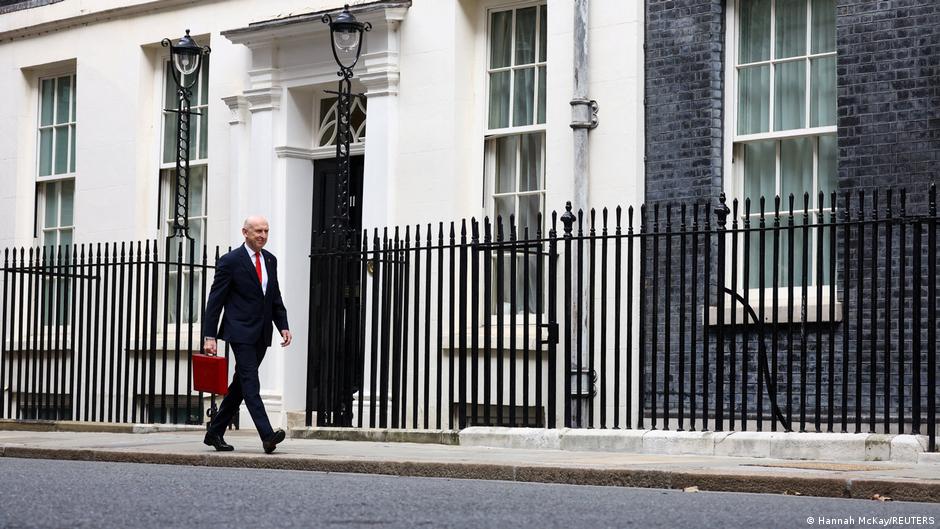
Britain will provide Ukraine with an additional £10 billion, equivalent to about €12 billion, UK Chancellor John Healey told the House of Commons. The package includes loans, export finance guarantees and £500 million for emergency military support during the coming winter.
A British government spokesperson cited by Reuters said the £500 million allocation should address urgent gaps in Ukraine’s air defenses. That priority could be relevant to established defense contractors as well as smaller technology companies developing sensors, communications systems, interception technologies and software used in air-defense networks. The announcement did not specify how contracts would be distributed or what share, if any, would be available to startups.
Export guarantees could reduce risk for suppliers
The inclusion of export finance guarantees is particularly significant for companies considering sales to Ukraine. Such guarantees can reduce some of the commercial and political risks facing exporters, potentially making it easier for technology and industrial suppliers to secure financing for transactions. The structure may also encourage partnerships between British companies and Ukrainian businesses, although no individual projects or private investments were announced.
Healey said he and British Prime Minister Andy Burnham spoke with Ukrainian President Volodymyr Zelensky before the parliamentary announcement. According to Healey, Zelensky responded to the news of the additional £10 billion by saying:
“You made my day.”
Zelensky described the new British financial and military support on Telegram as “a truly powerful and timely step.” He said Moscow must “see and feel that Ukraine will not be left alone with the problems that Russia is so eager to scale up.”
“Every step to strengthen Ukraine brings Russia closer to understanding that it must end this war,” the Ukrainian president said.
Zelensky added that sanctions policy was another subject discussed with Burnham. He said Britain would continue to maintain a principled position on sanctions, calling it an important example for the rest of the world. On October 27, Russia’s Foreign Ministry said it had added seven representatives of British defense plants to its stop list in response to what it called London’s hostile anti-Russian policy.
Dutch funding targets drones and reconstruction
The Netherlands is separately providing €500 million in military aid for Ukraine during the coming winter. Dutch Prime Minister Rob Jetten announced the funding after meeting Zelensky in The Hague on October 28. Reuters reported that the money is intended for drones and other materials required to reinforce Ukraine’s defenses.
Drone procurement has become a major area of defense innovation, bringing together hardware manufacturing, software, communications and rapid product development. The Dutch allocation may increase demand across that supply chain, but the government has not identified recipients, transaction structures or any venture-backed companies that could participate.
The Netherlands will also allocate €1.2 billion in nonmilitary assistance over the next three years. Of that amount, €380 million is designated for Ukraine’s reconstruction in 2027, followed by €410 million in each of 2028 and 2029.
Part of the funding will go to vehicles that help Dutch companies invest in Ukraine’s recovery. This could lower barriers for businesses evaluating projects in a market where wartime risk, infrastructure damage and financing constraints complicate conventional investment. The remaining funds will support urgent repairs to Ukrainian energy infrastructure and purchases of machine tools for industry.
For the technology and venture ecosystem, the combination of public funding, investment support and defined procurement needs could create openings in resilient power systems, grid software, industrial automation and dual-use technologies. It may also encourage strategic partnerships or acquisitions where larger suppliers seek specialized capabilities. However, neither government announced a dedicated venture capital fund, startup program or M&A initiative as part of the measures.
Bliksem project points to joint development
Zelensky also wrote on X on October 28 that he and Jetten had met Ukrainian and Dutch companies operating in defense, energy and software. Following the meeting, the two sides instructed their teams to develop a special air-defense project named Bliksem.
No budget, timetable or participating companies were disclosed for Bliksem. Even so, the planned project highlights a model increasingly relevant to the innovation ecosystem: governments defining urgent defense requirements while companies from multiple sectors collaborate on deployable systems. Its eventual structure will determine whether the initiative primarily benefits major contractors or also creates routes for startups and emerging suppliers.
Taken together, the British and Dutch commitments link immediate winter defense needs with longer-term reconstruction and commercial support. The clearest near-term opportunities are likely to emerge through public procurement, export-backed transactions and corporate partnerships rather than conventional venture funding. For investors and founders, the key details will be eligibility rules, contracting processes and how much of the financing becomes accessible to private technology providers.



