Ukraine, Russia Discuss POW Swap as War Risks Cloud Venture Outlook
Abu Dhabi talks addressed a possible exchange of up to 3,000 prisoners, territorial disputes and potential steps toward de-escalation.
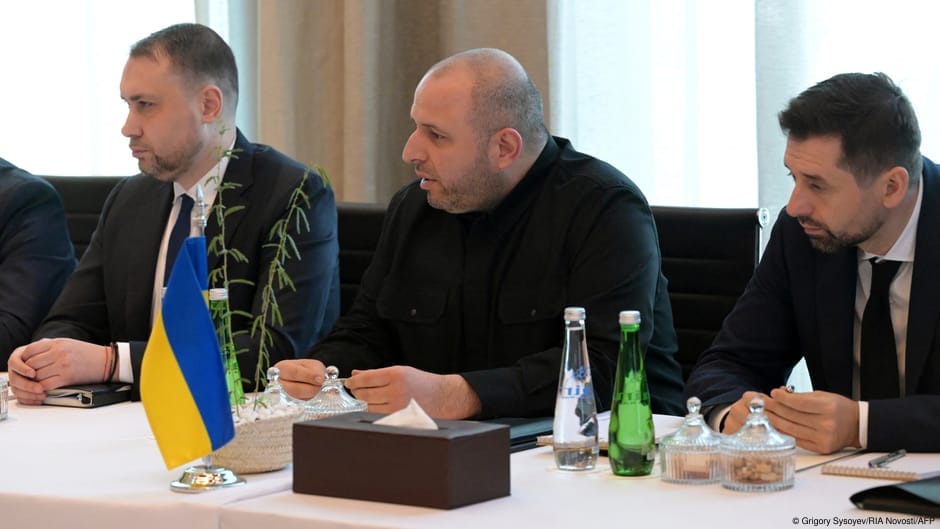
Ukraine and Russia discussed a possible large-scale prisoner-of-war exchange during the first day of talks in Abu Dhabi, as diplomatic efforts that could shape the wider risk environment for technology companies and investors exposed to the region continued.
Representatives of Kyiv and Moscow considered formulas of either “1,000 for 1,000” or “1,500 for 1,500” at the meeting on Tuesday, November 11, Ukrainian President Volodymyr Zelenskyy said at a press conference. Under the larger option, as many as 3,000 prisoners would be exchanged in total.
Zelenskyy said US representatives would take that agenda to Russia. The talks involved Ukraine, Russia and the United States, while European and NATO representatives were also present in Abu Dhabi but did not sit directly at the negotiating table.
Territory remains a leadership-level issue
The Russian delegation also raised the issue of territory, Zelenskyy said. He characterized that subject as one requiring decisions at the highest political level, while noting that Ukraine’s negotiators had a mandate to discuss it.
“The second issue concerned territories, and it was raised by the Russians. This is an issue at the level of leaders—our negotiators have such a mandate,” Zelenskyy said.
The Ukrainian president emphasized the importance of European participation around the negotiations. He said Kyiv wanted the European Union, the United States and Ukraine to maintain a common position, adding that work toward that alignment was continuing.
For the venture capital and startup ecosystem, any movement toward de-escalation is relevant because the negotiations address the broader conditions surrounding cross-border operations, access to capital and potential M&A activity. The first day, however, produced no announced settlement or binding de-escalation agreement. The discussions described by Zelenskyy remained focused on prisoners, territory and the positions of the participating governments.
Kyiv disputes Moscow’s battlefield assessment
Zelenskyy also said Russian representatives appeared to have a distorted understanding of conditions on the battlefield. Citing a report from the Ukrainian negotiating team, he said Russian officials believed their forces had occupied half of the Donbas territory that Ukraine says it still controls.
Military and intelligence representatives attended on the Russian side and presented that assessment seriously, according to Zelenskyy. He argued that Russian President Vladimir Putin was operating with information that did not reflect battlefield realities.
“Putin lives in different information. It is an altered reality,” Zelenskyy said, rejecting the idea that Russia could fully occupy eastern Ukraine within one, two or three months.
Zelenskyy said US officials confirmed Ukraine’s assessment of the battlefield situation. He specifically referred to comments by General Alexus Grynkewich, the US Air Force officer serving as NATO’s Supreme Allied Commander Europe, who was also present at the talks.
The disagreement over battlefield conditions is significant for the direction of the negotiations. Divergent assessments of military leverage can affect whether the parties see incentives to compromise, prolong talks or continue pursuing objectives through force. For founders and venture investors assessing Ukraine and neighboring markets, the resulting uncertainty remains a central variable in long-term planning, fundraising and acquisition decisions.
Energy and Black Sea issues move onto agenda
Zelenskyy said the second day of talks in Abu Dhabi would focus more heavily on possible de-escalation measures. Energy and the Black Sea were expected to feature alongside another discussion of the prisoner exchange.
The delegations would also examine the possibility of a trilateral meeting among national leaders, he said. No date or confirmed format for such a meeting was announced.
Energy and Black Sea security are particularly consequential for the operating environment of companies across Ukraine’s innovation economy. The agenda signals that negotiators are moving beyond the immediate humanitarian question of prisoners toward infrastructure and regional security issues, although the first-day statements did not establish that an agreement in those areas was close.
The presence of US, European and NATO representatives underscores the international scope of the process. At the same time, Zelenskyy’s account showed that fundamental disputes remained unresolved, especially over territory and competing descriptions of the battlefield.
The Abu Dhabi discussions therefore offer an early diplomatic signal rather than a clear change in the outlook for startups, venture funds or strategic buyers. A completed prisoner exchange could provide a tangible result, while progress on energy, the Black Sea or a leaders’ meeting would represent broader steps toward reducing uncertainty. Until such measures are agreed and implemented, the region’s innovation ecosystem continues to operate against the backdrop of war and unresolved geopolitical risk.



