Ukraine Talks Could Reshape Risk Outlook for European Tech Startups
US envoys are seeking direct Russia-Europe engagement as investors assess how diplomacy could affect funding, M&A and innovation.
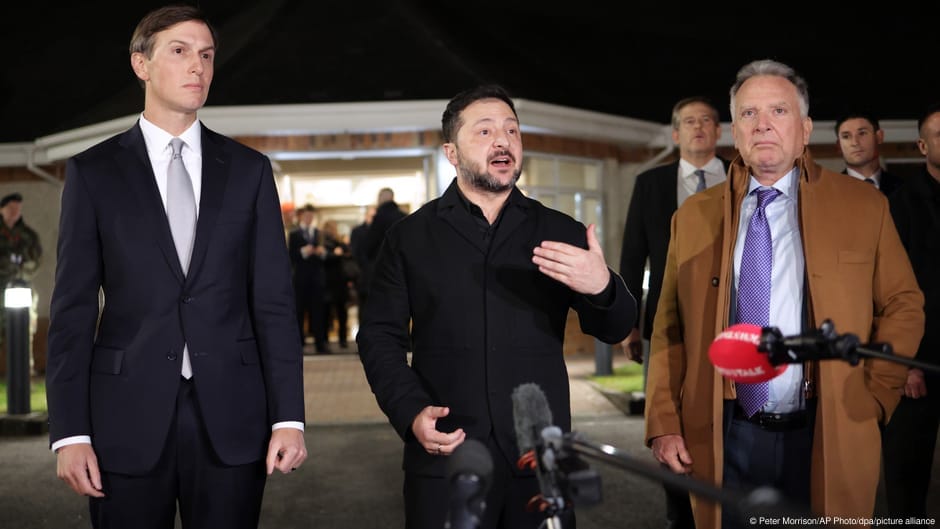
US presidential envoys Steven Witkoff and Jared Kushner are focused on facilitating direct engagement between Moscow and European partners as part of negotiations over Ukraine and broader discussions about security on the continent, Kushner said on Saturday, November 14.
The diplomatic initiative carries implications beyond foreign policy. For technology startups, venture capital firms and strategic buyers operating across Europe, progress toward an agreement could influence perceptions of geopolitical risk, capital allocation and the outlook for cross-border transactions. The immediate effect, however, remains uncertain because the timing and outcome of the next negotiations have not been disclosed.
Kushner wrote on the social media platform X that efforts were underway to involve European representatives in the Ukraine talks. He said NATO, which includes the United States, would remain a crucial pillar of European security in the future. The emphasis on European participation suggests that any eventual framework would have to address the interests of multiple governments and security stakeholders.
“Any final agreement must be approved by all interested parties, and President Trump will support only those arrangements that strengthen the security of Ukraine and Europe and make future conflicts less likely,” Kushner said.
For founders and investors, the security architecture referenced by Kushner is part of the backdrop against which long-term decisions are made. Venture financing, corporate acquisitions and research investment often depend on confidence that companies can hire across borders, protect infrastructure and serve customers without abrupt disruption. Diplomacy does not remove those risks by itself, but it can alter how investors evaluate them.
Investors Watch for Changes in the European Risk Premium
Kushner identified preparation of the agenda for the next round of trilateral talks involving Russia, the United States and Ukraine as another focus of the envoys’ work. He said both Moscow and Kyiv understood that practical compromises would be necessary to end the war.
He also said that several new ideas emerged during negotiations held earlier in the week and that some of them could lead to a breakthrough. No details of those proposals were provided, leaving investors without enough information to judge their potential economic impact or durability.
The venture capital sector is likely to view the process through several lenses. A credible reduction in regional security risk could improve conditions for fundraising and cross-border expansion, particularly for startups whose operations or customers are sensitive to geopolitical instability. It could also affect the willingness of international corporations to pursue European technology acquisitions. Conversely, prolonged uncertainty may keep attention concentrated on resilience, security and capital efficiency.
The talks may be especially relevant to innovation areas shaped by the conflict and Europe’s security priorities. Startups working in cybersecurity, communications, logistics, energy resilience and dual-use technology operate within a market influenced by government policy and defense requirements. Any final agreement that changes the regional security environment could reshape demand, procurement priorities and investor expectations, although the current negotiations have not produced publicly announced policy changes in those fields.
A Fast-Moving Diplomatic Schedule
Kushner and Witkoff participated in several meetings during the week aimed at ending the war in Ukraine. On November 10 and 11, they represented Washington at trilateral negotiations in Abu Dhabi attended by delegations from Moscow and Kyiv.
On November 12, the two envoys traveled to Russia for a meeting with Russian President Vladimir Putin. The following day, they arrived in Dublin, where they met Ukrainian President Volodymyr Zelenskyy. The sequence of meetings underscored the pace of the diplomatic effort and the role of US intermediaries in maintaining contact among the parties.
The date of the next negotiations has not been publicly announced. Before departing Moscow, Kushner told the Russian television program Vesti that further discussions would take place as early as the following week. He described the planned format as multilateral.
Witkoff separately said that the date had already been determined and that European representatives would attend. Their inclusion could broaden the agenda and increase the number of parties whose approval would be needed, while also giving Europe a more direct role in discussions that may shape its security and economic environment.
For the startup ecosystem, the next round will be significant less as an immediate funding catalyst than as a signal about the direction of political risk. Venture investors and corporate buyers will be looking for evidence that negotiations can produce a stable framework rather than a temporary pause. Until concrete terms emerge, the principal impact is likely to be on expectations: whether Europe’s innovation economy can plan for reduced uncertainty, or must continue operating under the elevated risks created by the war.



