US Push to Revive Russian Gas Transit Raises Stakes for European Startups
A proposed US-brokered route through Ukraine could reshape energy costs, investor risk models and Europe’s climate-tech funding landscape.
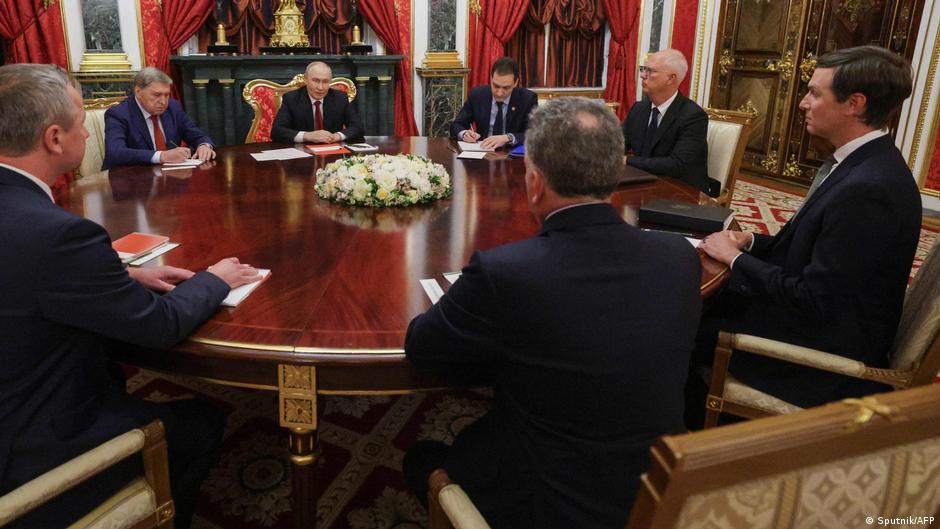
The United States is pressing for a rapid restart of Russian natural gas shipments to Europe through Ukraine as part of negotiations over an energy truce between Moscow and Kyiv, according to The Wall Street Journal, citing American, European and Ukrainian officials.
For Europe’s technology sector, the proposal carries implications beyond energy diplomacy. Any shift in gas supply, pricing or security could affect operating costs for energy-intensive startups, investor assumptions about Europe’s industrial outlook, and the pace of venture funding for climate and energy technologies. It could also create opportunities for American investors if a US intermediary becomes part of the proposed trading structure.
American negotiators Jared Kushner and Steve Witkoff discussed the idea during trips to Moscow and Kyiv in September, the newspaper reported. The plan would involve selling Russian gas through an American intermediary, a structure expected to bypass European sanctions and create potentially profitable opportunities for US investors.
The proposed arrangement places an American intermediary at the center of a politically sensitive energy trade, potentially opening a new investment channel while testing Europe’s commitment to reducing Russian imports.
Energy costs meet venture capital risk
Washington is seeking a comprehensive agreement to halt strikes on energy facilities before trilateral talks among the United States, Russia and Ukraine scheduled for November in Abu Dhabi. The administration of President Donald Trump expects European resistance to the proposal may ultimately prove less forceful than public statements suggest, according to the report.
US officials believe Russia’s return to the European gas market could give President Vladimir Putin an additional incentive to support an energy truce. Ukraine, meanwhile, could receive renewed transit revenue from gas moving across its territory.
One American official said the White House had also proposed placing proceeds from Russian gas sales to Europe into a special account in a third jurisdiction. The mechanism would be intended to restrict the use of those funds for military purposes.
For venture investors, the debate introduces a fresh layer of policy and geopolitical uncertainty into European dealmaking. Lower or more stable energy costs could improve forecasts for startups in advanced manufacturing, data infrastructure and other power-intensive sectors. At the same time, renewed access to Russian gas could weaken some of the immediate economic pressure driving investment into energy efficiency, storage, electrification and alternative supply technologies.
The proposal could also influence mergers and acquisitions. Established energy groups, infrastructure operators and financial intermediaries may reassess assets linked to gas transportation, trading and compliance if transit resumes. Startups offering sanctions screening, commodity-market software, payments controls and energy-network monitoring could face new demand as companies attempt to navigate a trading structure spanning Russia, Ukraine, the United States and European jurisdictions.
Climate-tech strategy faces a policy test
The initiative is encountering substantial opposition in Europe. Existing European Union legislation provides for a phased end to Russian gas imports by the close of 2027, while leaders of the region’s largest countries have repeatedly said they do not want to restore dependence on Russian energy supplies.
Russian gas now accounts for about 11% of European consumption, down from 45% before Russia’s full-scale invasion of Ukraine. Liquefied natural gas supplied by the United States currently covers about 30% of European gas consumption.
Those figures frame a strategic question for Europe’s innovation ecosystem. Venture funds and startups have spent recent years building around the expectation that the continent will diversify supply and reduce exposure to Russian hydrocarbons. A partial reversal, even through a US-mediated arrangement, could complicate long-term assumptions behind investments in renewable generation, grid technology, clean industrial processes and energy storage.
The effect would not necessarily be uniform. Greater supply and lower energy prices could extend the runway of industrial startups and make European production more competitive. But policy ambiguity could delay funding decisions for companies whose growth depends on firm decarbonization mandates or persistent price advantages over fossil fuels. Investors may therefore place greater weight on technologies that remain competitive across several energy-price scenarios.
Some European officials have sharply criticized the idea in private conversations, according to the newspaper. The US administration nevertheless believes high energy prices and risks to energy security could make European countries more receptive to such proposals.
That calculation puts energy affordability and strategic autonomy in direct tension. For founders and venture firms, the outcome could reshape capital allocation across climate tech, industrial software and energy infrastructure. It may also determine whether the next phase of European innovation is driven primarily by an accelerated break from Russian energy or by a more complex transition that temporarily restores some Russian gas under American financial intermediation.



