US Weighs Lifting Sanctions on Russian Direct Investment Fund
A potential reprieve for the Kremlin-linked fund could reopen cross-border investment channels and enable Russian diesel supplies to the US.
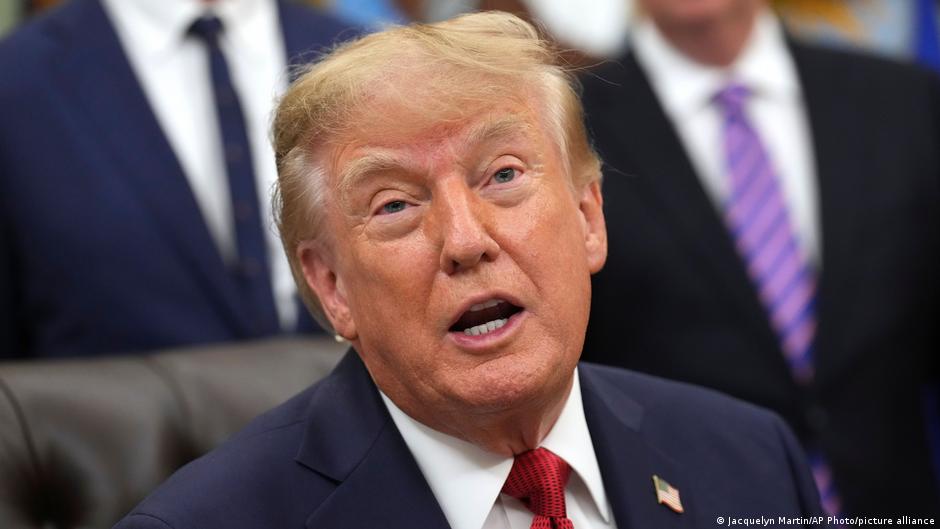
The administration of US President Donald Trump is considering lifting sanctions on the Russian Direct Investment Fund, or RDIF, a move that could carry implications beyond energy markets by reopening a state-backed channel for cross-border investment and potential US-Russian business projects.
The New York Times reported on Tuesday, October 27, citing people familiar with US-Russian negotiations, that Moscow is pressing Washington to remove the restrictions so the fund can participate in supplying Russian diesel fuel to the United States. Under the previous administration of President Joseph Biden, US authorities described RDIF as a Kremlin financial vehicle and called it a “slush fund” for Russian President Vladimir Putin.
For technology startups, venture investors and corporate dealmakers, any sanctions relief would be significant because RDIF was established as a platform for attracting foreign capital into Russia. Restoring its ability to transact internationally could potentially revive discussions around joint investment projects, although the report identifies diesel shipments—not technology financing—as Moscow’s immediate objective.
Sanctions review could reshape investment channels
The US Treasury Department is reviewing RDIF’s request for sanctions relief under its standard procedures, according to one of the newspaper’s sources. Under that process, the Russian fund would have to demonstrate that the grounds on which the sanctions were imposed no longer apply.
“Consideration of further easing sanctions on Russia, which has not previously been reported, shows how the Kremlin is using the recent wave of diplomacy related to the war in Ukraine to advance an agenda that appears to have little to do with securing peace,” the newspaper said.
RDIF is headed by Kirill Dmitriev, a key participant in Russian-US talks, including negotiations concerning the war in Ukraine. Dmitriev has promoted Kremlin proposals for possible joint business projects between Russia and the United States and has met repeatedly with representatives of the current US administration.
That role places RDIF at the intersection of diplomacy, state capital and potential dealmaking. If the restrictions were removed, the fund could again become a vehicle through which foreign investors assess projects involving Russian counterparties. However, the reported review does not itself constitute sanctions relief, nor does it establish that venture funding, technology acquisitions or startup partnerships would immediately resume.
RDIF’s record includes technology and healthcare investment
Russia created RDIF in 2011 to attract foreign investment into the country. One of the projects associated with the fund was Sputnik V, Russia’s vaccine developed during the COVID-19 pandemic. That history demonstrates the fund’s involvement in strategically important innovation projects as well as its broader sovereign investment mandate.
The Biden administration sanctioned RDIF four days after Russia launched its full-scale invasion of Ukraine. At the time, the US Treasury said that although RDIF was formally a sovereign wealth fund, it was widely considered a slush fund for Putin and a prominent example of the kleptocracy characteristic of Russia’s system of government.
Those allegations remain central to the risk calculation for venture firms, strategic investors and potential acquisition partners. Even if Washington were to remove the fund from sanctions lists, investors would still have to evaluate regulatory exposure, political risk and the durability of any diplomatic opening before pursuing transactions connected to RDIF or the Russian market.
Diesel agreement drives the immediate negotiations
Trump said in an October 9 post on Truth Social that he had held “very successful” talks with Putin, resulting in an agreement to supply Russian diesel to the United States and the global market. According to Trump, Russia would immediately provide more than 300,000 metric tons of diesel to US and global markets, followed by another 500,000 tons during November and 1 million tons immediately afterward.
Trump also said Moscow could quickly provide an additional 3 million tons of fuel, depending on the condition of Russian oil refineries. He argued that Russian energy supplies, together with what he described as US “complete control” over the Strait of Hormuz, would cause diesel prices to fall rapidly and substantially for Americans and consumers worldwide.
On the same day, the US Treasury Department announced that the Office of Foreign Assets Control, acting at the White House’s direction, was immediately issuing a temporary general license permitting Russian diesel supplies to the world market. Putin later formally confirmed his telephone conversation with Trump and the agreements concerning deliveries of Russian petroleum products to global markets.
The diesel arrangement provides the immediate commercial context for RDIF’s sanctions request. For VentureLine’s audience, the broader question is whether a narrowly defined energy exemption could develop into a wider normalization of investment activity. Dmitriev’s advocacy for joint US-Russian projects makes that possibility relevant to venture capital and M&A, but the available information points only to an administrative review, with no confirmed decision or timetable for removing the sanctions.



