White House Talks on Oleshky Truce Put Humanitarian Innovation in Focus
Melania Trump will meet Ukrainian and Russian representatives as the fragile ceasefire highlights demand for scalable crisis-response tools.
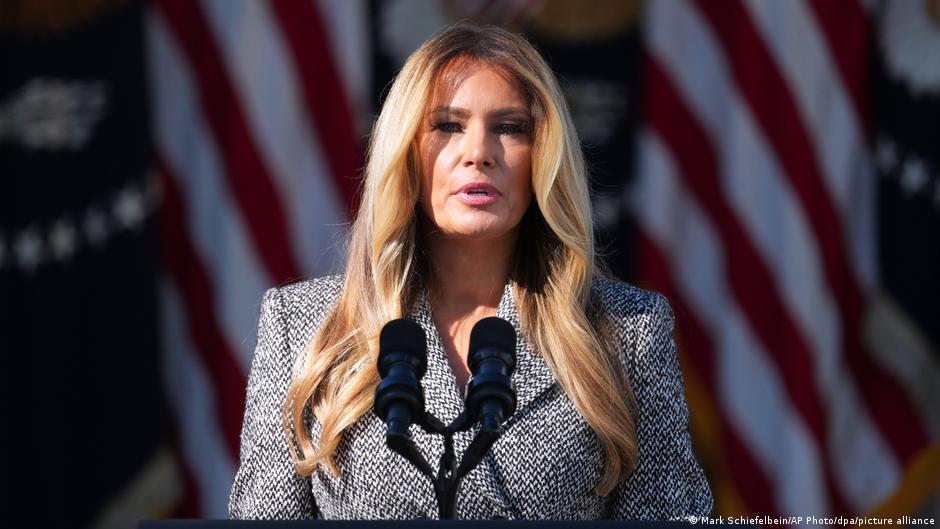
US first lady Melania Trump is set to discuss a ceasefire in the Russian-occupied city of Oleshky with representatives of Ukraine and Russia at the White House, bringing renewed attention to the logistical and technological demands of humanitarian operations in active conflict zones.
The planned talks concern Oleshky, referred to as Alyoshki in Russian, in Ukraine’s Kherson region. The White House announced the meeting on Tuesday, November 3, according to a notice published on its official website. Trump is also scheduled to deliver a formal statement on the outcome of the humanitarian mission in the city at 11 a.m. Eastern Time on Thursday, November 5.
The announcement did not specify whether the meeting with representatives of Kyiv and Moscow would take place on the same day as the first lady’s statement.
Humanitarian Operations Create a Test for Crisis Technology
For the startup and venture capital ecosystem, the diplomatic initiative underscores a broader challenge: moving civilians and delivering relief in contested areas requires secure communications, rapid coordination and reliable logistics under exceptionally difficult conditions. Companies developing tools for emergency mapping, supply-chain visibility, identity verification, telemedicine and resilient communications increasingly operate in an environment where deployment conditions can change within hours.
The source report does not identify any startups, investors, technology vendors, funding rounds or prospective acquisitions connected to the Oleshky mission. Nor does it indicate that private companies participated in the ceasefire negotiations. The direct significance for venture markets therefore lies in the operational context rather than in a disclosed commercial transaction.
According to RBC-Ukraine, the Ukrainian delegation traveling to the White House will include David Arakhamia, head of the Servant of the People parliamentary faction, and Dmytro Lubinets, the Ukrainian parliament commissioner for human rights. Russia is expected to be represented by Kirill Dmitriev, a special representative of Russian President Vladimir Putin, and ombudsperson Yana Lantratova.
The temporary halt in fighting enabled hundreds of civilians to leave the city and allowed humanitarian supplies to be delivered.
The ceasefire in Oleshky and surrounding areas began early on October 27 and ended at 10:59 p.m. on November 1. It resulted from agreements between the parties reached with the participation of Melania Trump, whom both Moscow and Kyiv have described as a key intermediary in arranging the halt in fighting.
During the humanitarian operation, hundreds of civilians were evacuated from the city. Humanitarian cargo was also delivered to Oleshky, demonstrating how even a short negotiating window can support a substantial movement of people and essential supplies.
Implications for Investors and Founders
Humanitarian corridors expose the gap between technology that performs well in controlled settings and systems capable of operating amid damaged infrastructure, limited connectivity and acute security risks. For founders, the central product challenge is resilience: tools must remain usable when networks are disrupted, location data are sensitive and multiple institutions need to coordinate without a shared technical platform.
Investors evaluating crisis-response and dual-use technology may view operations such as the one in Oleshky as evidence of persistent demand for dependable systems. However, deployment in a war zone also raises unusually high barriers involving procurement, data protection, cybersecurity, export controls and the safety of users. Commercial potential cannot be separated from humanitarian safeguards, particularly when products process information about civilians, evacuation routes or aid deliveries.
The episode may also shape longer-term interest in partnerships and consolidation across emergency logistics, geospatial intelligence and secure communications. Larger defense, infrastructure and enterprise-software groups often seek capabilities that can be integrated into broader operational platforms, while smaller companies can offer specialized tools developed for rapidly changing conditions. No such merger or acquisition activity was announced in connection with the White House meeting, but the mission illustrates the kinds of real-world requirements that can influence future product development and investment decisions.
Any technology deployed around a temporary ceasefire must also account for the limited duration of the operating window. In Oleshky, the truce lasted less than a week. Systems supporting evacuation and aid delivery therefore need fast setup, clear interfaces and the ability to work across organizations that may have little time for training or integration.
Melania Trump’s forthcoming statement is expected to address the humanitarian mission’s results. The White House talks will meanwhile place the ceasefire and its aftermath on a diplomatic agenda involving officials from both sides. For the innovation ecosystem, the proceedings offer a reminder that humanitarian technology is ultimately measured not by technical novelty alone, but by whether it can support safe, timely action when political agreements create only a narrow opportunity to operate.



