Trump Says Putin More Interested Than Zelenskyy in Ukraine Peace Deal
The U.S. president said violations of an energy ceasefire had occurred on both sides, while Kyiv urged Washington to pressure Moscow.
U.S. President Donald Trump said Russian President Vladimir Putin is more interested than Ukrainian President Volodymyr Zelenskyy in reaching a peace agreement over Ukraine, even as questions mount over Russia’s reported breach of an energy ceasefire that Trump himself had announced.
Speaking to reporters overnight into Tuesday, October 13, Trump was asked how he sees Putin as ready for compromise while Russia continues to attack Ukraine. The president replied that he believes the two sides will ultimately reach an agreement, adding that in his view Putin is more eager than Zelenskyy to conclude a deal.
“I think they will make a deal. I really think Putin is more interested than Zelenskyy in making a deal,” Trump said.
The remarks place Washington’s assessment of Moscow’s intentions at the center of a tense diplomatic moment. For Ukraine’s government, the immediate issue is not only the broader future of peace talks but also whether Russia will stop striking energy infrastructure, a condition Kyiv says it has accepted and Moscow has not observed.
Energy Ceasefire Becomes a Test of U.S. Leverage
Trump was also asked about Putin’s violation of the energy ceasefire, an arrangement the U.S. president had previously said would halt all attacks on energy facilities in the war. Trump responded that the matter first needed to be examined, saying there had been violations on both sides.
When pressed on how he intended to ensure that the Russian president complied with the energy ceasefire, Trump said he believed Putin wanted an agreement and suggested that Zelenskyy needed to be persuaded to accept one. That framing contrasts with Kyiv’s public position, which is that Ukraine has already supported the energy ceasefire and is waiting for Russia to take corresponding steps.
For investors and technology companies watching the region, the distinction matters. Ukraine’s innovation economy has continued to operate through wartime disruption, supported by local founders, international customers, defense technology demand and diaspora networks. But attacks on energy infrastructure remain a direct operational risk for startups, data-driven businesses, hardware teams and outsourced engineering firms that depend on reliable power and connectivity.
Energy stability is also a prerequisite for any broader reopening of the funding environment. Venture capital activity in Ukraine and across the wider region has been shaped by war risk, security costs and uncertainty over the durability of international support. A credible ceasefire affecting energy assets would not resolve those constraints, but it could reduce one of the most immediate risks for founders and investors evaluating hiring, product development, infrastructure resilience and cross-border expansion.
Zelenskyy Urges Washington to Press Moscow
Earlier, Zelenskyy called on the United States to influence Russia so that it would begin observing the ceasefire regime in the energy sector. Speaking at the Warsaw Security Forum, he said Ukraine was waiting to see what concrete steps the Americans were prepared to take.
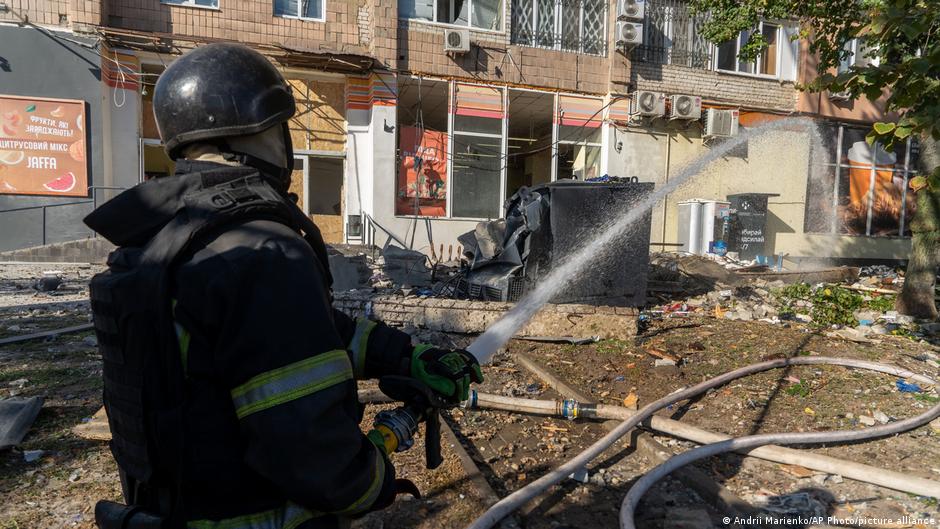
According to the Ukrainian president, Kyiv was very surprised on October 11 by social media reports that all attacks on energy facilities in Russia’s war against Ukraine would stop immediately. Zelenskyy said that immediately after that statement was published, Russia struck a thermal power plant in Kharkiv, causing additional damage to Ukraine’s energy system.
Zelenskyy later wrote on Telegram on the evening of October 12 that Ukraine had supported the energy ceasefire and that its position was “absolutely clear.” He said Ukraine was ready to guarantee an energy ceasefire as announced by the U.S. president, and that Russia must take corresponding steps.
“At the moment, Russia’s fulfillment of these conditions announced by the U.S. president is not being recorded,” Zelenskyy wrote.
He added that much depends specifically on the U.S. position for de-escalation to work, saying pressure must be applied to Russia and that talks with the American side were continuing at all levels.
The episode underscores the role Washington could play not only in security diplomacy but also in shaping the commercial risk profile of Ukraine’s wartime economy. For venture-backed companies, ceasefire credibility is not an abstract diplomatic metric. It affects the cost of backup power, the reliability of development teams, the confidence of international customers and the willingness of investors to underwrite longer-term growth.
Startups in Ukraine have often adapted by distributing teams, moving infrastructure, building redundancy and targeting foreign revenue. Those measures have helped parts of the ecosystem remain resilient, but they do not eliminate the drag of recurring strikes on energy assets. If a sector-specific ceasefire were implemented and verified, it could improve operating conditions for technology firms and support a more constructive environment for funding discussions and strategic partnerships.
At the same time, Trump’s comments may raise questions among Ukrainian officials and their backers over how the United States interprets responsibility for compliance. By saying that violations occurred on both sides and emphasizing his belief that Putin wants a deal, Trump signaled a diplomatic posture that may differ from Kyiv’s account of Russia’s conduct following the ceasefire announcement.
For the innovation ecosystem, the next signal will be whether Washington turns the ceasefire announcement into enforceable pressure, and whether Moscow alters its behavior around Ukraine’s energy infrastructure. Until then, founders and investors are likely to treat the peace-deal rhetoric as politically significant but operationally unproven.