EU Plans New Drone and Missile Funding for Kyiv as Defense Tech Needs Grow
Brussels says Ukraine’s war financing and EU accession agenda will be central at this week’s European Council meeting.
The European Union is preparing to allocate additional funding to Kyiv in mid-October for the purchase of drones and missiles, a move that underscores how Ukraine’s defense needs continue to shape Europe’s security, industrial and innovation agenda.
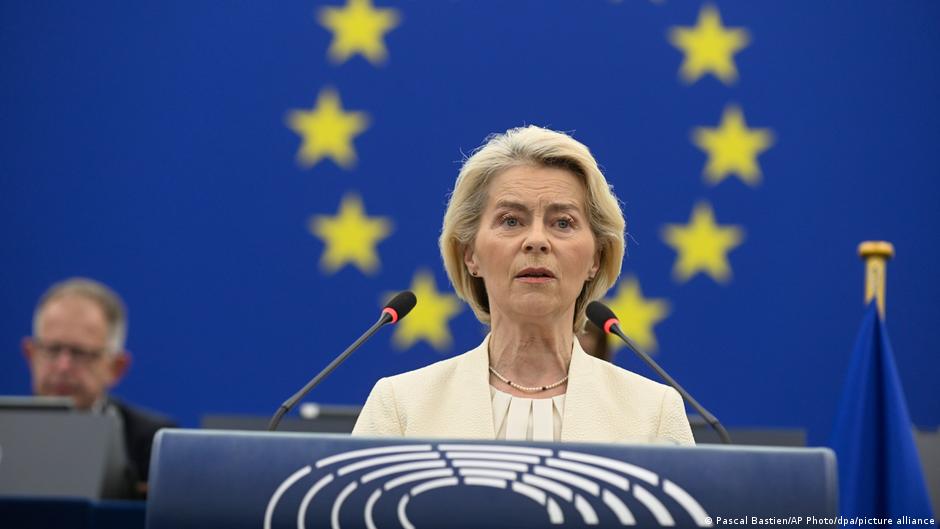
European Commission President Ursula von der Leyen announced the planned support on Sunday, October 11, in a post on X after holding a phone call with Ukrainian President Volodymyr Zelensky. She said the funding was needed to strengthen Ukraine’s defense and protect its airspace, but did not specify the size of the package or identify the sources of the financing.
“This is necessary to strengthen Ukraine’s defense and protect its airspace,” von der Leyen said.
For Europe’s technology and venture ecosystem, the emphasis on drones and missiles is another sign that defense innovation has moved from the margins of policy debate into the core of public financing decisions. Ukraine’s battlefield requirements have accelerated demand for unmanned systems, air defense capabilities, resilient infrastructure and rapid procurement models, creating strategic relevance for startups and investors working across dual-use technologies.
Brussels said the situation in Ukraine will be one of the central topics at this week’s European Council meeting. EU leaders are expected to discuss Ukraine’s financing needs for the coming year and ways to mobilize new international support. Von der Leyen also indicated that two new clusters of topics in Ukraine’s negotiations with the EU will be unlocked, tying near-term military and financial support to the country’s longer-term integration into European institutions.
Defense Spending Becomes an Innovation Signal
The decision to direct additional EU money toward drones and missiles comes as European governments increasingly frame defense capacity as an industrial and technological priority. While the source announcement did not provide details on procurement channels or beneficiaries, the focus areas are closely watched by founders and venture investors because they sit at the intersection of hardware, software, autonomy, sensors, communications and manufacturing scale-up.
Ukraine has become a real-time testing ground for defense technology under extreme conditions. That has changed how policymakers and investors assess innovation cycles in security-related markets. Technologies that once moved through lengthy procurement and certification pathways are now being judged by speed, adaptability and operational resilience. For startups, this can create opportunity, but it also brings political, regulatory and ethical complexity.
The EU’s latest planned financing should be read within a broader pattern of support rather than as an isolated procurement measure. Earlier, on October 2, the European Commission approved a 2.9 billion euro tranche for Kyiv under the Ukraine Facility, a mechanism designed to provide long-term financial assistance to Ukraine. The facility covers the period from 2024 to 2027 and is intended to allow the EU to provide Ukraine with up to 50 billion euros in stable and predictable financial support.
Payments under the Ukraine Facility are closely linked to Ukraine’s implementation of a specific recovery and reform plan, as well as support for democratic mechanisms, the rule of law and human rights, according to the European Commission. Disbursements are made quarterly after verification that the required conditions have been met.
That structure matters for the venture and startup community because it suggests that Ukraine-related capital flows are not limited to emergency defense funding. They are also connected to reconstruction, institutional reform and future market alignment with the European Union. For investors, the combination of security demand, public-sector financing and EU accession momentum may influence how capital is allocated across defense tech, energy resilience, cybersecurity, logistics and infrastructure platforms.
Ceasefire Call and Infrastructure Risks
Von der Leyen said she fully supported Zelensky’s call for a ceasefire that would help protect global food supplies and energy infrastructure in Ukraine and Russia. Her comments placed the latest funding announcement within a broader concern over the economic and civilian consequences of the war, including risks to critical infrastructure and international supply chains.
She also warned that the war had entered a new and even darker phase. Russia, she said, is waging a prolonged war on the battlefield and striking civilians far beyond the front line. The statement points to the continuing need for air defense and related technologies, including systems capable of detecting, intercepting and mitigating attacks against population centers and infrastructure.
For venture-backed companies operating in adjacent sectors, those priorities may translate into rising demand for products that improve situational awareness, protect energy systems, secure communications or support distributed manufacturing. However, the article’s source does not state whether any of the new EU funding will be available to startups directly, nor does it identify specific contractors, procurement frameworks or investment vehicles.
That uncertainty is important. Public defense financing can reshape markets, but it does not automatically translate into venture returns or startup contracts. Much depends on how funds are deployed, whether procurement processes are opened to new entrants, and how European institutions balance urgent military requirements with long-term industrial strategy.
Still, the policy signal is clear: Ukraine’s military needs, EU financial support and accession process are increasingly intertwined. For Europe’s innovation ecosystem, the question is no longer whether defense and resilience technologies will remain a niche category. It is how quickly capital, regulation and procurement can adapt to a security environment in which drones, missiles and airspace protection have become central to both battlefield outcomes and the future of European technology markets.