U.S. Senators Press Trump to Drop Russian Diesel Deal Over Ukraine War Funding
A bipartisan group says sanctions relief for Russian diesel would not materially ease fuel prices but could reshape energy and geopolitical risk for businesses.
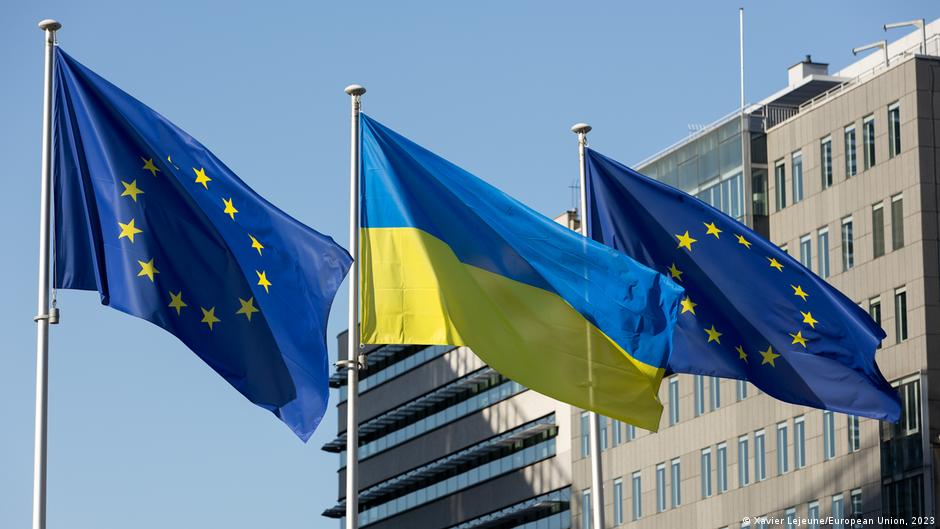
A bipartisan group of 12 U.S. senators is urging President Donald Trump to abandon a diesel supply arrangement with Russian President Vladimir Putin, warning that the move would give the Kremlin fresh resources to continue the war in Ukraine while offering little relief to American households facing high fuel prices.
The appeal, led by Democratic Senator Richard Blumenthal, was sent to Trump on Tuesday, October 13. A copy of the letter was posted by Blumenthal on X. The lawmakers argue that Congress and the American public support ending the war in Ukraine, which they say has taken hundreds of thousands of lives over four and a half years, but that any peace must come on “just terms.”
For venture-backed companies, the dispute is not only about fuel. It points to a broader policy question that has become increasingly relevant for startups, investors and corporate acquirers: how sanctions, energy prices and geopolitical alignment can alter market access, supply chains and fundraising assumptions almost overnight.
Sanctions Risk Meets Startup Operating Risk
The senators argue that lifting U.S. sanctions on Russian diesel exports would “only provide Putin with additional funds to finance his war machine and allow Russia to continue brutal attacks on Ukrainian civilians.” In their letter, they describe the deal as a gift to an adversary and a betrayal of U.S. allies, saying it should be cancelled.
“This deal is a gift to our adversary and a betrayal of our allies; it must be cancelled,” the senators state in the letter.
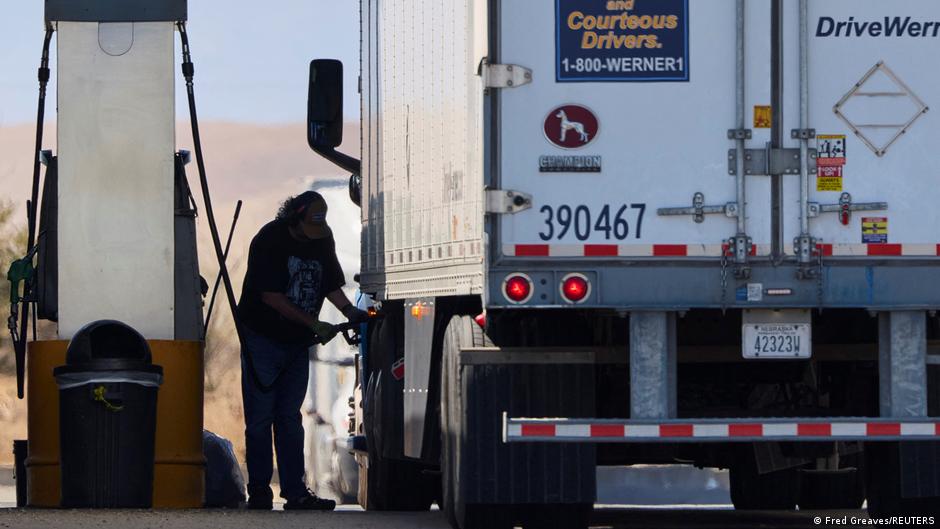
The political confrontation arrives at a sensitive moment for technology companies whose models depend on stable infrastructure costs and predictable regulatory conditions. Energy-intensive startups in logistics, manufacturing, cloud infrastructure, mobility, robotics, food systems and industrial AI can be affected by diesel prices either directly or through freight, warehousing and supplier costs. But the senators contend that American families are unlikely to see meaningful improvement from Russian diesel returning to global markets.
That point matters for investors assessing the trade-off between near-term energy relief and longer-term geopolitical exposure. If sanctions relief does not significantly lower consumer or operating costs, the policy could still introduce reputational, compliance and counterparty risk for companies and funds with exposure to cross-border supply chains.
The signatories call on Trump to increase economic pressure on Russia and on those they say play a central role in enabling the war, particularly China. They point to powers provided under Senator Lindsey Graham’s sanctions legislation concerning Russia and Iran. Copies of the appeal were also sent to Secretary of State Marco Rubio and Treasury Secretary Scott Bessent.
A Bipartisan Signal to Markets
The letter was signed by six Democratic senators: Richard Blumenthal, Jeanne Shaheen, Richard Durbin, Sheldon Whitehouse, Jack Reed and Christopher Coons. They were joined by six Republicans: Mitch McConnell, Thom Tillis, Susan Collins, Alan Stewart Armstrong, Lisa Murkowski and John Cornyn.
For the innovation economy, the bipartisan nature of the appeal is a notable signal. Venture capital firms often price political risk into sectors such as energy transition, defense technology, supply chain software, semiconductors, cybersecurity and advanced manufacturing. A cross-party challenge to sanctions relief suggests that any U.S. opening toward Russian energy exports could face continuing political resistance, even if authorized by the executive branch.
That uncertainty can shape M&A diligence and startup financing. Strategic buyers may scrutinize whether targets have indirect exposure to sanctioned commodities, shipping routes, insurers or counterparties. Venture investors may also question whether a portfolio company’s cost forecasts depend on energy flows that could be reversed by a new sanctions action, congressional pressure or Treasury guidance.
According to the source article, Trump said on October 9 on Truth Social that he had held an “extremely successful” phone call with Putin. During the call, the two leaders agreed on supplies of Russian diesel fuel to the American and global markets. Trump said Russian companies would “immediately” ship more than 300,000 tons, followed by another 500,000 tons in November, 1 million tons “immediately after that,” apparently in December, and later another 3 million tons depending on refinery conditions. The period for the later volume was not specified.
The U.S. Treasury, for its part, issued a general license suspending the effect of U.S. sanctions on Russian diesel fuel until April 2027. Russian television program Vesti reported on October 12 that the first shipment of Russian diesel had departed St. Petersburg for the eastern coast of the United States and was expected to arrive within 48 to 72 hours.
For startups, the timing of the license is especially important. A suspension through April 2027 could span multiple fundraising cycles, customer contracts and acquisition processes. Companies that handle fuel procurement, shipping analytics, trade finance, commodity data, compliance automation or sanctions screening may see demand rise as clients attempt to understand what is permitted, what is politically exposed and what could be reversed.
The dispute may also reinforce investor interest in technologies designed to reduce dependence on volatile fossil fuel supply chains, including electrified logistics, grid software, alternative fuels, battery systems and industrial efficiency platforms. At the same time, higher geopolitical tension can complicate capital flows, particularly for startups with suppliers, customers or manufacturing dependencies linked to China, which the senators singled out as a key enabler of Russia’s war effort.
The letter does not propose startup-specific measures, and it does not quantify expected market effects. Its immediate target is the diesel arrangement and the sanctions license behind it. But for the venture ecosystem, the episode is a reminder that policy decisions made in the name of fuel prices can quickly become boardroom issues, affecting compliance budgets, growth plans, acquisition risk and the strategic value of energy resilience.