Brazilian Supreme Court Sentences Ex-President Bolsonaro’s Son Amid Political Turmoil
Eduardo Bolsonaro receives a four-year prison sentence for seeking US sanctions against Brazil, highlighting political risks affecting the country’s innovation climate.
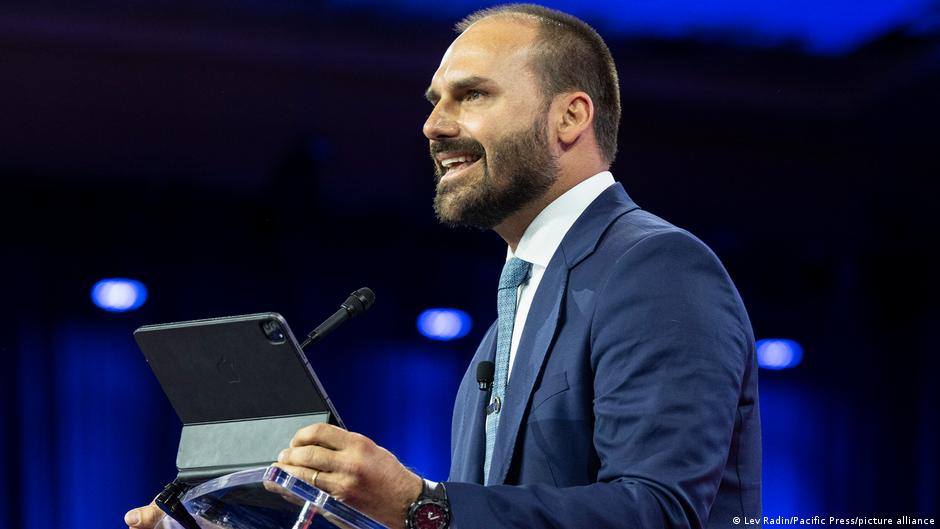
The Brazilian Supreme Court has sentenced Eduardo Bolsonaro, son of former President Jair Bolsonaro, to four years and two months in prison. The sentence, issued in absentia since Eduardo resides in the United States, stems from his actions advocating for US sanctions against Brazil amid legal proceedings against his father.
Implications for Brazil’s Political and Innovation Ecosystem
Eduardo Bolsonaro, 41, served as a member of Brazil’s lower house of parliament from 2015 to 2023. The Supreme Court ruled that his calls for sanctions represented a threat to judicial authority and government institutions, with Judge Alexandre de Moraes stating that Eduardo "lobbied abroad for interests contrary to those of his own country." In addition to the prison term, Eduardo is banned from holding public office for eight years.
"Eduardo Bolsonaro’s actions undermined national sovereignty by attempting to leverage foreign powers against Brazil’s judicial process," said Judge Alexandre de Moraes.
The ruling intensifies the ongoing political upheaval surrounding the Bolsonaro family. Former President Jair Bolsonaro, who governed from 2019 to 2023, was convicted in September 2025 of orchestrating a coup attempt and received a 27-year prison sentence. Meanwhile, Brazil is gearing up for presidential elections in October 2026, with current President Luiz Inácio Lula da Silva seeking re-election, opposed by Flávio Bolsonaro, another son of the incarcerated ex-president.
Brazil's political instability has raised concerns within the venture capital and startup ecosystem, where governance and institutional stability are key to attracting investment and fostering innovation. The Bolsonaro family’s continued legal battles and the associated uncertainties risk dampening foreign investor confidence and complicate strategic partnerships between Brazilian startups and international technology firms.
Despite Brazil’s dynamic and growing tech sector, these high-profile political developments could hinder the country’s ability to maintain a stable environment conducive to venture capital inflows and mergers and acquisitions. Startups, particularly those reliant on global capital or cross-border collaboration, may face increased challenges navigating regulatory unpredictability and reputational risks linked to political controversies.
As Brazil approaches its 2026 elections, the outcome and subsequent political climate will be crucial in shaping the trajectory of the nation’s innovation landscape. Observers will watch closely to see how government stability, rule of law, and policy continuity evolve in the context of ongoing legal proceedings against prominent political figures.