Palestinian Election Delay Extends Political Risk for Regional Startups
Mahmoud Abbas moved long-awaited Palestinian parliamentary and presidential elections to September 2027, drawing Israeli accusations and internal criticism.
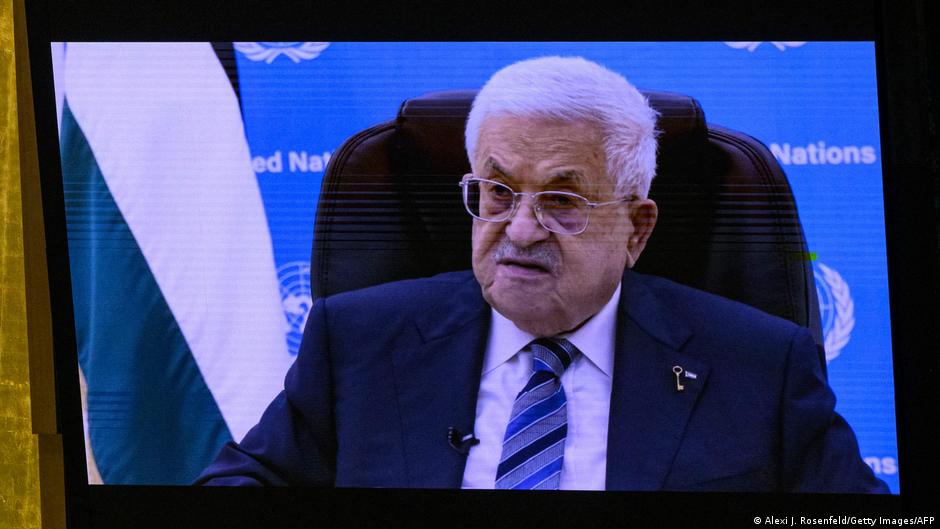
Palestinian Authority President Mahmoud Abbas has postponed elections in the Palestinian territories from late November to September 11, 2027, according to WAFA, extending a period of political uncertainty that matters not only for diplomacy but also for founders, investors and technology operators working across the region.
The vote is intended to choose both a parliament and a president. It would be the first nationwide Palestinian election in more than two decades, a milestone with direct implications for governance, institutional legitimacy and the operating environment for any innovation economy in the West Bank, East Jerusalem and the Gaza Strip.
For venture capital and startup ecosystems, political legitimacy is not an abstract concern. Early-stage companies depend on predictable rules, cross-border mobility, payment infrastructure, access to talent and confidence that public institutions can support rather than obstruct economic activity. The postponement pushes those questions further into the future at a moment when Gaza’s reconstruction, public administration and security arrangements remain central to any broader economic recovery.
Governance Uncertainty Meets Startup Risk
WAFA cited Israeli military restrictions, the expansion of Jewish settlements, attacks by armed settlers and the lack of freedom of movement as reasons for delaying elections in the West Bank, East Jerusalem and the Gaza Strip. With regard to Gaza, the agency also pointed to instability and the postponed deployment of international security forces.
Those same constraints shape the basic terrain for technology companies. Restrictions on movement can limit hiring, customer meetings, logistics, accelerator participation and investor due diligence. Instability in Gaza complicates any plan for rebuilding digital infrastructure, restoring local services or scaling startups that rely on reliable connectivity and physical access. For investors, delayed elections add another layer to a risk profile already shaped by war, security controls and fragmented governance.
Israel’s foreign minister, Gideon Saar, rejected the explanation and accused Abbas, who is 90, of misleading the international community with false claims that Israel had created obstacles to voting. Saar said Abbas was trying to avoid responsibility and accountability.
Israel’s foreign minister accused Mahmoud Abbas of seeking to evade responsibility and accountability over the delayed vote.
Criticism also came from within Fatah, the Palestinian national liberation movement to which Abbas belongs. That internal pushback matters for the business climate because factional cohesion affects how policy is made, how public institutions function and whether investors can assess who has authority to approve projects or implement reforms.
The delay follows a limited electoral opening earlier this year. In April, Deir al-Balah in the Gaza Strip held its first municipal elections in 20 years. Candidates on most electoral lists were either close to Fatah or independent. For local entrepreneurs, municipal governance can be especially important because it often touches licensing, local services, permits and civic infrastructure more directly than national politics.
Reconstruction, Capital and the Gaza Plan
The broader regional context remains decisive. The Middle East situation escalated sharply on October 7, 2023, when Hamas, an Islamist movement designated as a terrorist organization by the European Union and the United States, launched a large-scale attack on Israel. Militants fired a massive rocket barrage, crossed into Israeli territory and carried out the deadliest massacre of civilians in the history of the modern Israeli state, killing about 1,200 people.
Militants also seized around 250 hostages and took them to the Gaza Strip. Some hostages were exchanged or released, while others died. Israel responded by declaring war on Hamas.
In October 2025, Israeli authorities and Hamas agreed to a ceasefire under a peace plan developed by the administration of U.S. President Donald Trump. The United States, Turkey, Qatar and Egypt served as guarantors of the arrangements between Israel and Hamas. During the first stage, Hamas militants returned all surviving Israeli hostages in exchange for the release of Palestinian prisoners from Israeli jails.
In mid-January, the White House said the second stage of Trump’s plan to end hostilities in the Gaza Strip had begun. Under that stage, a National Committee is expected to take over governance of the region until the Palestinian Authority is ready to assume that role.
For investors, that sequence raises a practical question: who will be the credible counterparty for rebuilding and development? A National Committee, the Palestinian Authority, international guarantors, donors and security actors may all influence the market environment. Startups and venture investors typically need clarity on contracts, data rules, banking access, import channels, procurement and dispute resolution. The longer the political transition remains unresolved, the harder it becomes to price risk or commit long-term capital.
The election delay therefore has consequences beyond electoral politics. It affects the timeline for institutional renewal, the credibility of governance reform and the confidence required for technology-led recovery. For Palestinian founders, diaspora investors and regional venture funds, September 2027 now becomes a key date on the political calendar, but the operating environment will be shaped well before then by security arrangements, reconstruction governance and the credibility of interim institutions.
In a region where technology ecosystems depend heavily on cross-border networks, talent mobility and international capital, the postponement reinforces a familiar constraint: innovation can emerge under pressure, but scaling companies requires institutions that can be trusted, accessed and held accountable.