U.S. Strike on Gulf Vessel Raises New Risk for Startup Supply Chains
CENTCOM says it disabled a Panama-flagged cargo ship after blockade warnings, adding pressure on energy markets, logistics and venture-backed hardware firms.
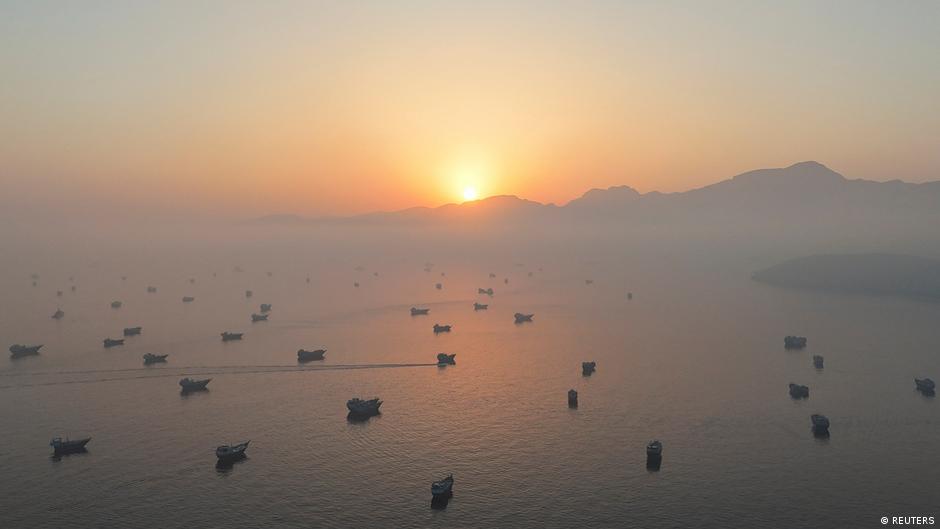
A U.S. Air Force fighter jet disabled a commercial cargo vessel in the Gulf of Oman on October 10, according to U.S. Central Command, escalating a maritime crisis that is already affecting energy costs, shipping routes and the operating environment for technology startups with exposure to global supply chains.
CENTCOM said the Panama-flagged M/V Ocean Molica, also known as the Arika Sun, had previously departed an Iranian port and allegedly ignored repeated warnings before attempting to break an active U.S. maritime blockade against Iran. The aircraft used a precision munition to strike the stern of the vessel, fully disabling its propulsion system, the command said. No crew members were injured.
Crews have been advised to heed blockade warnings.
The incident comes as the Strait of Hormuz and the Gulf of Oman remain central chokepoints for global trade, energy flows and hardware supply chains. For venture-backed companies, especially those building in robotics, advanced manufacturing, climate tech, semiconductors, mobility and defense-adjacent logistics, the disruption risk extends beyond headline geopolitics. Higher fuel prices, longer shipping times and insurance uncertainty can rapidly affect burn rates, customer delivery timelines and working-capital needs.
Maritime Risk Becomes a Startup Cost
CENTCOM said U.S. forces resumed the blockade on July 14 against all vessels traveling to or from Iranian ports. Over the following three months, the command said four commercial vessels had been disabled and 135 vessels had been forced to turn around and change course. During the same period, U.S. forces also destroyed 10 tankers linked to what was described as the shadow network of Iran's Islamic Revolutionary Guard Corps.
Those numbers are likely to draw attention from investors tracking the resilience of portfolio companies that depend on physical goods, imported components or cross-border fulfillment. Software-only startups may face indirect exposure through cloud infrastructure costs, customer budgets or macroeconomic sentiment. But hardware and industrial startups are more directly vulnerable: delayed parts, higher freight costs and rising fuel prices can turn a strong order book into a cash-flow problem.
The latest U.S. strike was not reported to have caused casualties, but its operational message was clear: vessels attempting to bypass blockade restrictions risk being forcibly stopped. That creates a more uncertain environment for shipping operators and for the companies that depend on predictable ocean freight. Even startups that do not ship through the Gulf may face secondary effects if carriers reroute capacity, adjust premiums or increase surcharges across broader lanes.
Meanwhile, the United Kingdom Maritime Trade Operations organization reported that a tanker in the Strait of Hormuz had again come under fire. According to the captain, the vessel was hit on its port side by an unknown projectile, causing a fire. UKMTO said the crew was safe.
The renewed tanker attack underscores how quickly a regional security crisis can become a commercial risk for founders and investors. The Strait of Hormuz is a critical passage for energy transport, and instability there can feed directly into fuel-price volatility. For startups, fuel-price spikes can raise the cost of logistics, employee travel, data-center operations and manufacturing inputs, depending on sector and geography.
VCs Reassess Exposure to Energy and Logistics Shocks
The conflict is also intersecting with politics in Washington. On October 2, G7 leaders condemned Iran's continuing attacks on neighboring countries, as well as actions they said disrupted international trade, energy security and the global economy. The group called for the immediate and full restoration of navigation rights and principles in the Strait of Hormuz and said it intended to strengthen collective efforts to achieve that goal.
Fuel prices have risen sharply again in recent weeks amid the war with Iran, increasing pressure on Republicans roughly a month before the U.S. congressional midterm elections. Recent polls cited in the source article show their popularity among voters has declined.
For the venture market, the political dimension matters because energy inflation and geopolitical instability can influence interest-rate expectations, public-market valuations and the appetite for risk assets. If investors become more cautious, fundraising timelines may lengthen, valuations may compress and late-stage companies may face greater pressure to show capital efficiency. Startups with exposure to defense, maritime intelligence, energy resilience, supply-chain visibility and autonomous logistics, however, may see a different dynamic: demand for their products could rise as governments and enterprises look for tools to manage disruption.
That split is already familiar to many venture investors. Geopolitical stress can weaken broad market sentiment while creating demand in specific categories. Companies offering satellite monitoring, maritime tracking, predictive logistics, cybersecurity for port infrastructure, alternative fuel systems and energy-risk analytics may find themselves closer to enterprise and government priorities. At the same time, startups dependent on imported hardware or low-margin delivery networks may face higher costs without an easy way to pass them on to customers.
The disabled M/V Ocean Molica is therefore more than a single maritime incident. It is part of a broader risk environment in which military enforcement, tanker attacks, energy security and global commerce are converging. For founders, the immediate question is operational: whether their supply chains, customer contracts and cash reserves can absorb higher volatility. For venture capital firms, the question is strategic: which startups are exposed to the shock, and which are positioned to solve it.
As CENTCOM continues to enforce the blockade and maritime authorities report attacks in the Strait of Hormuz, the innovation ecosystem will be watching for second-order effects. In a market already sensitive to capital costs and geopolitical uncertainty, the Gulf crisis could become another test of whether startups can build resilience into business models that still depend, directly or indirectly, on the movement of goods and energy around the world.