German and Austrian Raids Highlight Sanctions Risk for Mobility Startups
Investigators say two businesspeople used third countries to send cars and trucks to Russia, underscoring compliance pressure across Europe’s mobility sector.
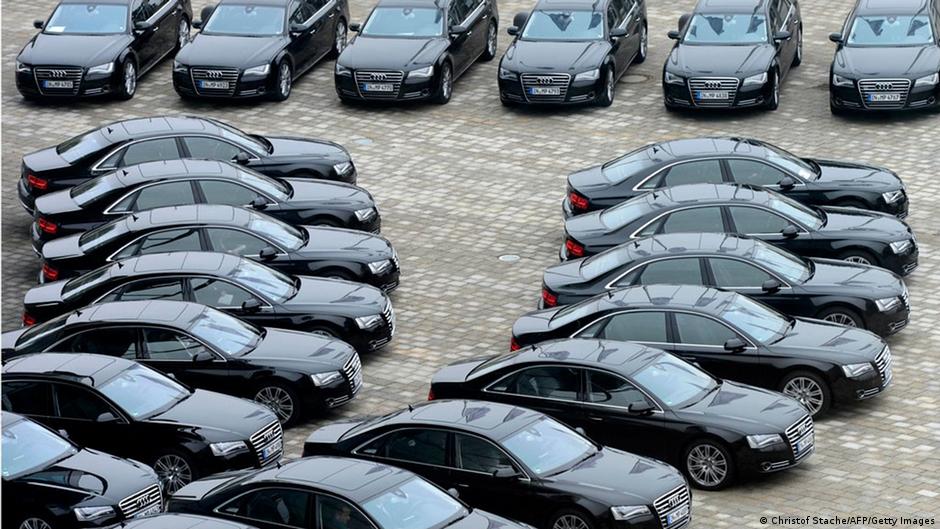
German and Austrian authorities have searched premises linked to two businesspeople suspected of exporting vehicles to Russia through third countries in violation of European Union sanctions, in a case that adds to the compliance risks facing mobility companies, dealers, logistics platforms and investors operating across European supply chains.
According to prosecutors in Kaiserslautern, the suspects are alleged to have exported 53 passenger cars and six semi-trailer tractors to Russia between autumn 2022 and the end of 2024 despite EU restrictions. Investigators believe the shipments were routed through intermediary countries, including Belarus, Kyrgyzstan and Georgia, in an attempt to conceal the final destination of the vehicles.
The searches took place on September 8 at residential and commercial premises in Neustadt an der Weinstrasse in the German state of Rhineland-Palatinate and in Vienna. The operation involved law enforcement authorities from Germany, Austria and Belgium. At the request of prosecutors, the Kaiserslautern district court authorized the seizure of assets worth about 7 million euros, described as the suspected proceeds from the illegal exports.
The case is centered on traditional automotive trade, but its implications extend into the broader innovation economy. European startups in automotive software, cross-border logistics, digital freight forwarding, compliance automation, fintech payments and vehicle marketplaces increasingly operate in the same fragmented trade corridors now under scrutiny. For venture-backed companies, the allegations illustrate how sanctions enforcement can move quickly from a legal issue into an operational, financing and reputational risk.
Asset Seizures Signal Higher Compliance Stakes
During the searches in Germany, authorities seized two cars, a Porsche and a Mercedes-Benz. In Austria, investigators seized 85,000 euros in cash. A further 278,000 euros was frozen in bank accounts in Germany, Austria and Belgium. Prosecutors also said three hunting rifles and ammunition were found at the Neustadt premises of one entrepreneur, prompting a separate investigation into a possible breach of weapons legislation.
Both suspects have so far exercised their right to remain silent, according to prosecutors. The investigation is continuing.
Prosecutors allege that third countries, including Belarus, Kyrgyzstan and Georgia, were used to conceal vehicle exports to Russia.
For investors, the asset freezes are a reminder that enforcement risk can affect not only direct exporters but also the networks that enable transactions. A marketplace startup, fleet financing company, logistics software provider or payments intermediary may not own the goods being shipped, yet it can still face due diligence questions if its systems facilitate cross-border sales involving restricted destinations, sanctioned counterparties or suspicious routing patterns.
That pressure is likely to strengthen demand for regulatory technology in Europe. Startups offering sanctions screening, beneficial ownership checks, customs data analytics, transaction monitoring and supply-chain visibility may find a larger market as enforcement agencies intensify scrutiny. At the same time, venture capital firms are likely to look more closely at how portfolio companies manage export-control exposure, especially in sectors connected to mobility, hardware, dual-use components and international commerce.
A Pattern of Automotive Sanctions Cases
The raids follow several other German cases involving vehicle exports to Russia. In March, a court in Wurzburg sentenced a car dealer from Bavaria to six years in prison for supplying 111 luxury cars to Russia in breach of sanctions. According to investigators in that case, the vehicles reached employees of the FSB, the Federal Protective Service, Rosneft and the Russian presidential administration.
In July 2025, an employee of a car dealership in Hesse received a five-year prison sentence for selling 71 luxury cars to Russia, also in circumvention of sanctions. The recurrence of such cases suggests that automotive trade remains a persistent enforcement target, particularly where premium vehicles, resale structures and cross-border intermediaries create room for obfuscation.
German prosecutors were reported in May 2025 to be investigating more than 40 cases connected to deliveries of expensive cars to Russia. Media reports described a wider effort by German justice authorities to pursue dishonest car dealers, while experts cautioned that only a small share of shadow deliveries was being intercepted.
The scale of the problem extends beyond Europe’s dealer networks. In February, Reuters reported that tens of thousands of cars, including German luxury vehicles, were being exported to Russia in circumvention of sanctions through China. Some of the vehicles are produced in China by foreign companies, while others are imported into China from abroad. New cars are reportedly registered as used vehicles, allowing sellers to avoid obtaining manufacturer authorization for sales to Russia.
For the European startup ecosystem, the lesson is not limited to luxury cars. Venture-backed companies often grow by expanding quickly across jurisdictions, automating onboarding and relying on third-party vendors for logistics, documentation or payments. Those same features can become liabilities if compliance controls are too thin. Investors conducting due diligence on mobility and trade-tech startups may increasingly ask whether companies can detect re-export risk, identify unusual routing through intermediary countries and document decisions when transactions are blocked or escalated.
The investigation also lands at a moment when automotive innovation is becoming more global and more software-driven. Connected vehicles, fleet management platforms, procurement tools and financing products all create data trails that may help companies prove compliance, but they also expose gaps when counterparties use opaque structures. Startups that can translate fragmented customs, banking and logistics data into actionable risk signals may see opportunity as enforcement tightens.
For founders, the case underscores a practical reality: sanctions compliance is no longer only a concern for large industrial exporters. Any company touching vehicles, logistics, financing, marketplaces or international payments may be asked to show that it understands where goods are going and who ultimately benefits. In the current funding environment, that capability can affect customer trust, investor confidence and the viability of cross-border expansion.