Zelensky Says North Korea Plans to Send 10,000 More Troops to Russia
The Ukrainian president’s warning adds pressure on governments and defense-tech startups tracking the war’s widening manpower and technology flows.
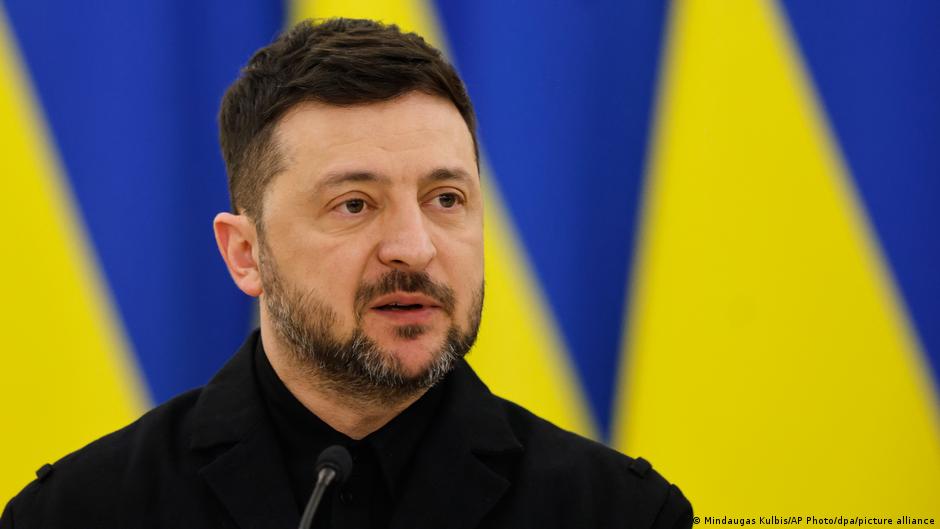
Ukrainian President Volodymyr Zelensky said North Korea is preparing to transfer roughly 10,000 additional military personnel to Russia, citing new intelligence from Ukraine’s military intelligence agency. The claim, delivered in his evening address on Monday, September 28, adds another geopolitical risk signal for investors, defense-technology startups and companies exposed to the wider security economy around the war in Ukraine.
According to Zelensky, more than 8,000 North Korean soldiers are already on Russian territory. He said the new group is now being selected for training and subsequent deployment to Russia. The Ukrainian leader framed the alleged plan as part of a broader Russian effort to expand the recruitment of foreign nationals for the war against Ukraine.
“It is important that the governments of the countries from which Russia draws people into its army counteract this. We will inform every government,” Zelensky said.
The statement comes as the war continues to reshape defense procurement, dual-use innovation and investor attention across Europe, Asia and the United States. Venture-backed companies building drones, battlefield software, satellite analytics, electronic warfare tools, cybersecurity systems and logistics platforms have already been pulled closer to government customers. Any indication that Russia is increasing foreign manpower, particularly through a state actor such as North Korea, adds to the urgency around technologies designed to monitor troop movements, verify intelligence and support rapid battlefield adaptation.
War Manpower Becomes a Technology and Capital Question
Zelensky’s comments did not include operational details about where the additional North Korean personnel might be trained or deployed. But his remarks pointed to what Kyiv views as an expanding personnel pipeline. He said Russian authorities “plan to increase” the hiring of foreigners for participation in the war against Ukraine.
For the startup ecosystem, the significance is not only military. The conflict has become a live testing environment for technologies that once sat on the edge of traditional venture capital interest. Founders working in autonomy, geospatial intelligence, secure communications and artificial intelligence for defense increasingly pitch products against a backdrop of rapid escalation and shifting alliances. Claims of a larger North Korean role could reinforce demand for tools that help governments identify cross-border deployments, track equipment flows and respond to new battlefield patterns.
South Korean intelligence has estimated that North Korea has already sent about 15,000 military personnel to support Russia in the war. In return, Pyongyang is believed to receive money, military technologies and security guarantees from Moscow. In August, Zelensky said North Korea intended to station between 30,000 and 50,000 fighters on Russian territory.
Those figures, if borne out, would deepen the strategic implications for technology transfer. For investors and acquirers in the defense sector, the reported exchange between Moscow and Pyongyang highlights a key M&A theme: the value of companies that can detect, attribute and disrupt the movement of sensitive military technology. It also underscores why governments may continue to back national-security startups, not only through procurement contracts but also through grant programs, sovereign funds and strategic investment vehicles.
Kyiv and Seoul Clash Over Captured Soldiers
Zelensky’s latest statement also landed during a diplomatic dispute between Kyiv and Seoul. The conflict between the two governments erupted several days earlier after South Korean President Lee Jae Myung sharply criticized Ukrainian authorities. Lee said Zelensky had “violated a confidentiality agreement” by publicly reporting the transfer to Seoul of two North Korean soldiers captured during fighting by Ukraine’s armed forces in Russia’s Kursk region.
Zelensky’s office responded that no nondisclosure agreement existed between the countries regarding that information. Seoul called that claim false. On September 28, South Korea’s foreign ministry summoned Ukraine’s acting ambassador. According to Yonhap, South Korea’s deputy foreign minister conveyed Seoul’s “stern position” to the Ukrainian diplomat.
The episode illustrates a challenge for governments and companies operating in the defense-innovation market: intelligence is valuable, but disclosure can strain partnerships. Startups selling intelligence, surveillance and reconnaissance capabilities often depend on close alignment with state customers. At the same time, governments must decide how much information to make public in order to shape international pressure, deter adversaries or explain procurement decisions.
For venture-backed companies, that tension can affect sales cycles, export controls and due diligence. A startup that handles sensitive defense data may face stricter compliance reviews, while investors may need to assess whether a company’s technology could become entangled in diplomatic disputes. The Kyiv-Seoul disagreement shows how even battlefield information about captured soldiers can become politically sensitive when it intersects with intelligence-sharing relationships.
The North Korean troop issue also has implications for the broader innovation ecosystem in Asia. South Korea is home to advanced semiconductor, robotics, battery and defense-industrial capabilities, and its strategic posture is closely watched by global investors. Any public dispute with Ukraine over North Korean combat involvement may shape how Seoul calibrates security cooperation, information sharing and support for technologies relevant to the war.
For now, Zelensky’s message is aimed at governments whose citizens or forces may be recruited or transferred into Russia’s war effort. But the downstream effects reach well beyond diplomacy. Defense founders, venture firms and strategic buyers are increasingly evaluating the war as a long-duration conflict in which manpower, technology transfer and intelligence disclosure are linked. The latest Ukrainian claim about North Korean troop plans adds another data point to that assessment.