New York Mayor Mamdani Unveils $29 Million Plan to Counter Antisemitism
The city’s expanded hate-crime strategy could affect startups, investors and nonprofits operating across New York’s civic-tech and security ecosystem.
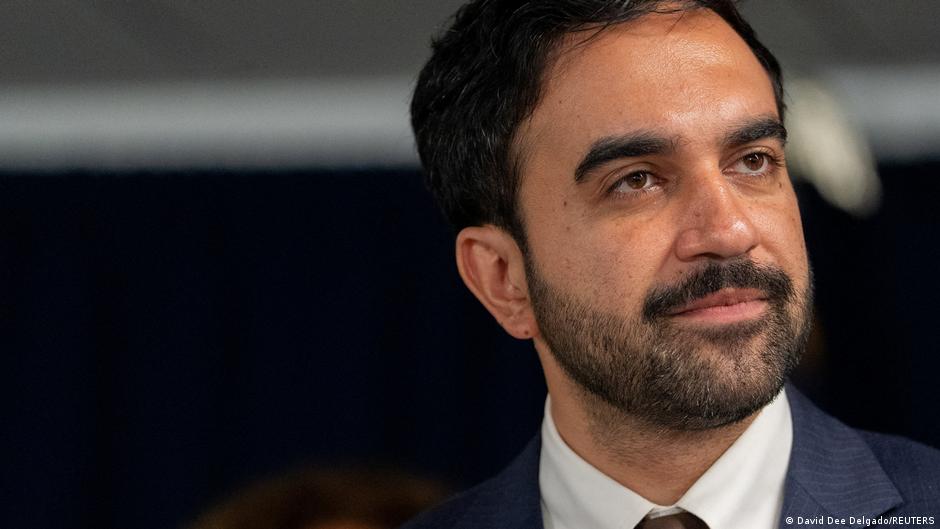
New York Mayor Zohran Mamdani on Tuesday, September 29, presented a comprehensive city strategy to counter antisemitism and hate crimes targeting Jews, a plan that sharply expands municipal spending and places new emphasis on security, education and community institutions. The initiative raises the annual budget for combating hate crimes from $3 million to $29 million, while directing additional resources toward synagogue security and restoring a working group focused on the safety of Jewish houses of worship.
For New York’s technology and venture ecosystem, the plan is not only a civic and public-safety measure. It also lands in a city where startups, nonprofit organizations, cultural institutions and private capital increasingly intersect with municipal priorities around security, education, data infrastructure and community resilience. The strategy could shape demand for security technology, educational platforms, civic-tech services and nonprofit partnerships, particularly for companies and founders working with city agencies or community organizations.
Mamdani, who is known as a critic of Israel, framed the initiative as a citywide obligation. In a video address published on X, he cited police statistics showing that antisemitic crimes account for more than half of all registered hate crimes in New York, even though Jewish residents make up 12 percent of the city’s population.
“This is not only unacceptable, it is something we are obliged to change, and city authorities will take the leading role,” Mamdani said.
Public Spending Meets the Civic-Tech Market
The increase from $3 million to $29 million marks a significant expansion of New York’s public commitment to countering hate crimes. While the plan is centered on Jewish community safety and antisemitism prevention, its implementation may create a broader operating environment for startups that provide security systems, reporting tools, emergency communications, risk assessment, community education and public-sector analytics.
The city intends to allocate additional funding for the protection of synagogues, a category that could involve physical security, monitoring infrastructure, training and coordination between religious institutions and municipal agencies. For venture-backed startups in security technology, this kind of public-sector focus can influence procurement priorities, even when individual contracts or vendor opportunities are not specified in the plan.
The restoration of a working group on the security of Jewish houses of worship also points to a more structured interface between government and community institutions. Such bodies can become important forums for identifying operational gaps, from threat reporting and incident response to communications systems and staff training. In a city with a dense network of nonprofits, cultural centers and religious organizations, the resulting needs often extend beyond traditional security services into software, logistics and data management.
The strategy also includes citywide public information campaigns against antisemitism and an expansion of educational programs about the Holocaust. That element may be relevant to education technology companies, digital content providers and nonprofit innovation groups that work on curriculum, public awareness campaigns or community engagement. The source plan does not name specific vendors or platforms, but the policy direction indicates that education and communications will be part of the city’s response, alongside policing and facility security.
Funding for Cultural Institutions and Nonprofits
Millions of dollars are planned for Jewish cultural centers and nonprofit organizations, including a Holocaust memorial being created in Queens and a new Jewish culture center in Brooklyn. These commitments may strengthen parts of New York’s nonprofit and cultural infrastructure at a time when civic institutions increasingly rely on technology for fundraising, programming, security, visitor management and public engagement.
For investors focused on social impact, urban innovation or public-sector technology, the plan highlights a recurring feature of New York’s market: municipal policy can quickly redirect attention toward specific community needs. Startups that serve nonprofits and cultural institutions may find that demand is shaped as much by public safety and trust as by growth metrics or consumer adoption. At the same time, companies working in sensitive areas such as surveillance, identity tools or risk scoring will face heightened scrutiny over privacy, civil liberties and community consent.
The political context is unusually sensitive. Mamdani is the first Muslim mayor of New York and is known for his pro-Palestinian position and criticism of Israel. Those views have drawn opposition from some members of the city’s Jewish community, although he also has supporters among New York Jews. The new strategy therefore arrives in a complex civic environment, where public policy, community trust and international politics are closely intertwined.
Israeli Prime Minister Benjamin Netanyahu, speaking at the United Nations General Assembly in New York, called the mayor an antisemite. During the 2026 election campaign, Mamdani said that if Netanyahu visited New York, he would seek his arrest on the basis of a warrant issued by the International Criminal Court in 2024. After taking office as mayor, however, Mamdani acknowledged that he did not have the authority to do so.
For founders and venture investors, that political backdrop matters because public-sector and nonprofit markets depend heavily on legitimacy and trust. Companies seeking to work with city agencies or community groups on antisemitism, hate-crime prevention or educational initiatives will need to navigate not only procurement processes, but also public sensitivities around civil rights, religious identity and foreign policy. In New York, where capital, media attention and civic institutions are tightly connected, reputational risk can be as material as technical execution.
The plan’s practical impact will depend on how the $29 million budget is allocated, which agencies administer the funds and how the city defines measurable outcomes. The source article does not provide those implementation details. Still, the scale of the increase signals that antisemitism and hate-crime prevention will be a larger municipal priority, with potential spillover effects for startups and nonprofits working at the intersection of public safety, education and community infrastructure.
For VentureLine’s readership, the key takeaway is that New York’s response to antisemitism may become part of a broader innovation market shaped by civic urgency. The opportunity is not simply to sell technology into a public problem, but to build tools and partnerships that can withstand scrutiny from communities, regulators and investors alike.