Russia Closes Romanian Consulate in St. Petersburg Amid Diplomatic Fallout
Moscow responds to Bucharest’s closure of the Russian consulate in Constanța by shutting the Romanian consulate in St. Petersburg, escalating tensions impacting regional stability.
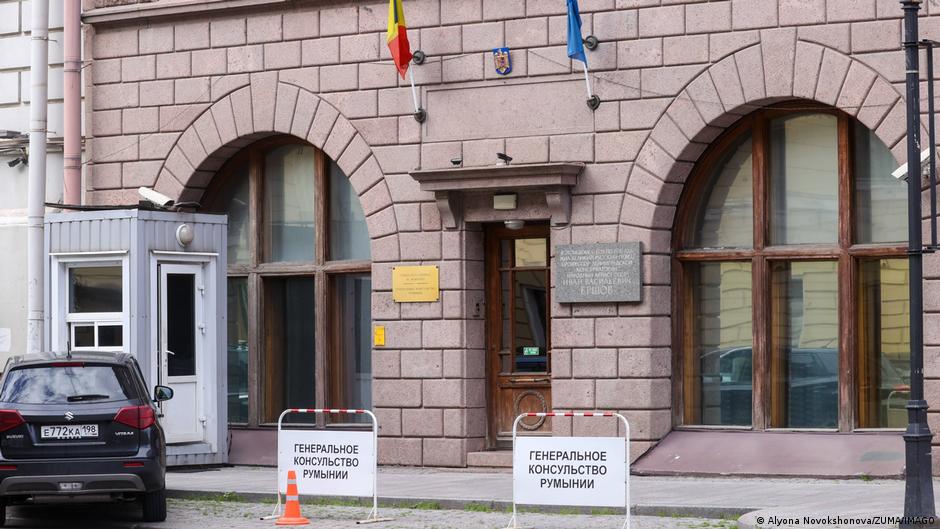
Russia has announced the closure of the Romanian consulate in St. Petersburg, declaring its acting consul general Laurentius Constantiniu persona non grata. This move is a direct response to Romania’s earlier decision to close the Russian consulate in Constanța and expel its consul general.
The Russian Ministry of Foreign Affairs conveyed this decision to Romania’s ambassador to Russia on June 25, framing it as a reciprocal action to Bucharest’s withdrawal of consent for the Russian consulate’s operation in Constanța.
Diplomatic Tensions Trigger Regional Security Concerns
The closure follows a significant incident in late May when a Russian drone reportedly crashed into a residential building in Galați, Romania, causing injuries and property damage. The Romanian government labeled the drone strike a violation of international law, prompting heightened NATO air defense measures in the region.
Specifically, on the night of May 29, a drone struck the roof of a multi-story apartment block in Galați, wounding a 14-year-old boy and a 53-year-old woman, and igniting a fire on the 10th floor. Romanian emergency services confirmed that the drone’s explosive payload detonated entirely, resulting in injuries and the evacuation of approximately 70 residents.
"The measure taken by Russia represents a response to Romania’s unjustified revocation of consent for the Russian consulate in Constanța," stated the Russian foreign ministry.
Following the drone incident, Romania called on NATO to bolster its air defense capabilities, highlighting the unprecedented nature of an attack originating from a drone used by Russia in its conflict with Ukraine impacting a NATO member’s civilian territory.
Romanian President Klaus Iohannis took the decision to close the Russian consulate in Constanța and declare its consul persona non grata as a firm diplomatic rebuke.
In response, Russia’s declaration against the Romanian consulate general in St. Petersburg was described by Romanian officials as an expected escalation, reflecting the tit-for-tat diplomatic environment.
Implications for Tech Startups and Venture Ecosystems
While these diplomatic developments primarily concern geopolitical and security issues, they also have subtle yet meaningful implications for the regional innovation ecosystem. The escalating tensions between Russia and Romania may indirectly affect cross-border technology collaboration, venture capital flows, and startup ecosystems that often rely on stable international relations.
Romania’s growing tech startup scene, with increasing interest from international investors, could face challenges in partnerships involving Russia-based entities, particularly in domains such as cybersecurity, defense tech, and dual-use technologies impacted by restrictions stemming from diplomatic rifts.
Similarly, Russian startups targeting expansion in Eastern Europe or seeking Romanian venture capital partnerships might encounter increased barriers, as political risks elevate due to the deteriorating relations.
These developments underscore the broader reality that geopolitical tensions can ripple through innovation networks, complicating deal-making, collaboration, and market access for emerging tech companies in the region.