Trump Proposes US-Hosted FIFA World Cup Without Canada and Mexico, Eyes China Partnership
Former US President Donald Trump suggests hosting a future FIFA World Cup solely in the US alongside China, signaling potential shifts in international sports event hosting dynamics.
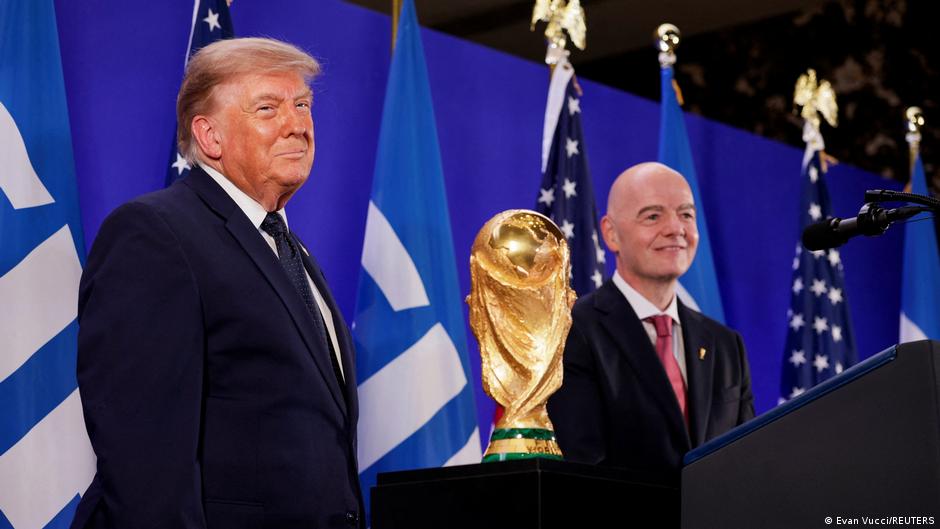
Former President Donald Trump has put forward a proposal to host another FIFA World Cup in the United States, this time excluding Canada and Mexico as co-hosts. Additionally, he suggested China as a potential partner for the tournament, marking a notable shift in the organization of one of the world's largest sporting events.
Shaping Future World Cups: US and China Collaboration
Speaking at a press conference in New York, Trump emphasized that the next World Cup should be held again in the US without including its 2026 co-hosts, Canada and Mexico. “Last time, I was very generous allowing them to join. This time, let's do it without them and choose ourselves, and next time invite someone else,” Trump declared.
Trump also highlighted that FIFA President Gianni Infantino endorsed the idea, proposing a joint hosting arrangement between the US and China. According to Trump, such a setup would benefit players with shorter flight times between matches, potentially enhancing logistical efficiency and player performance.
Infantino, present alongside Trump, praised the 2026 World Cup, calling it "the greatest World Cup of all time." He credited Trump’s involvement as instrumental in the tournament’s success, remarking, “Without you, this World Cup wouldn’t have been such an incredible success.” Trump returned the compliment, calling the event "the most successful sporting event, possibly in the history of mankind," and noted a growing enthusiasm for soccer in the US, contrary to previous assumptions that the country was not a football nation.
Implications for Sports, Innovation, and Investment
Trump’s proposal signals potential shifts in the global sports hosting landscape, which could influence related sectors including technology startups, venture capital, and the broader innovation ecosystem tied to major sporting events.
“I thought we were not a soccer country. It turned out we are, and I think that will continue.”
Hosting the World Cup typically stimulates investments in sports technology, infrastructure, and services, providing startups with opportunities to innovate in fan engagement, broadcasting, and stadium experience enhancements. A US-China joint hosting could also open avenues for cross-border technology partnerships and venture capital flows, particularly in sports tech, data analytics, and digital media.
Moreover, such mega-events drive mergers and acquisitions in the tech and entertainment sectors as companies seek to capitalize on increased global attention and demand. The exclusion of Canada and Mexico could lead to reallocation of investment focus and potentially new partnerships in North America and Asia.
Looking ahead, the 2030 World Cup is set to be hosted across Morocco, Portugal, Spain, and South America, while Saudi Arabia will host in 2034. The next opportunity for the US to bid as a sole or joint host is 2038, making Trump’s initiative an early move to influence future tournament arrangements and the accompanying business landscape.
Broader Sports Diplomacy and US Influence
Trump also expressed gratitude towards Infantino for his decision to lift the suspension of US player Folarin Balogun, a move that had drawn significant international attention. The former president’s personal attendance at the 2026 World Cup final at the MetLife Stadium in New Jersey, where Argentina and Spain will face off, underscores the political and cultural significance of the event.
As global sports events increasingly intersect with geopolitics and business strategies, Trump’s proposals reflect an attempt to leverage the World Cup as a platform for US leadership in sports and associated innovation sectors.