Lower Saxony Runoffs Signal Stable City Leadership for Germany’s Startup Hubs
Green and mainstream-party victories in key Lower Saxony cities offer continuity for founders, investors and regional innovation policy.
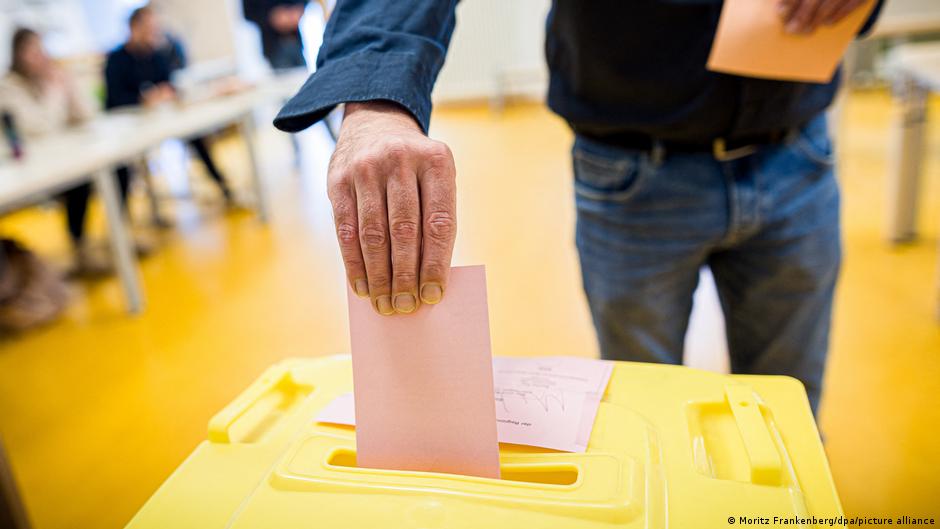
Municipal runoff elections in Lower Saxony delivered a setback for the far-right Alternative for Germany and preserved mainstream leadership across several cities with relevance for Germany’s regional technology and startup economy. The votes, held on Sunday, September 27, covered 123 municipalities where residents chose mayors and other local leaders.
For venture capital investors, founders and corporate innovation teams, the results matter less as a national political barometer than as a signal about local operating conditions. Municipal governments shape zoning, digital administration, procurement, mobility planning, university links and business-development policy. In cities such as Hanover, Braunschweig, Osnabrück, Oldenburg and Göttingen, those decisions can influence how quickly startups access talent, pilot technologies and work with public-sector partners.
The AfD had candidates seeking three leadership posts, but lost in all three contests. In Salzgitter, a city of about 100,000 people, Christian Democratic Union incumbent Frank Klingebiel, who has served as lord mayor since 2006, won decisively with 74.72% of the vote. AfD candidate Patricia Mair received 25.3%.
In Munster, independent candidate Anna Adamczak won with 80.5%, defeating AfD candidate Christoph Weynand, who received 19.5%. In Bockenem, independent candidate Jens Lüer took 69.6%, while AfD contender Felix Mull received 30.4%.
For companies assessing Germany’s regional markets, the runoff results point to continuity rather than political disruption in several important municipalities.
Green Wins Strengthen Urban Innovation Agenda
The most closely watched city result came in Hanover, Lower Saxony’s administrative capital and largest city. Belit Onay of Alliance 90/The Greens retained the mayoralty, a post he has held since 2019, defeating Axel von der Ohe of the Social Democratic Party in the second round.
For the startup and venture ecosystem, Hanover’s result is notable because regional capitals often act as conveners for universities, corporates, public agencies and early-stage companies. Local policy choices around sustainability, transport, permitting and digital services can create demand for climate-tech, govtech, urban mobility and enterprise software startups. Onay’s reelection keeps the city under Green leadership at a time when many European investors are tracking municipal demand for climate and infrastructure innovation.
The Greens also scored victories in other major Lower Saxony cities. In Oldenburg, the state’s third-largest city, Green candidate Jascha Rohr was elected as the new mayor, defeating Ulf Prange of the SPD. Prange had run for the party in place of Jürgen Krogmann, who had served as lord mayor since November 2014. In Göttingen, the fifth-largest city in Lower Saxony and a university center, Green candidate Onyeka Oshionwu defeated Ehsan Kangarani of the CDU in the second round.
Göttingen’s result may be especially relevant to founders and investors watching science-based company formation. University cities often supply research talent, spinouts and technical labor, while municipal leadership can affect the ease of building partnerships between academic institutions, city agencies and private capital. The source results do not specify startup programs or new funding measures, but the political continuity and Green gains provide a clearer backdrop for companies working in sustainability, education, health and research-linked sectors.
Mainstream Parties Hold Other Key Cities
In Braunschweig, Lower Saxony’s second-largest city, SPD incumbent Thorsten Kornblum retained the lord mayor’s office after the runoff. Kornblum, who has led the city since November 2021, defeated CDU candidate Maximilian Pohler. Braunschweig’s continued SPD leadership may provide continuity for local business and research networks as investors weigh the region’s industrial and technology base.
In Osnabrück, the fourth-largest city in the state, CDU incumbent Katharina Pötter held her post after defeating Volker Bajus of the Greens. Pötter has also led the city since November 2021. The result preserves CDU leadership in a city where municipal stability may be relevant for employers, service providers and startups dependent on predictable local administration.
The broader first round of Lower Saxony’s municipal elections took place on September 13. According to data available on September 14, the CDU received the largest share of votes, with 27.2% backing the party led nationally by German Chancellor Friedrich Merz. The SPD placed second with 24.6%, followed by the AfD with 15.9%. The Greens received 14.1%, and the Left Party received 6%.
Turnout was 64.6%, according to the electoral commission’s September 14 data. That was 7.6 percentage points higher than in the 2021 state elections, suggesting elevated voter engagement at a level of government that can have direct consequences for business formation, local infrastructure and investment conditions.
The election also unfolded against scrutiny of the AfD in Lower Saxony. Four AfD candidates were denied admission to the ballot because of doubts about their commitment to Germany’s constitutional order. The AfD’s state organization is under observation by the Office for the Protection of the Constitution as a right-wing extremist grouping. The party is challenging that decision in court.
For venture investors, the immediate takeaway is that Lower Saxony’s largest and most economically relevant cities remain in the hands of Greens, Social Democrats, Christian Democrats and independents rather than the AfD. That does not itself guarantee a more favorable funding climate or startup policy. But it reduces uncertainty around abrupt political shifts in municipal governance and keeps local decision-making largely aligned with established parties that already manage relationships with business groups, universities and regional development institutions.
In a European funding environment where late-stage capital remains selective and investors are scrutinizing political risk more carefully, local election outcomes can shape perceptions of where startups can scale pilots, recruit talent and engage public buyers. Lower Saxony’s runoff results therefore carry implications beyond city hall: they help define the regional environment in which founders, venture funds and strategic acquirers will make their next decisions.