Fire Reported at Ryazan Plant Hosting Yandex Data Center, Astra Says
The incident spotlights infrastructure risk for cloud platforms and tech companies operating around industrial sites tied to strategic supply chains.
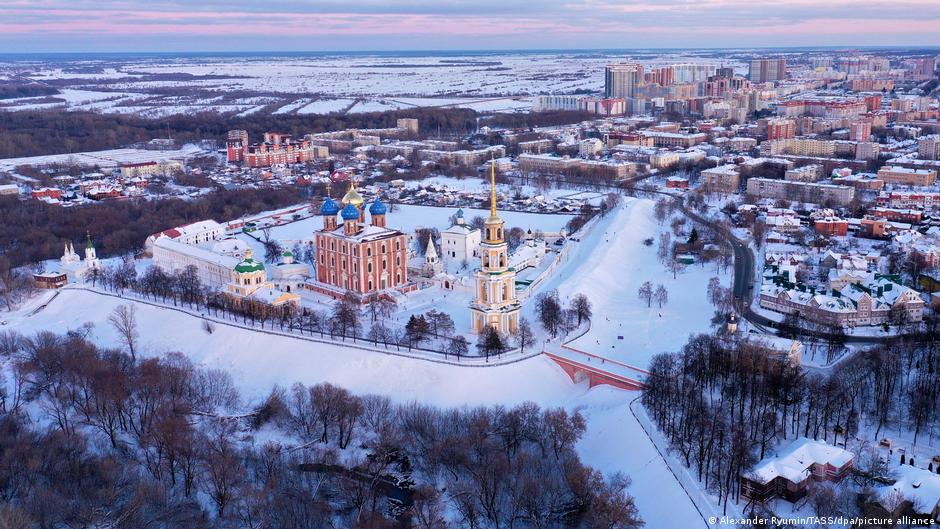
A fire broke out in Sasovo, in Russia's Ryazan region, on the grounds of the Sasta plant, where a Yandex DC data center is located, according to the Russian outlet Astra. The enterprise manufactures CNC metalworking machines, a category of industrial equipment used across sectors that depend on precision manufacturing.
Astra said its conclusion was based on open-source intelligence analysis. The outlet reported in a Telegram post published overnight on Thursday, October 8, that the fire began on the territory of the Sasta machine-tool plant, which also hosts the data center of Yandex DC LLC. Astra added that employees of the data center had shown its equipment last month and directly stated that it was located in Sasovo, in the Ryazan region.
“Last month, the data center employees themselves showed its equipment and directly stated that it is located in Sasovo, Ryazan region,” Astra wrote.
For Russia's technology market, the reported location of the fire is significant because Yandex Cloud is one of the country's most important cloud infrastructure providers. Even limited disruption at a data center site can matter to startups and software companies that rely on cloud services for hosting, compute, storage, analytics and customer-facing applications. Astra later drew attention to a report of power supply interruptions in a separate availability zone of the Yandex Cloud platform. According to the article, 40 minutes after those issues appeared, the Yandex Cloud team said the situation had stabilized.
Cloud Reliability and Startup Exposure
The episode highlights a familiar vulnerability for venture-backed technology companies: infrastructure risk is often concentrated in facilities that users never see. Startups build products on top of cloud platforms because doing so allows them to scale quickly without purchasing and managing their own server fleets. That model is central to modern venture capital, where rapid product deployment and fast iteration are core assumptions in company-building.
But cloud dependence also means that operational problems at a single availability zone, power system or data center campus can cascade into product outages, delayed customer deployments or missed service-level commitments. In this case, the source article does not state that startups were affected, nor does it provide details on the duration or scope of any customer disruption beyond the reported power interruption and subsequent stabilization notice. Still, the reference to a Yandex Cloud availability zone is relevant to the broader innovation ecosystem because cloud continuity is a key input for software companies, artificial intelligence workloads, digital services and enterprise platforms.
For venture capital investors, infrastructure resilience has become part of technical due diligence. Investors evaluating cloud-native startups increasingly ask how companies handle regional outages, failover, data replication and vendor concentration. A company that relies heavily on one provider, one region or one availability zone may face higher operational risk than a peer with a more diversified architecture. The incident described by Astra may therefore be read less as a single-site fire story than as a reminder that startup scalability is only as strong as the underlying infrastructure stack.
Industrial Site Adds Strategic Context
Sasta, according to Astra, specializes in the production of CNC metalworking machines. The outlet reported that the plant's equipment is used in defense, aerospace, transport and heavy industry. Astra wrote that the company's significance for Russia's military-industrial complex lies not in the production of finished weapons but in supporting the production base, because its machines are needed to manufacture high-precision metal parts and assemblies.
That industrial context gives the reported fire a wider strategic dimension. Data centers are usually discussed as assets of the digital economy, while machine-tool plants belong to the world of advanced manufacturing. At the Sasovo site, according to Astra's account, those two spheres intersect: cloud infrastructure associated with Yandex sits on the territory of an enterprise linked by the outlet to precision industrial production.
Astra also noted that the Sasta enterprise is under sanctions imposed by Canada, Switzerland, the European Union, the United Kingdom, Australia, New Zealand and Japan. The source article does not say that the reported fire was connected to sanctions, nor does it identify a cause. However, the sanctions context matters for technology and investment readers because it shapes the operating environment for companies that provide infrastructure, industrial capacity or digital services in Russia.
For startups, sanctions regimes and infrastructure location can affect access to suppliers, hardware, capital, insurance, cloud procurement and international partnerships. For investors, they can influence whether a company is viewed as financeable, acquirable or able to expand across borders. In markets affected by geopolitical restrictions, even technically strong startups can face complications in M&A, strategic partnerships and exit planning if their infrastructure or customers are exposed to sanctioned entities or sensitive industrial supply chains.
Data Centers in the Conflict Environment
The article also placed the Ryazan incident against a broader backdrop of attacks on data infrastructure during the Russia-Ukraine war. It recalled that on the evening of September 25, Russian forces began striking infrastructure belonging to the Ukrainian telecommunications operator Cosmonova, including a data center. As a result, the article said, disruptions to internet and television services occurred in Kyiv.
On October 3, Ukrainian President Volodymyr Zelensky commented on strikes against Ukrainian data centers. He said such attacks concern people and are not military infrastructure, adding that communications services are used not only in Ukraine but also in Moscow.
“They are hitting data centers. All of this concerns people. This is definitely not some kind of military infrastructure,” Zelensky said, according to the source article.
That comparison underscores why data centers have become critical infrastructure for both civilian life and the technology economy. They support cloud computing, telecom services, media distribution, payment systems, business software and public communications. In venture ecosystems, they are the physical foundation beneath digital businesses that often appear asset-light on paper.
The reported fire at the Sasta site, combined with the briefly noted Yandex Cloud power disruption, is therefore a reminder that innovation economies are not purely virtual. Cloud platforms, AI services and startup applications depend on power, buildings, industrial logistics and geopolitical stability. For founders, the practical lesson is the importance of resilience planning. For venture investors, the issue is whether portfolio companies have mapped the infrastructure dependencies that could become material during outages, conflict-related disruptions or regulatory shocks.
The available source report does not provide casualty information, the cause of the fire, the extent of damage at the plant, or whether the Yandex DC facility itself was directly affected. It does, however, identify the site, describe the plant's industrial role, note its sanctions status, and connect the incident to a short-lived Yandex Cloud availability-zone power issue that the company later said had stabilized.