Kremlev Says Trump Jr. Repaid Wedding Costs as Democrats Eye Inquiry
The episode is drawing scrutiny over political access, private funding and reputational risk for business figures tied to global networks.
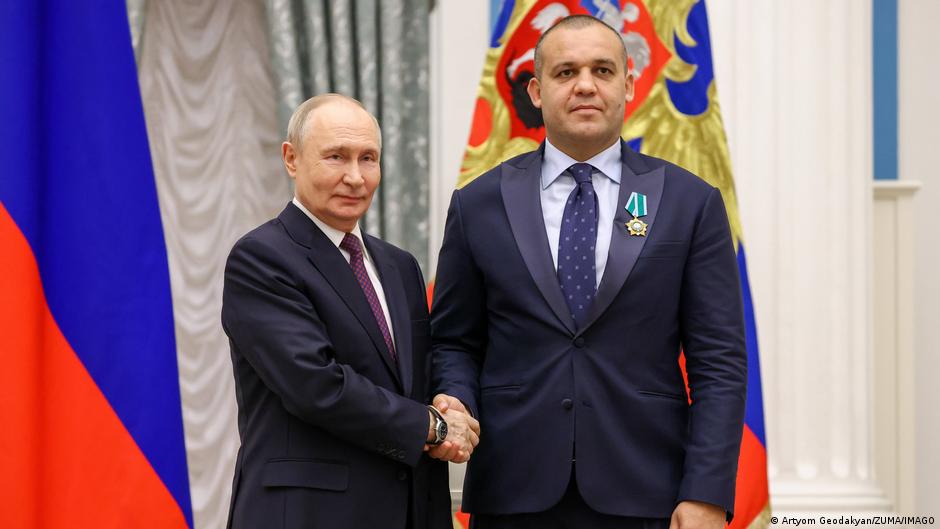
Russian entrepreneur Umar Kremlev said Donald Trump Jr. reimbursed him for money spent on part of Trump Jr.’s wedding celebrations, adding a new turn to a story that has drawn attention in Washington because of Kremlev’s proximity to Vladimir Putin and his position as head of the International Boxing Association.
Kremlev made the comments on Tuesday, October 6, at a press conference in Istanbul, according to the Russian state news agency TASS. The remarks followed earlier confirmation from U.S. President Donald Trump that his son had returned money to Kremlev.
For venture investors, technology founders and dealmakers, the episode is not about a startup transaction or a funding round. Its relevance lies in the broader operating environment for companies and investors navigating political exposure, cross-border relationships and the reputational risk attached to high-profile private networks. In an era when founders, funders and strategic backers often move through overlapping social, political and commercial circles, questions about who pays for access-adjacent events can quickly become matters of governance and due diligence.
“As far as whether he returned the expenses or not, yes, he returned them,” Kremlev said, according to TASS.
Kremlev said he had not attended the wedding itself and described the event as a shared gathering rather than a special gift. He also expressed confusion about why the funds had been returned.
“But honestly, I did not even understand what for, because it was a common event. It was not a special gift,” he said, according to the Russian agency. Kremlev compared the situation to inviting guests to a country house and then billing them afterward, calling the idea foolish. He said he has friendly relations with Donald Trump Jr. and had “never asked him or anyone else” to help him.
Political Scrutiny Creates Risk Around Private Networks
President Trump addressed the matter on September 18, telling reporters that, as he understood it, Trump Jr. had repaid the debt. He said he considered it a normal practice for a friend to pay for a wedding celebration and also regarded the involvement of a businessman close to Russian authorities in financing festivities for his son as acceptable.
The issue became public after ProPublica published an investigation on September 14 stating that Kremlev had paid part of the costs for wedding-related celebrations for Donald Trump Jr. in the Bahamas. Trump Sr. later told Axios that he had no idea who Umar was, had never heard of him, and that Kremlev had not paid for Don and Bettina’s wedding, which he said took place in a completely different place and on a different day than the party in question.
Trump Sr. described the event cited in the reporting as an after-party held in the couple’s honor. He said there was nothing wrong with it and that he had not attended the party.
Axios also reported that a senior Democratic member of the U.S. House Oversight Committee may investigate reports about Kremlev’s payment for Trump Jr.’s celebrations. Representative Robert Garcia of California sent a letter to White House Chief of Staff Susie Wiles saying Democrats on the committee were investigating multiple ways in which the Trump family had sought to enrich itself by using its proximity to the head of state.
Axios wrote at the time that if Democrats win control of the House of Representatives in the upcoming November 3 midterm elections, Garcia is likely to become the leading congressional investigator. The outlet said the inquiry offered a clear indication of the direction he would take in that role.
Why Investors Watch These Episodes
The case underscores a familiar challenge for venture capital and startup ecosystems: capital, influence and reputation do not move in separate lanes. High-growth companies often depend on investors, advisers, celebrity backers and international partners whose relationships can be as important as the money they provide. When political figures or politically connected businesspeople become part of a network, even through private social events, the reputational implications can spill into business contexts.
That matters for founders seeking funding, investors evaluating limited partner exposure, and companies considering mergers or strategic partnerships. A potential congressional investigation can turn a private reimbursement into a public governance question. It can also prompt counterparties to revisit disclosure standards, sanctions-screening practices, conflict-of-interest policies and internal rules for accepting hospitality or financial support from politically exposed individuals.
No startup or venture fund is named in the source reporting as a participant in the wedding-related events. Still, the episode fits a wider pattern that the innovation economy increasingly has to manage: global deal networks often include people with political visibility, regulatory exposure or connections to state power. In those circumstances, reputational diligence can become as important as financial diligence.
The facts now publicly stated are narrow. Kremlev says Trump Jr. repaid him. President Trump says he understands that his son returned the debt. ProPublica reported that Kremlev paid part of the cost of celebrations in the Bahamas. Trump Sr. denied knowing Kremlev and distinguished the party from the wedding itself. Democrats on the House Oversight Committee, according to Axios, may investigate the matter.
For the venture and technology sectors, the broader lesson is practical rather than partisan. The boundary between personal networks and business credibility is thin, especially when powerful families, foreign-linked business figures and congressional scrutiny converge. Startups and investors that operate internationally may read the story as another reminder that relationship risk can become headline risk quickly, even when the underlying event is social rather than commercial.