Foreign retailers in Russia face asset controls as startup risk rises
Temporary management of Western retail assets in Russia is sharpening investor concerns over market access, exits and strategic partnerships.
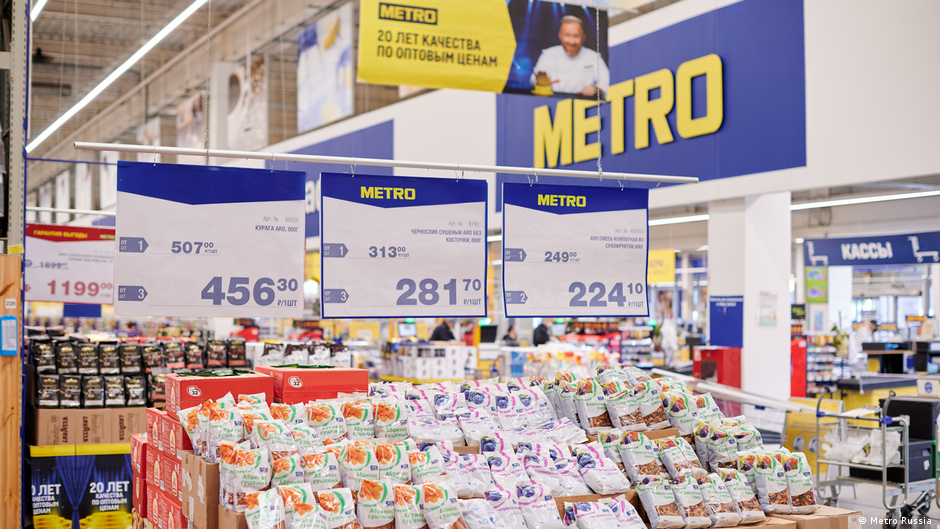
Foreign retail groups operating in Russia are facing a deepening loss of control over their local businesses, a development that carries consequences beyond the consumer sector and into the wider startup and venture capital ecosystem. According to the source article, temporary management has been introduced over the Russian assets of several foreign chains, including France's Auchan and Leroy Merlin, Germany's Metro and other companies. In some cases, owners have lost access to the assets they built or controlled in the market.
The immediate question raised by the situation is whether the Russian businesses of foreign retailers are moving toward nationalization. The source does not state that nationalization has occurred across the sector, but it describes a pattern in which foreign retail networks are being deprived, one after another, of the ability to manage their Russian assets. For investors, founders and strategic acquirers, that distinction matters: temporary administration may not be the same as formal nationalization, but it can have a similar chilling effect on capital allocation and corporate governance.
For venture-backed companies, retail infrastructure is more than a set of storefronts. Large retailers are potential enterprise customers, distribution partners, data sources, logistics anchors and exit counterparties. When ownership rights and operating control become uncertain, startups serving commerce, logistics, payments, procurement, advertising technology or supply-chain software must reassess contract risk. A startup that sells to a multinational retailer may find that the decision-maker, budget holder or legal counterparty changes with little notice.
Asset control becomes a venture risk signal
The cases named in the source article matter because Auchan, Leroy Merlin, Metro and Globus are associated with large-scale retail operations and complex supplier networks. Even without new financial details, the fact that temporary management has been imposed on assets linked to such companies sends a broader signal to investors: foreign ownership can become operationally vulnerable in Russia. That signal is especially important for VC funds that evaluate startups based on defensibility, customer concentration and exit optionality.
In standard venture analysis, political and regulatory risk often sits in the background unless a company is directly exposed to a sensitive sector. The developments described in the Russian retail market move that risk into the foreground. A startup whose revenue depends on Western retail groups in Russia may no longer be viewed simply as a commerce technology company; it may be priced as a business exposed to asset-control risk, payment disruption, governance uncertainty and potential changes in strategic direction.
Temporary management may not be formal nationalization, but for investors it can still change who effectively controls assets, contracts and future decisions.
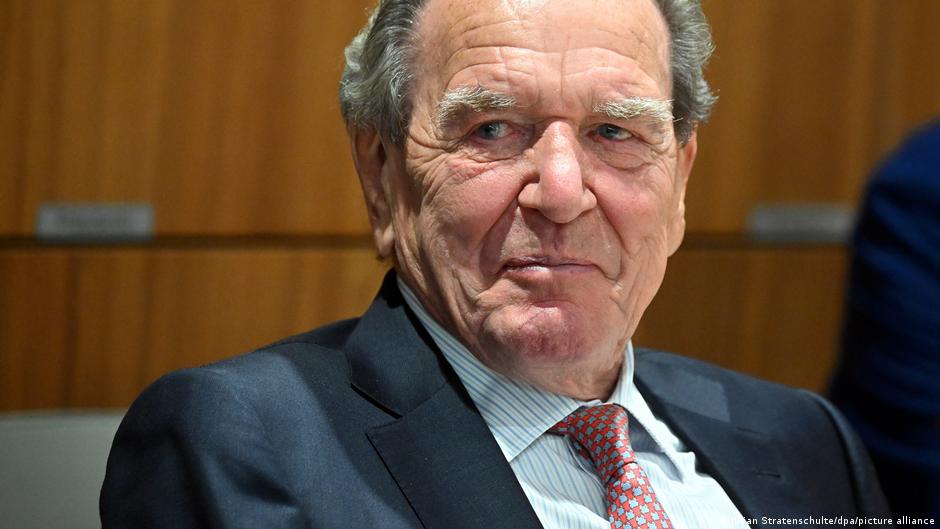
The source article also notes a notable governance development involving the former Russian subsidiary of the German holding company Globus. Former German chancellor Gerhard Schröder has joined the supervisory board of that former Russian subsidiary. The article frames this as part of a broader search for protectors or defenders by foreign-linked retail businesses operating in Russia. For the startup and VC community, the episode underlines how political relationships and reputational considerations can become intertwined with corporate survival strategies.
That is a challenging environment for founders. Startups generally seek scalable, repeatable sales channels and predictable counterparties. If major retailers are changing governance structures or being placed under temporary administration, young companies must spend more time on legal review, receivables management and contingency planning. That can slow product development and fundraising, particularly for firms whose go-to-market strategy depends on enterprise retail clients.
M&A and exit paths grow more complicated
The retail sector has historically been a route to strategic M&A for software, logistics and consumer technology startups. A large retailer may acquire a startup to strengthen e-commerce operations, automate warehouses, improve pricing tools or build loyalty platforms. But where asset control is uncertain, strategic M&A becomes harder to underwrite. Potential acquirers may lack authority, foreign parent companies may lack access, and local operators may face shifting mandates.
For VC funds, this affects portfolio construction. A Russian-market startup serving foreign retail chains could face a narrower set of exit options. A Western strategic buyer may hesitate to acquire assets connected to a market where foreign companies are losing management control. A local buyer may offer a different valuation framework. In either case, the path from startup growth to acquisition becomes less predictable.
The impact also extends to innovation ecosystems around retail. Large chains often support technology adoption through procurement, pilots and vendor ecosystems. If management is disrupted, pilot programs can stall. If owners lose access to assets, foreign-led innovation roadmaps may be replaced by local operational priorities. That shift can alter demand for software vendors, automation providers and data-driven retail tools.
None of this means that every startup connected to retail in Russia faces the same outcome. The source article is focused on foreign retailers and the measures affecting their assets. But the venture lesson is broader: when the operating environment changes for anchor customers, the companies around them must update their risk models. Startups selling into the sector may need to diversify customers, strengthen contract protections and reduce dependence on any single foreign-linked retail group.
For international investors, the developments described in the article reinforce the importance of jurisdictional risk in startup diligence. It is not enough to assess product-market fit or revenue growth in isolation. Investors must also ask who controls the customer, whether management authority could shift, and whether assets critical to the startup's revenue base remain accessible to their owners.
The situation around Metro, Globus, Auchan, Leroy Merlin and other foreign retailers therefore has implications well beyond conventional retail coverage. It is a case study in how asset-control measures can reshape the investment climate for technology companies serving traditional industries. For venture capital, the message is straightforward: when large commercial platforms lose control over their local assets, the startup ecosystem built around those platforms absorbs the shock.