Schröder’s Globus Russia Role Draws Fire as Geopolitical Risk Clouds Deals
German critics say the former chancellor’s post at Hyperglobus highlights how Russian exposure can reshape corporate strategy and investor risk.
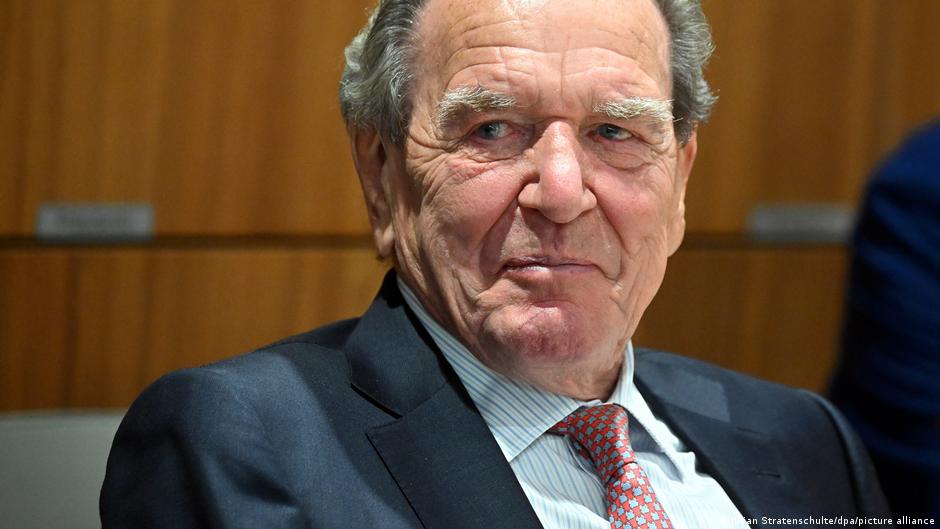
Former German chancellor Gerhard Schröder has taken a seat on the supervisory board of Hyperglobus, the Russian company that operates stores associated with the German hypermarket chain Globus. The appointment has triggered sharp criticism from German politicians and economists, who cast the move as another example of Schröder monetizing political access in Russia.
For venture investors, founders and corporate dealmakers watching cross-border exposure, the controversy is a reminder that governance choices in Russia can quickly become a broader reputational and strategic issue. While Hyperglobus is a retail operator rather than a technology startup, the debate around Schröder’s role touches the same questions now facing innovation ecosystems with links to sanctioned, contested or politically sensitive markets: who protects local assets, what relationships matter, and how much political risk investors should price into any transaction.
Roderich Kiesewetter, a Bundestag member and foreign policy expert for the governing Christian Democratic Union, commented on the news on Saturday evening, October 3. He called Schröder’s new post a “betrayal of Europe and his own country.” In a post on X, Kiesewetter wrote that anyone who publicly and demonstratively shakes Schröder’s hand is also seeking to signal a position.
“Schröder has a new lobbying assignment. In Russia. Where else?”
That remark came from Thomas Jäger, a professor of political science at the University of Cologne, who also posted on X. Jäger asked whether German President Frank-Walter Steinmeier had known about the appointment when he greeted Schröder a few days earlier, describing Schröder as the only one singled out in that way.
The handshake referenced by Kiesewetter and Jäger may have taken place during the ceremony marking the 75th anniversary of Germany’s Federal Constitutional Court, held on September 28 in Karlsruhe. Steinmeier attended the event, and when entering the hall he shook hands, including with Schröder, who was seated in the front row as an honorary guest.
Political Access as a Corporate Risk Tool
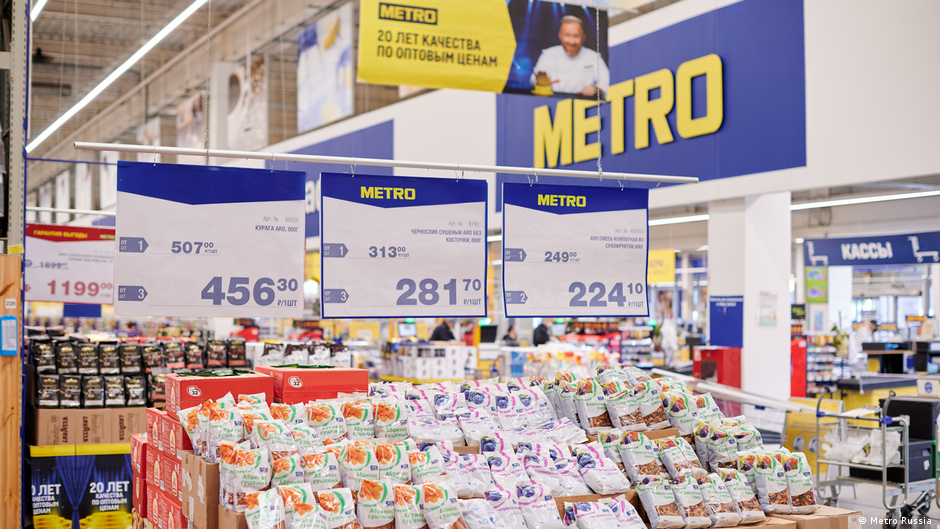
The most pointed business interpretation came from Janis Kluge, a German economist and head of a research division at the Berlin-based German Institute for International and Security Affairs, or SWP. In his view, bringing Schröder into Hyperglobus management amounts to the company buying “lifetime insurance” against facing the same fate as German retailer Metro, whose Russian assets were placed under temporary management by decree of Vladimir Putin.
Kluge wrote on X that Schröder is again monetizing his access to Putin. For startup founders and VC-backed companies operating across borders, that assessment is striking because it frames political proximity not merely as reputational baggage, but as a form of perceived asset protection. In markets where legal ownership, operational control and state intervention can diverge, informal influence may become part of the corporate risk calculus.
That is precisely the type of signal that can unsettle investors. Venture capital depends on clear cap tables, enforceable rights and credible exits. When an operating company is seen as relying on political relationships to protect assets, acquirers, limited partners and strategic investors may discount valuations or avoid exposure entirely. The result can be a chilling effect that extends beyond retail or industrial assets into technology services, logistics software, fintech, enterprise platforms and other sectors that depend on cross-border capital.
German economist Jan Schnellenbach, professor of microeconomics at Brandenburg University of Technology in Cottbus, accused the former chancellor of “shamelessness.” He asked on X whether it had not been said that Schröder was too ill to appear before a German court, and then questioned whether Russian money has healing powers.
Many observers in Germany have long regarded Schröder as a lobbyist for Russian companies. He previously held leadership roles at Rosneft and at the operating company behind Nord Stream. Hyperglobus confirmed to DW on October 2 that the former German chancellor would become a member of its supervisory board and would oversee the retailer’s “strategic development.”
Implications for Startups and Cross-Border Capital
The Globus case arrives in an environment where European technology startups already face more complicated diligence around Russia-linked revenue, assets, shareholders, supply chains and customers. Even when a company is legally compliant, perceived geopolitical exposure can affect access to bank services, strategic partnerships, grant funding, corporate pilots and later-stage investment rounds.
The appointment also highlights the growing importance of governance optics in M&A. A buyer evaluating a company with operations in or around Russia must assess not only contracts and operating metrics, but also the political architecture that keeps those operations intact. If stability depends on figures with controversial access to Moscow, the issue can become material in diligence and may affect warranties, indemnities, escrow structures or the decision to walk away.
According to Isabel del Alcazar von Buchwald, press spokesperson for Globus Gruppe, the Russian business of the Globus network has been “legally and organizationally independent” since January 1, 2025. At the same time, the shareholders of Russia’s Hyperglobus are the same German businesspeople as those behind the rest of the group, she said in a comment to DW.
That structure is likely to remain central to the controversy. Formal independence may separate Russian operations from the broader group on paper, but shared ownership keeps reputational and political questions alive. In the venture and startup world, such distinctions matter: investors often look beyond legal separation to beneficial ownership, control, governance rights and public perception.
For Europe’s innovation ecosystem, the broader lesson is that geopolitical risk is no longer a peripheral compliance category. It can shape who sits on boards, which assets remain investable, and whether future funding or acquisition routes stay open. Schröder’s new role at Hyperglobus has become a political dispute in Germany, but for capital markets and startups it also reads as a case study in how governance, access and reputation can collide when companies try to preserve value in Russia.