Kolesnikova Says EU-Minsk Contacts Could Loosen Russia’s Grip on Belarus
The Belarusian activist argues that calibrated diplomacy and sanctions relief can free prisoners while widening Europe’s opening to Belarusian society.
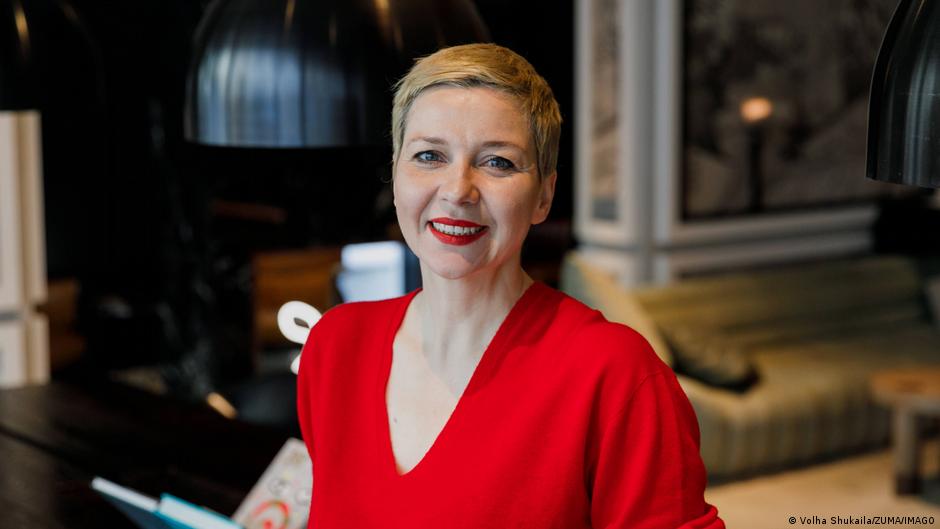
Belarusian activist, musician and former political prisoner Maria Kolesnikova has urged European Union governments to follow the United States in using diplomacy and sanctions as practical tools to secure the release of political prisoners in Belarus. In an interview with DW, she rejected suggestions that her repeated calls for dialogue signal a softer position toward the regime of Alexander Lukashenko, arguing instead that diplomacy has already proved its value in saving lives.
For VentureLine’s audience, the comments point to a broader question facing Europe’s innovation economy: whether a more deliberate opening to Belarusian society, separate from engagement with the regime, could reshape the country’s long-term political and economic orientation. Belarus has produced a notable technology and engineering diaspora, while repression and geopolitical isolation have pushed founders, developers and investors to relocate. Kolesnikova’s argument places diplomacy, sanctions and security policy in the same frame as the future of the country’s human capital and its possible reconnection with European markets.
“We are talking to you here now precisely because diplomacy was used as an instrument of influence, as an instrument for achieving certain goals,” Kolesnikova said on DW News.
She stressed that years in prison had not changed her view of the system in Belarus. Her position, as presented in the interview, is not a call to normalize Lukashenko’s rule, but to use available channels to obtain concrete outcomes, particularly the release of people imprisoned on political grounds.
Diplomacy as leverage, sanctions as bargaining power
Kolesnikova said more than 800 people convicted under political articles remain in Belarusian prisons. She pointed to the recent U.S. negotiating track with Minsk as evidence that a combined approach of talks and sanctions relief can work. According to her, negotiations between Washington and Minsk led to the release of about 500 political prisoners in exchange for eased sanctions on Belarusian companies.
That precedent matters beyond the immediate humanitarian result. Sanctions have shaped the operating environment for Belarusian companies, investors and workers, especially in sectors that rely on cross-border payments, enterprise clients, international banking and access to global technology platforms. Kolesnikova’s remarks suggest that sanctions policy can be calibrated not only to punish repression, but also to create leverage for prisoner releases and to keep space open for Belarusian society.
For startups, the distinction is significant. A blanket political freeze can accelerate the outflow of technical talent and make any future reintegration harder. A carefully targeted approach, by contrast, could preserve links between European institutions, Belarusian professionals and the broader ecosystem of founders, engineers and civil society organizations that operate outside state control.
Europe’s opening to Belarusians, not the regime
Kolesnikova argued that Europe’s openness toward Belarus and Belarusians, rather than toward the regime itself, could reduce Russia’s sphere of influence in the country. She described that as a goal for the architecture of European security. In that formulation, engagement is not merely a diplomatic gesture; it is a strategic tool aimed at narrowing Moscow’s room for influence inside Belarus.
Her comments come as EU diplomacy shows signs of testing limited channels with Minsk. Kolesnikova specifically referred to recent talks between Polish Foreign Minister Radoslaw Sikorski and Belarusian Foreign Minister Maxim Ryzhenkov. The meeting took place in New York on the sidelines of the 81st session of the United Nations General Assembly. After the meeting, Sikorski said, among other things, that Warsaw was preparing to open a new embassy building in Minsk.
For venture capital and technology investors, such diplomatic signals are not immediately equivalent to market access or investable opportunity. Belarus remains politically constrained, and Kolesnikova’s own account centers on repression, imprisonment and sanctions. But the direction of European policy could affect where Belarusian entrepreneurs build companies, how diaspora networks maintain ties, and whether the country’s innovation base remains oriented toward Europe or becomes more dependent on Russia.
The Belarusian technology sector has long been linked to cross-border mobility, outsourcing, product engineering and founder networks that extend beyond the country’s borders. Political repression since 2020 has made those ties more fragile. Kolesnikova’s emphasis on openness to Belarusians suggests a policy path that could help preserve talent pipelines, academic connections, startup relocation options and future M&A links without giving political legitimacy to the authorities in Minsk.
A personal case turned policy argument
Kolesnikova’s own experience is central to her case. She was arrested in September 2020 over opposition protests. In a criminal case described in the source as fabricated, a Minsk court sentenced her on September 6, 2021, to 11 years in prison. She was released on December 13, 2025, together with Nobel Peace Prize laureate Ales Bialiatski and another 121 political prisoners, following negotiations between Belarusian ruler Alexander Lukashenko and a U.S. delegation led by Special Envoy for Belarus John Cole.
Her release, she argues, demonstrates that diplomacy can deliver results even when the political system itself has not changed. That is the core of her message to Europe: if the American negotiation track worked, it should be used. The goal, in her telling, is to save lives, release prisoners and create a wider opening for Belarusian society.
For Europe’s venture and startup community, the implications are indirect but material. Capital follows talent, rule-of-law expectations and geopolitical stability. A Belarus that remains locked inside Russia’s sphere of influence offers little certainty for investors and little autonomy for founders. A Belarus whose people maintain stronger European links, even under severe political constraints, preserves more optionality for future innovation, capital formation and cross-border business formation.
Kolesnikova’s argument therefore connects humanitarian diplomacy with the economics of long-term ecosystem building. She is not presenting Belarus as an imminent investment market, nor claiming that dialogue alone can change the regime. Instead, she is calling for a policy architecture that uses sanctions, talks and openness to Belarusian citizens as instruments of influence. In the startup context, that means recognizing that political prisoners, diaspora technologists, founders and future investors are part of the same strategic landscape: the contest over whether Belarus’s next generation is pulled deeper into Moscow’s orbit or remains connected to Europe.