German Delegation Plans Belarus and Russia Trips as Local Ties Test Sanctions Climate
BSW lawmaker Sven Hornauf says the visits aim to revive city partnerships, a move with implications for cross-border networks watched by startups and investors.
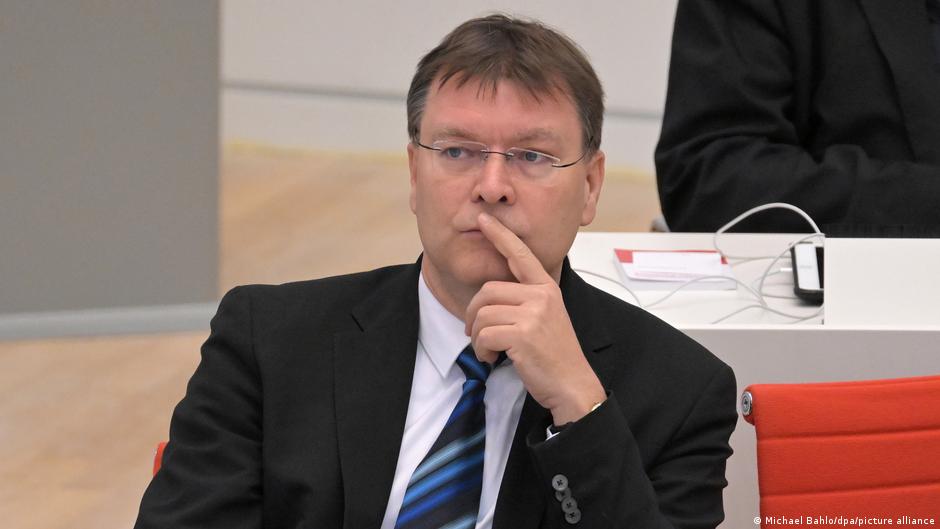
German regional lawmaker Sven Hornauf, a member of the left-populist Alliance for Social Justice and Reasonable Economics, known as BSW and formerly associated with Sahra Wagenknecht, has announced plans to organize delegations to Belarus and Russia in an effort to restore contacts between German municipalities and their twin cities.
Hornauf, who sits in the state parliament of Brandenburg, said he intends to travel by bus to Vitebsk in November with a delegation of like-minded participants from various German political parties and civil society. He made the remarks in an interview with the regional newspaper Märkische Oderzeitung on Saturday, October 3. The plans were reported the following day by larger German media outlets, including dpa, Tagesspiegel and Die Welt.
For Germany’s technology and venture ecosystem, the initiative is not primarily a startup story in the narrow sense. But it touches a broader question that investors, founders and cross-border operators have had to track since Russia’s full-scale invasion of Ukraine: whether informal regional networks, municipal partnerships and civil-society channels could gradually reopen even while the wider political and security environment remains strained.
Municipal Channels Re-emerge as a Political Signal
According to Hornauf, the goal is to restart cooperation between German cities and their sister cities in Belarus and the Russian Federation in order to send what he described as a signal in favor of understanding between peoples. He also plans to visit Russia in April 2027.
It is important to restore normal, regular contacts directly at the level of people, Hornauf said, adding that the general political climate, regardless of side, should not prevent them.
The planned Belarus trip is expected to include 30 to 40 people, according to Hornauf, most of whom are not members of political parties. He nevertheless named several BSW members among the expected participants, as well as representatives of the Greens and the far-right Alternative for Germany, or AfD. The final composition of the delegation will be determined during preparatory meetings, Hornauf said.
Hornauf said a delegation from his home city, Frankfurt an der Oder, will visit Vitebsk from November 6 to 11. Other participants in the trip intend to travel to Minsk and several other Belarusian twin cities. In each case, the stated reason for the visit is the desire to restore twinning relationships.
Many sister-city relationships among German, Belarusian and Russian municipalities were suspended after Russia’s full-scale invasion of Ukraine. Yet a 2026 survey by the media group Redaktionsnetzwerk Deutschland of roughly 100 German cities and municipalities found that only one had fully terminated its partnership with a Russian twin city.
RND also reported that around 40% of surveyed municipalities had continued informal contacts with Russia after 2022, including invitations for representatives of Russian cities to visit Germany. In 42% of responding German municipalities, officials supported resuming partnership with Russia in the event of a peace settlement in Ukraine.
Why Startups and Investors Will Watch the Signal
The technology sector depends heavily on signals from institutions, even when those signals emerge outside the venture market itself. City partnerships can support academic exchanges, innovation clusters, civic technology cooperation, local business links and access to regional networks. When those channels are suspended, the loss is not limited to diplomacy; it can also affect the softer infrastructure around innovation, including talent mobility, research relationships and early-stage international cooperation.
At the same time, the Hornauf initiative illustrates why venture capital firms and startup founders remain cautious about any operational exposure connected to Russia or Belarus. The article does not report any proposed business deals, investment activity, startup partnerships or M&A talks linked to the delegation. The relevance for VentureLine readers lies instead in the political environment around future cross-border engagement. Investors typically assess not only market opportunity but also sanctions risk, reputational exposure, compliance obligations and the likelihood that public authorities will support or discourage engagement.
For German startups, particularly those working in defense, cybersecurity, dual-use technology, logistics, financial compliance or public-sector software, the political backdrop is especially consequential. Hornauf has also criticized Germany’s efforts to strengthen defense measures in response to Russia’s aggressive policy. In particular, he opposed the deployment of the U.S.-Israeli Arrow 3 missile-defense system at the Bundeswehr base in Holzdorf. The missile-defense system entered operational duty in Germany at the end of 2025.
That stance places the planned trips within a wider German debate over security, deterrence and engagement. For innovation ecosystems, the debate matters because public spending, procurement priorities and regulatory expectations increasingly shape startup opportunities, especially in sectors tied to national resilience and defense technology.
Hornauf previously drew media attention in spring 2026 when he became one of the initiators of a visit by BSW members and supporters to the Russian embassy in Berlin. He had earlier faced criticism for supporting several AfD initiatives.
The planned delegations therefore sit at the intersection of municipal diplomacy, domestic German politics and the post-2022 European security order. The source article presents the trips as an attempt to restore people-to-people contacts, not as a commercial initiative. But for founders and investors, the renewed public discussion over Belarusian and Russian local ties may be read as an early indicator of how parts of Germany’s regional political landscape are testing the boundaries of re-engagement before any broader normalization occurs.
Whether such efforts remain symbolic or gradually affect practical cooperation will depend on the wider political climate, including the war in Ukraine and any future peace settlement. For now, the announced November visit to Belarus and the planned April 2027 trip to Russia underscore that some local actors in Germany are seeking to reopen channels that many cities suspended after 2022, while much of the venture and technology sector continues to operate under heightened geopolitical caution.