German Right-Wing Party Expels Politician After Controversial Hitler-Like Speech
Alexander Eichwald's exclusion from AfD highlights internal tensions and public backlash affecting political discourse and public trust.
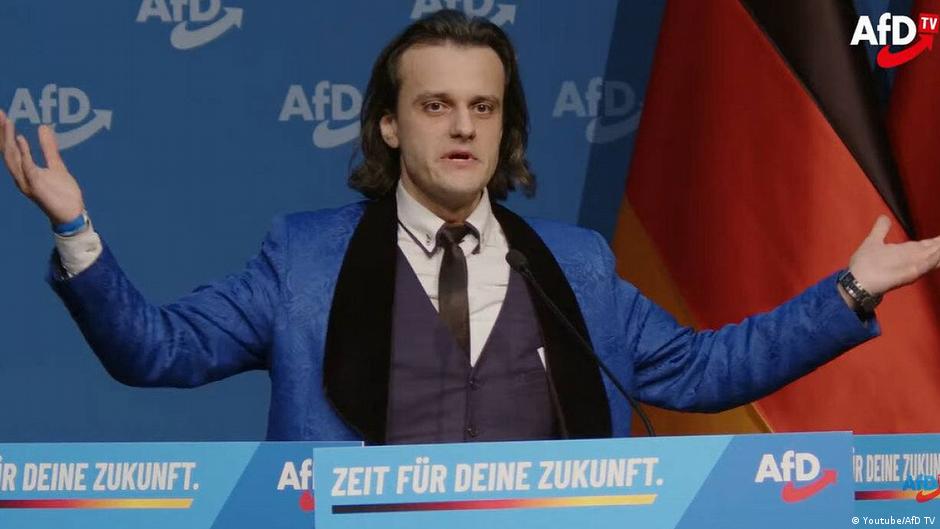
The Alternative for Germany (AfD) party's disciplinary court has expelled 30-year-old Alexander Eichwald, a figure known for delivering a speech mimicking Adolf Hitler's oratory style. The decision marks a significant move by the right-wing populist party amidst growing controversies that could influence Germany's political and social landscape.
Speech Controversy and Party Response
Eichwald gained notoriety after addressing the AfD's youth wing congress in North Rhine-Westphalia with a rhetoric style strikingly similar to that of the Third Reich dictator. He employed distinctive gestures, elongated words, and a pronounced rolling of the letter "r" that evoked Hitler’s speeches.
"The party’s disciplinary court cited Eichwald's behavior as causing serious harm to the AfD," a party representative said regarding the expulsion decision.
Though Eichwald did not attend the disciplinary hearing, stating he had already submitted a written defense, he retains the right to appeal in the party's federal arbitration court. Eichwald declared his intent to contest the expulsion, emphasizing his rejection of being removed from the party.
Background and Motivations
Born in Russia and relocating to Germany at age nine from Rostov-on-Don, Eichwald explained his speech manner as a result of his Russian upbringing and German learning experience, which included listening to the band Rammstein. While he does speak with an accent in daily life, eyewitnesses and media noted his speech during the congress was a deliberate act.
Following intense criticism, Eichwald revealed that his speech was a "planned action" designed to expose alleged neo-Nazi elements within the AfD leadership and to hold a "mirror to society." He likened contemporary Germany to the Weimar Republic, a historical period preceding Hitler’s rise to power.
Rejecting claims that his performance was parody or satire, Eichwald described himself as embodying a "persona" on stage. He argued that the AfD’s harsh reaction revealed the party’s true nature. Eichwald also expressed discontent towards AfD co-chair Alice Weidel, who had controversially referred to Hitler and Stalin as "spiritual brothers" earlier in 2025, a remark Eichwald, as a Russian-German, called "an insult" and an attempt to downplay the atrocities against Slavic peoples.
Implications for Political Discourse and Innovation Ecosystem
This internal party conflict underscores the challenges faced by right-wing populist movements as they grapple with extremist symbolism and public perception. For the tech startup ecosystem and venture capital communities observing Germany’s political environment, such turbulence could influence regulatory attitudes, societal stability, and investor confidence.
Political controversies affecting public trust often ripple into the broader innovation landscape by shaping policy priorities, affecting market sentiment, and potentially deterring international talent and capital inflows. Venture capital firms and startups closely monitor these developments to anticipate shifts in funding climates and collaboration opportunities.
As Eichwald continues to challenge his expulsion, and the AfD navigates its internal divisions, the evolution of Germany’s political narrative remains a critical factor for stakeholders aiming to foster a stable and progressive innovation ecosystem.