Germany’s AfD Party Maintains Popularity Amid Calls for Ban and Political Isolation
Despite controversy and surveillance, the far-right AfD leads in polls, challenging traditional parties and impacting Germany’s political landscape.
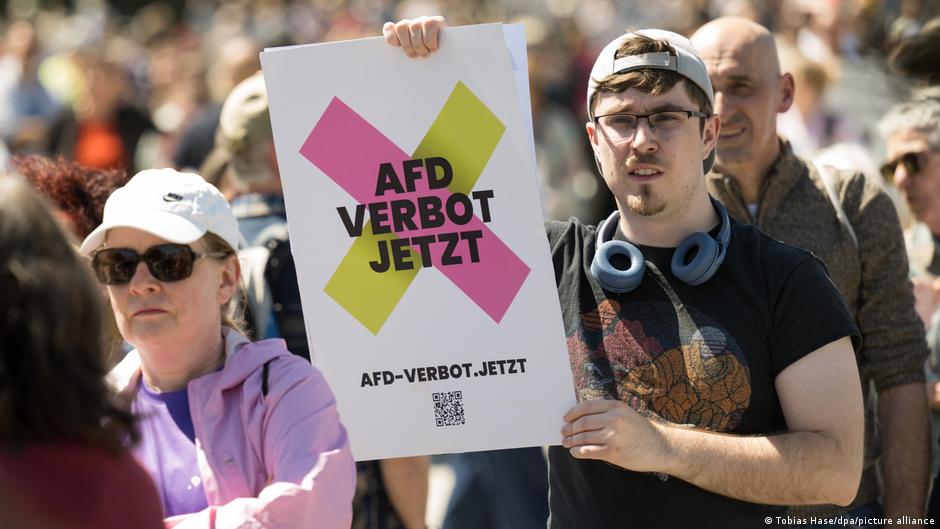
In Germany’s evolving political ecosystem, the far-right party Alternative for Germany (AfD) continues to command significant public support, posing complex challenges for the country’s political and social dynamics. According to a recent survey by the sociological institute Insa, commissioned by Bild am Sonntag, 40% of Germans endorse banning the AfD, while 45% oppose such a move, with 15% undecided. This division highlights the polarized views on the party’s role and influence.
AfD’s Growing Influence Amid Political Isolation Strategies
The AfD currently outpaces the traditional conservative bloc CDU/CSU by 8 percentage points in popularity, securing 29% support compared to CDU/CSU's 21%. This marks a notable shift in Germany’s political landscape, as the AfD asserts itself as a new political force. The party’s co-chair Alice Weidel recently declared the AfD’s ambitions to become Germany’s leading political party, branding it as “the new people’s party.”
“We are the new people’s party in Germany,” Alice Weidel stated at the party congress in Erfurt, signaling AfD’s growing confidence and political ambition.
Despite this popularity, the AfD remains under scrutiny. Since February 2021, Germany’s Federal Office for the Protection of the Constitution (BfV) has monitored the party over concerns of right-wing extremism. This surveillance underscores ongoing tensions in Germany’s approach to managing political extremism.
The strategy of political isolation, known in Germany as "Brandmauer" or "firewall," aims to restrict cooperation with the AfD at all political levels. However, public opinion on this tactic is divided: 42% support it, while 39% oppose it, and 19% remain unsure. This reflects broader societal debates on how to engage with or marginalize controversial political actors.
Implications for the Tech Startup and Venture Capital Ecosystem
The AfD’s ascendancy and the polarized political climate have direct and indirect consequences for Germany’s innovation ecosystem, particularly tech startups and venture capital (VC) funding. Stable governance and predictable policies are critical drivers for investor confidence and startup growth. The political volatility surrounding the AfD’s role may introduce uncertainty in regulatory environments and economic outlooks.
Startups operating in Germany often rely on clear, consistent government support programs, innovation-friendly policies, and international cooperation—all factors potentially disrupted by the rise of politically divisive forces. Investors may adopt a cautious stance where political instability threatens market predictability.
Moreover, the AfD’s policy positions and rhetoric could influence areas such as immigration policy, research funding, and European partnerships—key elements underpinning the talent pool and market access crucial for tech startups. For venture capitalists, these factors contribute to risk assessments when considering investments in German startups.
Overall, the AfD’s growing popularity and Germany’s divided public opinion on banning or isolating the party underscore ongoing challenges for maintaining a stable environment conducive to innovation and economic growth.
Broader Political Trends and Government Confidence
The recent ARD Deutschlandtrend survey further highlights public dissatisfaction with Germany’s federal government, with only 13% approving its work as of early July 2026. Chancellor Friedrich Merz’s approval rating has fallen to a historic low of 13%, indicating a general erosion of confidence in established leadership.
In this context, the Social Democratic Party (SPD) and the Greens each hold 13% support, with the Left Party at 10%. These figures suggest a fragmented political spectrum, where the AfD’s prominence disrupts traditional party dynamics and voter loyalties.
As the AfD asserts itself as a decisive political player, the implications extend beyond electoral politics. The party’s impact on Germany’s social cohesion, regulatory frameworks, and international reputation bears watching, especially for sectors reliant on innovation and global collaboration.