ICAO warning on conflict-zone flights raises stakes for aviation tech ventures
After Ukraine flagged Russian airspace as unsafe, the UN civil aviation body urged tougher protections for civilian aircraft over conflict zones.
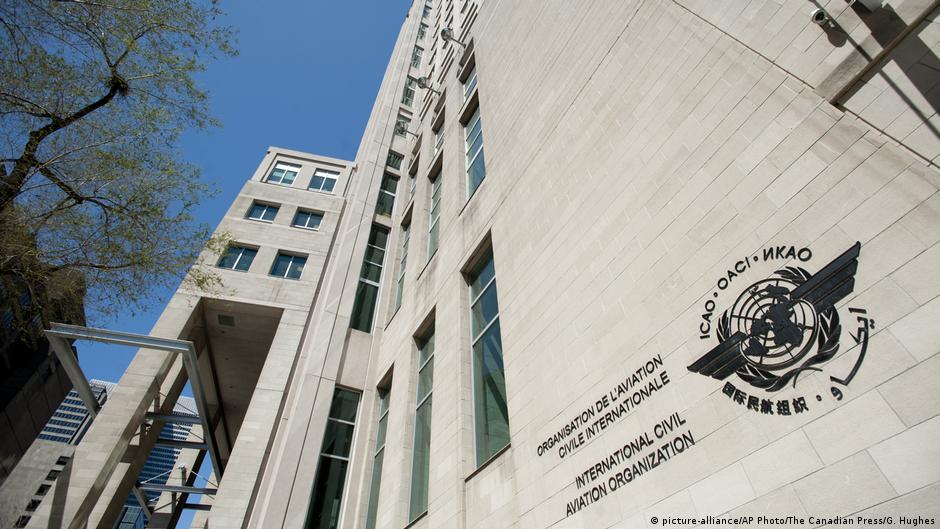
The International Civil Aviation Organization, the UN body that sets global standards for civil aviation, has called on governments to strengthen protections for civilian aircraft flying over conflict zones after Ukraine formally warned that Russian airspace has become unsafe because of intensified military activity.
The statement, published by ICAO on Wednesday, September 2, did not directly name Russia or Ukraine. But the timing followed within hours of a notification from Kyiv, whose foreign minister Andrii Sybiha said Ukraine had officially informed the organization that Russian airspace is unsafe and urged all parties to avoid it.
For VentureLine readers, the immediate significance goes beyond airlines and state regulators. The episode highlights how conflict-related airspace risk is becoming a harder operating constraint for the wider aviation and aerospace innovation market, including startups working in navigation, airspace management, aviation safety, drone detection, and infrastructure protection.
ICAO said the appeal reflected a growing global threat from the use of weapons against civilian aircraft and an increased risk that such aircraft could be attacked or caught in crossfire. Among the technologies it identified as dangerous were drones, long-range weapons systems, air defense systems, and devices that create radio-frequency interference for navigation systems.
“Member states should promptly exchange information about threats when certain activity creates risks for civil aircraft, strengthen risk-assessment mechanisms and timely decision-making, and improve coordination between military and civilian authorities to prevent the mistaken identification of civil aircraft as military targets.”
Why the warning matters for the innovation ecosystem
ICAO has 193 member states, effectively covering almost the entire global aviation system. When the organization issues a broad warning about conflict-zone risk, the message lands not only with governments and carriers but also with the companies building products around the future of flight. Startups in aviation technology depend on assumptions about stable operating environments, usable air corridors, trusted navigation, and cross-border coordination. ICAO’s latest language suggests those assumptions are under increasing pressure.
The organization’s specific reference to drones and radio-frequency interference is especially notable for venture-backed technology companies. Drones have become central to both commercial innovation and military activity, while interference with navigation systems directly affects a range of products tied to route planning, geolocation, safety assurance, and autonomous or semi-autonomous flight systems. The statement does not change those markets overnight, but it sharpens the policy and operational backdrop against which founders, strategic investors, and acquirers will evaluate aviation exposure.
Sybiha said Russia is consciously ignoring existing threats created by its aggression against Ukraine and argued that this has already led to several incidents in recent years. Against what he described as a sharp escalation of Russian terror against Ukraine, he said Russian airspace is becoming increasingly unsafe. He said Kyiv’s notification to ICAO was intended to prevent unintended incidents.
Hours before ICAO published its statement, Sybiha wrote that Ukraine was strongly urging everyone to avoid Russian airspace. That message built on remarks made on September 1 by Ukrainian President Volodymyr Zelenskyy, who said airspace over Russia would gradually close because of Ukrainian drones that, he said, Russian authorities were not properly reporting. Zelenskyy said that “the Russian sky is becoming completely unsafe” and added that Ukraine did not want innocent people to die, which is why it was warning partners.
Russian President Vladimir Putin responded by calling Zelenskyy’s remarks “an application for state terrorism.” Speaking on the night of September 2 after the Shanghai Cooperation Organization summit in Bishkek, Putin said that if such tragedies were to occur, Russia would find a way to respond and that no one should doubt it.
Later on September 2, Russia’s aviation authority Rosaviatsia said it was implementing additional measures together with other state bodies for the safe use of Russian airspace and to increase the protection of transport infrastructure on the ground. The agency added that Russia’s air transport system and ground infrastructure were continuing normal operations and were receiving and dispatching flights, including those of foreign airlines.
That leaves the market facing a familiar but intensifying split-screen reality: regulators are warning of expanding conflict-zone threats, Ukraine is urging avoidance of Russian airspace, and Russian authorities are insisting that operations remain on track. For investors and operators in aviation-related technology, that tension matters. Capital allocation in aerospace has increasingly favored systems that improve resilience, verification, coordination, and threat awareness. ICAO’s statement underscores why those areas are moving from optional modernization themes toward core operating requirements.
The organization did not announce new binding rules in this statement. Its message was instead a call for firmer commitments by states to share threat information quickly, improve risk evaluation, and coordinate more effectively between military and civil authorities. Even so, such signals can influence procurement priorities, partnership decisions, and the commercial narrative around aviation startups developing safety-linked technologies.
In that sense, the warning is not only a geopolitical development. It is also a reminder that the innovation economy around flight is being shaped by the same security pressures confronting states and airlines. When airspace risk rises and technologies such as drones and navigation interference are named explicitly by the world’s main civil aviation body, the downstream effects reach well beyond the runway.