Russian Strikes Hit Ukraine Infrastructure and German-Owned Auto Supplier
Attacks across Ukraine killed two people, disrupted power supplies and halted operations at a German-owned automotive components plant.
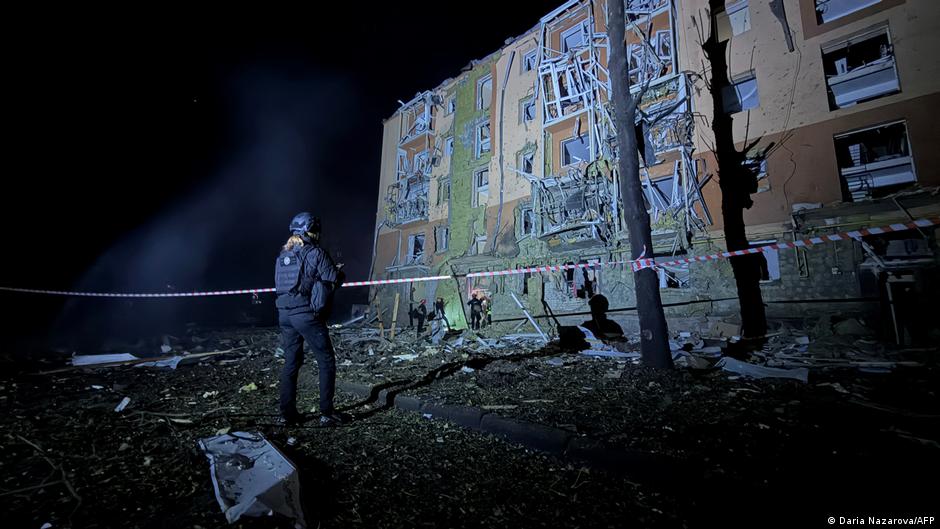
Russian drone and missile strikes across several Ukrainian regions late on Saturday, October 17, and overnight into October 18 killed two people, injured others and damaged critical infrastructure, according to local authorities. The attacks also halted operations at a German-owned automotive components plant, underscoring the continuing risks facing manufacturers, technology businesses and investors operating in Ukraine.
One person was killed and four others were wounded in an evening drone attack on Poltava, regional military administration head Vitaliy Diakivnych wrote on Telegram. Four private homes were damaged in the city, while another five were damaged in the Tereshky rural community.
In Zaporizhzhia, a drone struck a multistory residential building during the night, regional military administration head Mykhailo Semikin said. A 27-year-old woman was killed, and another woman was injured.
Three people were injured when Russian forces used ballistic weapons against two districts of Kharkiv on Saturday evening, according to Mayor Ihor Terekhov. The head of the Kharkiv regional military administration said two men, aged 66 and 42, were wounded in the Slobidskyi district and hospitalized. A 26-year-old woman was injured in the city’s Osnovianskyi district.
Power disruptions increase operating uncertainty
The strikes also affected energy systems relied upon by companies, workers and data-dependent services. In the Vinnytsia region, an attack caused damage to critical infrastructure and led to emergency electricity outages, regional military administration head Natalia Zabolotna said on Telegram.
“In the near future, the situation with electricity supply will remain unstable,” Zabolotna said.
In the Chernihiv district, 19,000 customers were left without electricity following the evening strikes, representatives of regional energy supplier Chernihivoblenergo said. Critical infrastructure in Dnipro was also attacked, according to regional military administration head Oleksandr Hanzha.
For Ukraine’s startup and innovation ecosystem, unstable electricity supplies can disrupt offices, laboratories, cloud-connected operations and production facilities even when companies are not directly struck. Such interruptions also add to the cost of maintaining backup power, distributed teams and operational redundancy. Those pressures form part of the risk environment considered by venture capital investors, strategic buyers and companies evaluating expansion or acquisition opportunities in the country.
The reported damage does not by itself establish the financial impact on Ukrainian startups or venture funding. However, attacks on power and other essential infrastructure can complicate due diligence, business-continuity planning and transaction timelines. They can also affect the ability of growing technology companies to retain staff, serve customers and maintain predictable operations.
German-owned automotive supplier suspends production
The direct impact on industry was illustrated in Lutsk, where a plant operated by German company Kromberg & Schubert suspended work following a strike. The facility manufactures electrical onboard wiring systems for automobiles, placing the attack within a broader supply-chain context that extends beyond Ukraine’s domestic market.
Russia’s Defense Ministry said the plant was targeted because it was used for the “repair of automotive equipment in the interests of the Armed Forces of Ukraine.” The source information did not provide an independent assessment of that claim, details on the extent of damage at the site or a timeline for the resumption of operations.
The shutdown highlights the exposure of foreign-owned production assets in Ukraine and the potential consequences for automotive suppliers, contractors and logistics partners. For venture-backed manufacturers and hardware startups, the incident also illustrates risks that differ from those facing software-only companies: physical facilities, specialized machinery, inventory and supplier networks cannot be relocated as quickly as digital operations.
Persistent attacks on civilian areas, industrial sites and energy infrastructure may influence how investors structure financing and mergers and acquisitions involving Ukrainian businesses. Potential responses can include greater emphasis on insurance, contingency provisions, geographic diversification and resilient energy systems. At the same time, demand for technologies that support energy resilience, cybersecurity, logistics and distributed operations may shape innovation priorities within Ukraine’s startup sector.
The latest strikes combined human casualties with damage to homes, electricity networks, critical infrastructure and an internationally owned industrial facility. Their effects therefore extend beyond immediate emergency response, adding further uncertainty for businesses seeking to operate, invest and scale in Ukraine during the war.