Starlink Station Fire Raises Security Risks for Europe’s Space Tech Sector
The suspected arson attack near Warsaw highlights infrastructure threats facing satellite startups, investors and strategic technology assets.
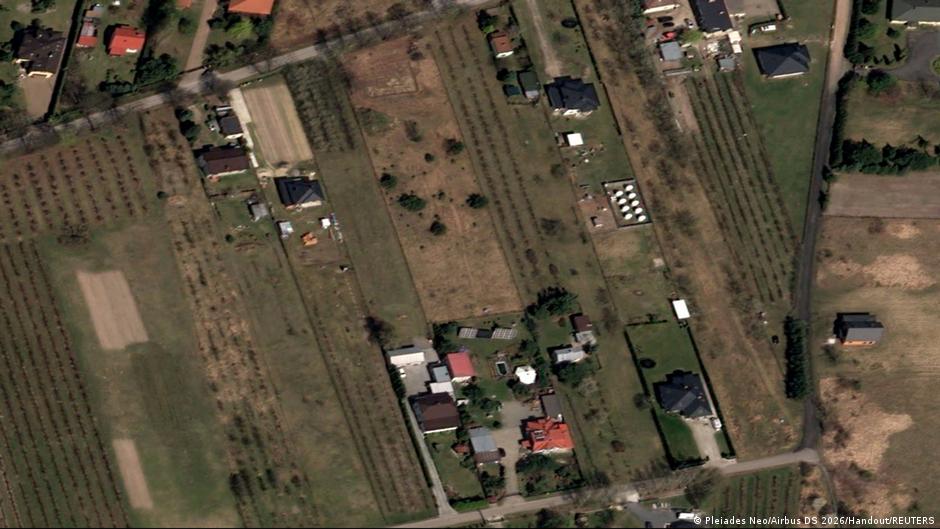
A fire that damaged a Starlink ground station near Warsaw has widened concerns about the physical security risks facing Europe’s commercial space and communications infrastructure, with potential consequences for technology startups, venture capital investors and prospective mergers and acquisitions in strategically important sectors.
Turkish organized crime group Daltons may have been involved in setting fire to the satellite communications facility on behalf of Russian intelligence services, Der Spiegel reported, citing sources in several countries. The group has for years been linked to extortion, arms trafficking and contract killings, including in Germany.
The suspected use of a criminal organization to target privately operated communications infrastructure would add another layer of risk for companies building satellite networks, cybersecurity products and dual-use technologies. For investors, it underscores that resilience now depends not only on software defenses but also on the protection of ground stations, power systems, generators and other physical assets.
Investigation Spans Poland and Germany
Two Turkish citizens detained on Oct. 12 in Nürtingen, Germany, as part of the arson investigation were identified by Der Spiegel as 38-year-old Ümit E. and 34-year-old Müslüm T. According to representatives of several law enforcement agencies cited by the magazine, the men either belong to the Daltons or carried out assignments for members of the group.
The Higher Regional Court in Stuttgart is expected to decide soon whether the two suspects will be extradited to Poland.
Two more people, including a woman, were detained on Oct. 13 during the investigation. Polish radio station RMF FM reported that an anti-terrorism operation was conducted in Berlin to apprehend her. Under a preliminary version of events, the woman may have provided logistical assistance to the Turkish citizens and acted as their driver.
Der Spiegel reported that the Daltons themselves may have been operating at the direction of Russian intelligence. The magazine noted that Beratcan Gökdemir, the alleged leader of the group, was detained in Russia in 2024. Turkey requested his extradition, but Russian authorities did not hand him over to Ankara.
German intelligence services believe Moscow may have offered Gökdemir protection in anticipation of services in return, according to the report. His current whereabouts are unknown. The allegations have not established direct Russian responsibility for the fire.
Ground Infrastructure Becomes an Investment Risk
The Starlink facility is located in the village of Wola Krobowska, about 50 kilometers from Warsaw. It was damaged in an arson attack on Sept. 23, when flames engulfed an electrical substation and a generator. Bild reported that the station briefly stopped operating before returning to service. No one was injured.
Polish authorities described the incident as an attempted act of sabotage, while stressing that direct evidence of Russian involvement had not been established.
Polish Deputy Prime Minister Krzysztof Gawkowski said on Sept. 23 that, although there was not yet direct proof connecting Russia to the arson, many signs suggested that the incident was consistent with a new Russian doctrine for conducting attacks.
For the European innovation ecosystem, the case illustrates how geopolitical exposure can affect commercial technology assets far beyond traditional defense contractors. Satellite communications providers rely on distributed terrestrial facilities, while startups supplying antennas, power management, network monitoring and cybersecurity tools increasingly operate within the same strategic infrastructure chain.
That exposure could influence how venture capital firms assess companies serving space, telecommunications and dual-use markets. Investors may place greater weight on site redundancy, backup power, supply-chain controls, employee screening and coordination with national security agencies. Higher security and insurance costs could also become more prominent in financing models for startups that own or operate critical hardware.
The incident may likewise shape M&A due diligence. Buyers considering satellite, connectivity or infrastructure-security companies may scrutinize physical safeguards and geopolitical dependencies alongside intellectual property, revenue and conventional cyber risk. Businesses offering threat detection, hardened energy systems and rapid service restoration could become more strategically valuable as operators seek to limit downtime from attacks on ground-based equipment.
Starlink’s reported return to operation after a brief interruption demonstrates the importance of operational resilience, but the multinational investigation also shows the complexity of protecting privately managed infrastructure. As commercial space networks become more closely integrated with public communications and security systems, startups and their financial backers face an environment in which physical sabotage, organized crime and alleged state activity can converge around a single technology asset.