Yemen Offensive Raises New Supply Chain Risks for Mideast Tech Startups
A new government push against the Houthis near the Red Sea corridor is adding geopolitical risk for startups, investors and acquirers.
For technology startups and venture investors watching the Middle East, the latest escalation in Yemen is not a distant security story. It is a renewed test of regional stability, energy exposure and the resilience of trade routes that underpin hardware, logistics, fintech and mobility companies across the wider innovation economy.
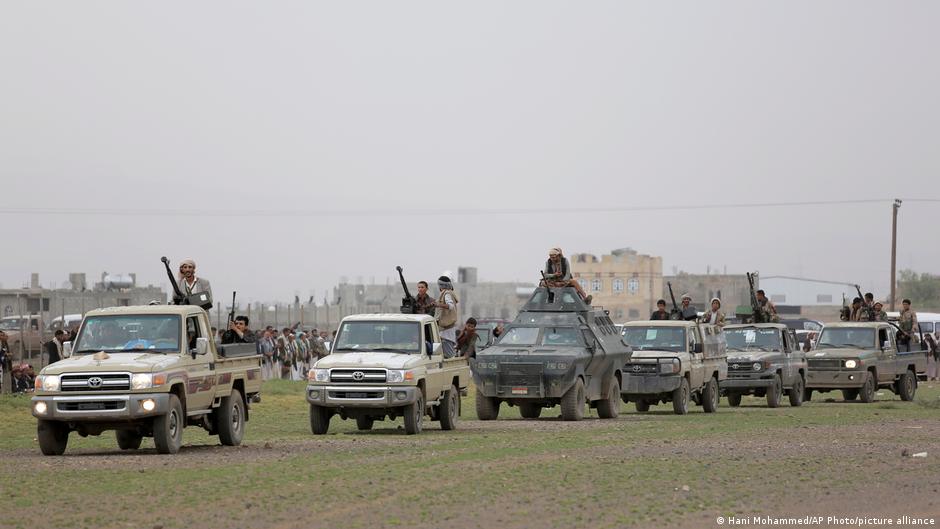
Forces loyal to Yemen's internationally recognized authorities have advanced toward the approaches of the port city of Mocha, seeking to drive out Houthi fighters who seized the city a month earlier. The Yemeni authorities' claim of progress into positions held by the Houthi movement Ansar Allah was reported on Monday, October 5, by Reuters.
The fighting around Mocha is among the first reported action by Yemeni government forces against Houthi positions after Rashad al-Alimi, chairman of Yemen's Presidential Leadership Council, announced on October 4 the start of a large-scale military operation against the Islamist group.
Al-Alimi said the operation's goal is to return all of Yemen's territory to the control of the internationally recognized authorities. That ambition implies a long and difficult campaign: the Houthis hold significant parts of the country, including the most densely populated areas and the capital, Sanaa.
In late September, Yemen's authorities announced the start of general mobilization to fight the Houthis and promised amnesty to all Ansar Allah members who switch to the side of government forces.
Why Investors Are Watching Mocha
Mocha's location gives the battle significance beyond Yemen's borders. The city lies on the Red Sea coast near the Bab el-Mandeb Strait, one of the key maritime chokepoints linking the Indian Ocean, the Red Sea and access toward the Suez route. The Houthis' recent military gains, including their capture of Mocha on the shore of the strait, have strengthened the position of Iran and its allies over critical regional waterways, according to the source account.
For venture-backed companies, especially those that depend on imported components, regional distribution hubs, cloud infrastructure procurement, cross-border payments or energy-intensive operations, instability around maritime routes can translate into longer delivery timelines, higher costs and investor caution. The immediate battlefield developments do not change startup fundamentals by themselves, but they add another layer of uncertainty to diligence, expansion planning and potential M&A involving companies exposed to Gulf logistics and energy prices.
The threat is not limited to shipping. Rebel attacks have already been described as threatening global trade routes and contributing to rising energy prices. Houthi leaders have separately declared the Bab el-Mandeb Strait closed to vessels from Saudi Arabia. For startups operating on thin margins, especially in climate tech hardware, e-commerce logistics, industrial software and regional mobility platforms, such cost pressure can quickly affect burn rates and fundraising assumptions.
Yemen's internationally recognized authorities say the operation is aimed at restoring control over the entire country, while the Houthis also claim battlefield successes.
Competing Claims of Momentum
Both sides are presenting themselves as successful on the battlefield. The Yemen Press Agency, citing a representative of Ansar Allah, reported that the Houthis had captured one district in Taiz province as well as al-Alimi's former residence in the region.
Al Masirah, a television channel controlled by the Houthis, also showed video footage said to depict the capture of al-Alimi's multi-story house. In the footage, Houthi fighters raised the group's flag over the building.
Houthi military spokesman Yahya Saree also claimed a series of operations inside Saudi Arabia. According to Saree, the Houthis attacked King Khalid International Airport in Riyadh, an Aramco refinery in Rabigh and several military facilities in the country.
Saudi Arabia has not confirmed those reports. At the same time, Riyadh, Ankara and Islamabad have agreed on the rapid deployment of forces in the region under the Mecca Defense Pact concluded in August, Reuters reported. The pact provides for a collective response by Turkey, Saudi Arabia and Pakistan to an attack on any of the three countries. According to Reuters, Riyadh is prepared to participate in the Yemeni government forces' offensive against the Houthis by providing air support.
For investors, the possible involvement of Saudi Arabia, Turkey and Pakistan matters because it raises the prospect of a broader regional confrontation. Gulf states have become increasingly important pools of capital for venture funds and late-stage startups, while also serving as launch markets for fintech, artificial intelligence, logistics and enterprise software companies. A wider military response could make capital allocation more cautious, especially in sectors exposed to sovereign spending, cross-border payments, transport corridors and energy costs.
Energy, Trade and the Startup Risk Premium
The current operation follows weeks of intensifying violence. In early September, the Houthis announced an expansion of military operations in the Middle East and struck four cities in southern Saudi Arabia. More than 70 people were injured in the mass shelling, and fires broke out at oil facilities. Saudi Arabia, in turn, carried out more than 60 airstrikes on several Houthi-controlled provinces.
The Houthis have also stepped up attacks inside Yemen in an effort to capture the country's entire Red Sea coastline. Their gains have turned the Red Sea and Bab el-Mandeb into a central variable for companies whose economics depend on predictable movement of goods and stable fuel costs.
On September 19, the Saudi-led Coalition to Restore Legitimacy in Yemen said Yemeni rebels had tried the previous night to strike the Saudi capital, Riyadh, with a ballistic missile for the first time. The missile was “intercepted and destroyed,” coalition spokesman Brigadier General Turki al-Maliki said at the time on X.
For venture capital, the immediate question is not whether startups will stop operating in the region. Many will not. The more practical issue is valuation and timing: how investors price geopolitical risk, how acquirers assess exposure to supply chains and energy markets, and whether founders need to raise more capital to account for longer delivery cycles or higher operating expenses.
If the government offensive toward Mocha expands and Saudi air support becomes part of the campaign, the conflict could become a more prominent factor in regional investment memos. For now, the fighting has created a sharper risk backdrop for founders and fund managers already navigating an innovation ecosystem tied closely to Gulf capital, global shipping lanes and energy-market volatility.