Trump-Putin Call on Irkutsk Health Reports Tests Startup Risk Readiness
Washington, Moscow and the WHO are seeking clarity after reports of a possible plague-linked death in Irkutsk raised public health and operational questions.
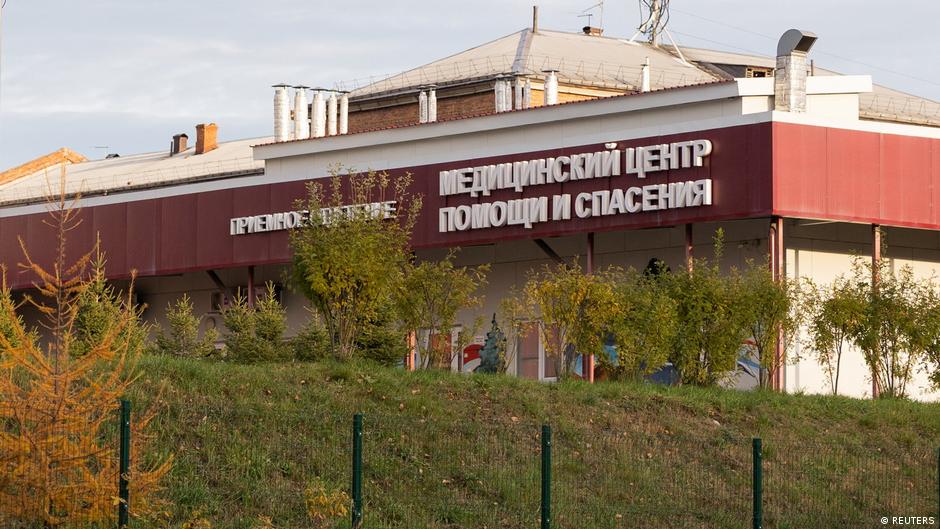
U.S. President Donald Trump plans to speak by phone with Russian President Vladimir Putin as international attention turns to reports surrounding the death of a 28-year-old laboratory assistant at the Irkutsk Anti-Plague Institute, a case that has prompted World Health Organization inquiries and raised questions for companies operating across health, industrial and cross-border technology markets.
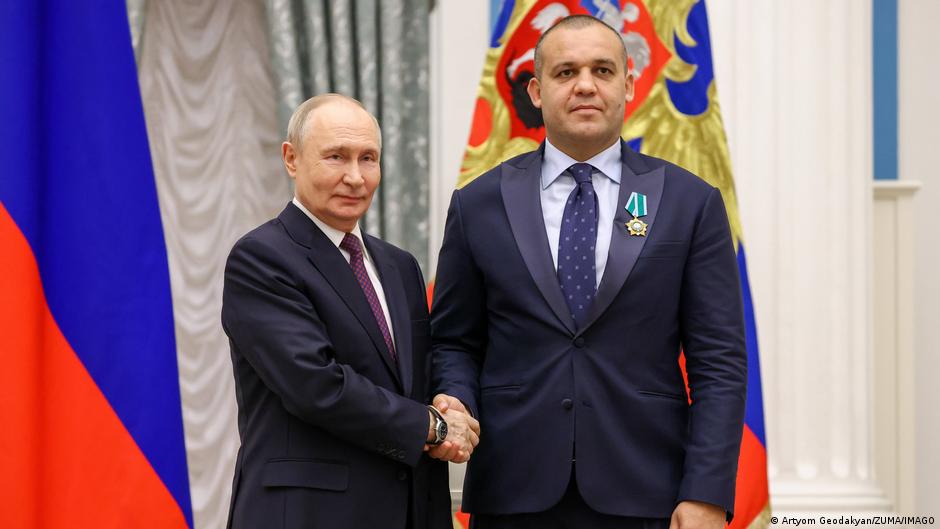
The White House said on Tuesday, October 6, that Trump and Putin had a call scheduled soon. The comment came in response to a reporter's question about whether Trump had discussed the Irkutsk incident with Putin. The possible death of laboratory assistant Darya Shipilova from plague has not been confirmed by Russian federal authorities, but the reports have already created a wider signal event for investors and startups watching public health resilience, biosecurity preparedness and operational continuity in Russia-linked markets.
For venture-backed companies, the immediate issue is not only the medical facts, which remain under review, but the institutional response. Startups in health technology, diagnostics, logistics, industrial services and enterprise risk management often depend on fast, credible information flows during public health scares. When official statements, regional messages and media reports diverge, founders and investors face uncertainty that can affect hiring, travel, supply-chain planning, insurance and fundraising conversations.
WHO asks Moscow for more information
WHO Director-General Tedros Adhanom Ghebreyesus said overnight on October 7 on X that the organization was in contact with Russian health authorities and had offered technical support. According to his account, Russian health officials told the WHO that no plague cases had recently been registered in the Irkutsk region.
Russian authorities told the WHO that an epidemiological investigation had been conducted, preventive and control measures had been taken, and identified contacts had been placed under medical observation and tested.
Tedros also said Russian authorities reported that no high-threat pathogens had been detected among contacts and that medical monitoring of all identified contacts had been completed. At the same time, he said the WHO had requested additional information to clarify the cause of the severe pneumonia, the pathogen that triggered public health measures, and media reports about a second employee with pneumonia of unknown cause.
That distinction matters for the innovation ecosystem. A confirmed dangerous pathogen would be one kind of shock; a poorly explained pneumonia case that triggers quarantines and foreign government scrutiny is another. Both can expose gaps in public communication, laboratory safety, surveillance systems and emergency coordination. Those gaps are exactly where some healthtech, biosurveillance, workplace safety and data infrastructure startups say they can add value, but they also make sales cycles and regulatory pathways more complex.
Trump had said on October 5 that the United States was watching events in Russia “very closely.” Asked whether the White House would respond to the reports, he said the U.S. had just heard about the situation and that Russian authorities were calling it pneumonia. He added that pneumonia used to be easier to treat, but that microbes and bacteria had become disproportionately stronger, and said the U.S. would help Russia.
Operational uncertainty spreads beyond healthcare
Shipilova died during the night of October 2 at the Shelekhov district hospital in the Irkutsk region. Alexey Tsydenov, the head of neighboring Buryatia, initially wrote on Max that plague was the cause of her death. He later edited the post to add the word “possibly.”
Russia's consumer health regulator, Rospotrebnadzor, said the deceased woman had been diagnosed with pneumonia, the cause of which had not been established. Irkutsk region Governor Igor Kobzev said there was suspicion of a “particularly dangerous infection,” without naming the suspected diagnosis.
Local reporting has pointed to a broader precautionary response. On October 4, the outlet Lyudi Baikala reported that Irkutsk city clinical hospitals No. 1, 3 and 10, as well as a maternity hospital and the Ivano-Matreninskaya children's clinical hospital, had been closed for quarantine. In Shelekhov, a mask requirement was introduced at the Irkutsk Aluminum Plant, known as IrkAZ, according to plant director Artem Fominykh a day earlier.
For industrial technology and logistics startups, those measures are a reminder that public health alerts can quickly spill into manufacturing and critical infrastructure. Even when the underlying diagnosis is unresolved, quarantine rules and mask mandates can disrupt shifts, plant access, supplier visits and field deployments. Venture investors assessing startups with exposure to Russia or adjacent Eurasian markets may now pay closer attention to contingency planning, jurisdictional risk and the reliability of local public health data.
The incident also lands in a global venture market that has become more selective about resilience claims. Since the pandemic era, startups have frequently pitched products for outbreak monitoring, digital triage, workplace compliance and supply-chain visibility. Events such as the Irkutsk case show that demand for those tools remains plausible, but they also underline a hard commercial reality: companies must operate inside political and regulatory systems where information may arrive slowly, inconsistently or through competing channels.
For merger and acquisition activity, the episode could sharpen diligence around biosafety, laboratory governance and exposure to state health infrastructure. Strategic buyers in diagnostics, life sciences services and enterprise risk software are likely to look closely at whether targets can validate data sources, respond to public-sector requests and withstand sudden restrictions on movement or facility access.
The next key development is whether Russian authorities provide the additional information requested by the WHO and whether the planned Trump-Putin conversation yields any clearer account of the case. Until then, the situation remains a public health uncertainty with implications that extend beyond medicine into the operating environment for technology companies, investors and industrial innovators.