Leipzig Sabotage Probe Raises New Risk Questions for Europe’s Tech Supply Chain
Latvia says a suspect in the Leipzig airport sabotage investigation had been living in Russia, as the case widens scrutiny of security, logistics and cross-border compliance in Europe.
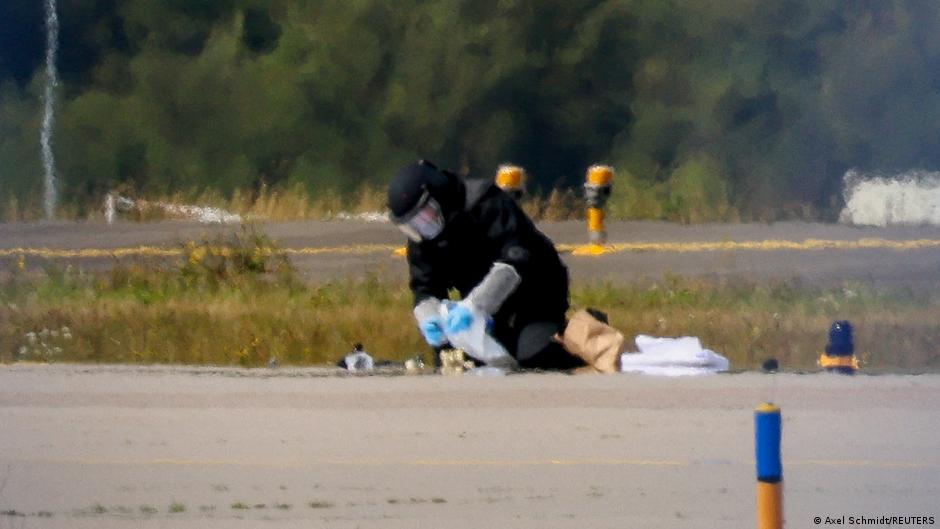
Latvia has said that a Latvian citizen suspected of involvement in an alleged sabotage attempt at Leipzig airport had been living in Russia on a permanent basis in recent years, adding a new layer to a case that is already drawing attention across Europe’s transport, security and policy circles.
The statement, reported on Thursday, September 3, by Latvian news agency Leta and attributed to Latvia’s State Security Service, came as Riga confirmed it is cooperating with German investigators and providing the necessary support. The Latvian agency declined to comment further, citing the ongoing investigation. Germany’s federal prosecutor has not yet issued official public comments on the case.
For startup investors and founders tracking European logistics, aviation, dual-use technology and compliance infrastructure, the case is significant less for any immediate commercial outcome than for what it signals about the operating environment around critical transport nodes. Leipzig is a major cargo hub, and an alleged attack involving drones near Ukrainian aircraft underscores how geopolitical tensions can spill into the physical systems that support trade, supply chains and cross-border movement.
Investigation expands across borders
German investigators had earlier identified two suspects in the case involving an attempted act of sabotage. According to reporting cited from Süddeutsche Zeitung as well as broadcasters NDR and WDR, the alleged attempted attack on a Ukrainian transport aircraft involved a person born in Russia who holds Latvian citizenship and a Belarusian national who holds Russian citizenship.
The second suspect reportedly entered the Schengen area using an Italian tourist visa. That document was issued in late April by an Italian diplomatic mission in Minsk. After those details became public, Rome said it would review the circumstances under which the visa had been granted.
“An investigation will be conducted,” Italian Foreign Minister Antonio Tajani was quoted as saying by Euractiv, adding that the episode confirmed that some countries were attempting to act against the European Union, including by using individuals with no criminal record and who do not arouse suspicion.
That point may resonate well beyond government ministries. For venture-backed businesses operating in sensitive sectors, the reference to individuals who do not immediately trigger suspicion highlights a widening concern around compliance systems, vetting processes and the limits of traditional risk screening. It also sharpens attention on the intersection of mobility, immigration controls and enterprise security.
The alleged sabotage attempt involving a Ukrainian Antonov An-124 cargo plane took place on August 4. Investigators say at least three drones were involved. One drone equipped with explosives was found near several Ukrainian cargo aircraft. A second is believed to have crashed into a DHL cargo plane within minutes of the first drone being discovered. A third drone was found 10 days later, on August 14, in a field west of the airport. Investigators discovered about 50 grams of a substance near it that, in an initial assessment, was thought to be hexogen.
Those details matter for a broad swath of Europe’s innovation economy. Startups building drone detection, perimeter security, airport analytics, cargo monitoring and infrastructure resilience tools are likely to see the incident as further evidence that public and private operators face a more complex threat picture. The case also points to the vulnerability of high-value logistics infrastructure at a time when Europe is trying to reinforce industrial capacity, defense readiness and supply-chain reliability.
Berlin has placed responsibility for the incident on Russia. In response, the German government decided to close Russia’s consulate general in Bonn and terminate the agreement governing the operation of the Russian House in Berlin. Germany also said it would tighten checks on Russian citizens entering the country and strengthen measures against Russia’s so-called shadow fleet, which Moscow is accused of using to circumvent European Union sanctions tied to Russia’s war against Ukraine.
For investors, the policy fallout is almost as important as the criminal investigation itself. When governments respond to alleged sabotage with tighter border controls, sanctions enforcement and institutional closures, the result can be a more demanding environment for founders operating internationally. Companies in logistics software, travel, trade facilitation, aerospace services and compliance technology may face higher expectations from customers and regulators alike, even if no formal new business rules are announced immediately.
At the same time, the case could reinforce demand for technologies designed to harden physical and digital infrastructure. Europe’s startup ecosystem has already seen growing interest in defense tech, resilience software and tools that support sanctions screening and operational monitoring. While the Leipzig incident does not itself establish any market outcome, it adds another data point for backers who have increasingly focused on strategic infrastructure as an investable theme.
Moscow has rejected the allegations that it organized the sabotage in Leipzig. In response to the closure of the Russian House in Berlin, Russian authorities said they would close the branches of the Goethe-Institut operating in Russia, located in Moscow, St. Petersburg and Novosibirsk.
The immediate facts of the case remain under investigation, and officials in both Latvia and Germany have disclosed only limited information. But even at this stage, the episode illustrates how security incidents tied to airports and cargo operations can ripple far beyond law enforcement. For Europe’s startup and venture community, the broader message is that geopolitical risk is increasingly inseparable from infrastructure risk, and that the systems connecting aviation, trade and technology are becoming a frontline issue in the region’s innovation economy.