Russia to close Goethe-Institut branches after Berlin pact is scrapped
The move removes a long-standing German cultural network from Russia and adds another layer of friction for startups, investors and cross-border innovation ties.
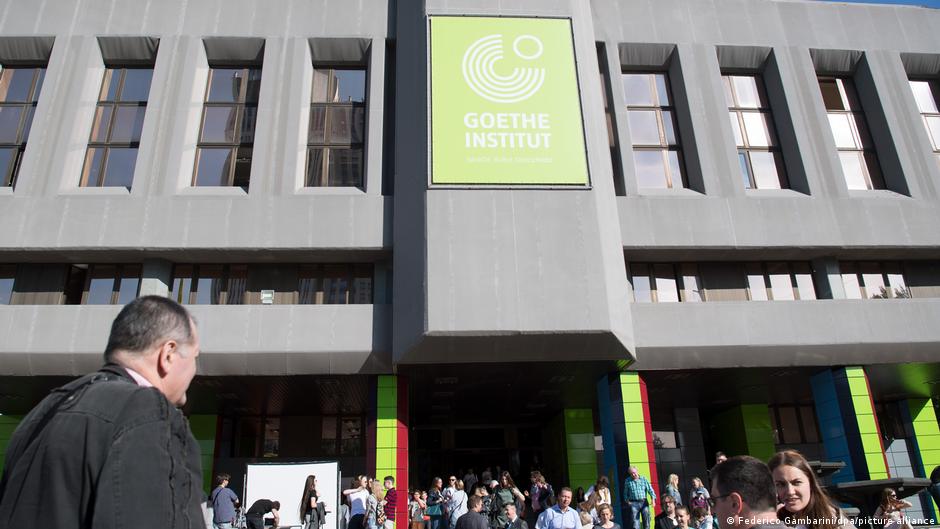
Russia will close the German Goethe-Institut’s branches in the country after Berlin moved to terminate its agreement with Moscow over the operation of the Russian House in Berlin, Russian Foreign Minister Sergei Lavrov said on Thursday, September 3, at the Eastern Economic Forum in Vladivostok.
For the innovation economy, the decision matters beyond cultural diplomacy. The Goethe-Institut has long been part of the infrastructure that supports language training, academic exchange and business familiarity between Germany and Russia. Its removal further narrows the channels through which founders, researchers and investors maintain soft connections during a period already defined by sanctions, political estrangement and tighter border controls.
Lavrov said Germany’s decision followed what Russian officials described as an answer to a drone attack in Leipzig. Speaking at the forum, he said Germany had branches of the Goethe-Institut in Moscow, St. Petersburg and Yekaterinburg, adding that they would be shut after Russia’s cultural center was expelled from Berlin.
“Of course, they will be closed, after our cultural center was kicked out of there. Otherwise we will not respect ourselves,” Lavrov said.
According to the Goethe-Institut’s own data, however, its third branch in Russia is located not in Yekaterinburg, as Lavrov said, but in Novosibirsk.
Lavrov said the German authorities had “consciously” taken a step that, in his view, clearly meant ending their cultural presence in the Russian Federation, a presence that had remained despite what he called the “Ukrainian vicissitudes” in Russia’s relations with the West.
DW said it had asked the Goethe-Institut’s management for comment.
Pressure on cross-border ties
Lavrov’s remarks came a day after German authorities announced tougher sanctions against Russia, assigning responsibility to Moscow for a drone incident at Leipzig airport in August. German Interior Minister Alexander Dobrindt said the decision followed an examination of the drones’ settings and certain components that had also been used in other hybrid incidents.
As part of the response, the German government ordered the closure by September 18 of the last Russian general consulate in the country, located in Bonn, and said it would terminate the agreement governing the activities of the Russian House in Berlin, according to German Foreign Minister Johann Wadephul. The same agreement also regulated the Goethe-Institut’s work in Russia.
Berlin also plans tighter controls on the entry of Russian citizens and stronger measures against what German officials called Russia’s “shadow fleet.”
For VentureLine readers, the immediate significance is not that the Goethe-Institut was a venture investor or startup operator. It was not. The significance is that Europe’s and Russia’s already diminished connective tissue is being cut back even further. In practical terms, that can make talent mobility, language access, partnership-building and trust formation harder at a time when tech companies operate in a fragmented geopolitical environment.
Germany has been one of Europe’s central nodes for venture capital, industrial technology and applied research. Russia, despite the sharp contraction in ties with Western markets, still has founders, engineers and research institutions that have historically interfaced with German academia, corporates and cultural organizations. Institutions such as the Goethe-Institut sit adjacent to that ecosystem, helping enable the softer forms of engagement that often precede commercial collaboration.
When those channels disappear, the cost is rarely measured in a single transaction. It shows up in fewer founder exchanges, weaker language pipelines, reduced convening power and fewer points of contact for students, researchers and early-stage entrepreneurs trying to navigate foreign markets. That matters especially for deep tech, industrial software and science-linked ventures, where relationships often begin long before any funding round or acquisition process emerges.
The broader backdrop is an escalating policy environment in which sanctions, consular closures and entry restrictions increasingly shape business reality. Even where startup activity continues, the compliance burden rises, legal uncertainty expands and cross-border planning becomes harder. Venture firms and multinational technology groups assessing exposure to Russia or Russian-linked talent pools have to account not only for formal restrictions, but also for the loss of institutions that facilitate routine interaction.
Germany’s decision to end the Russian House agreement and Russia’s stated response against the Goethe-Institut underline how diplomatic retaliation can spill into the wider innovation system. Cultural organizations are not a substitute for capital markets or corporate partnerships, but they often help sustain the human and educational networks on which those markets eventually depend.
In that sense, Lavrov’s announcement is another sign that the decoupling between Russia and key European systems is moving beyond trade and finance into the ecosystem layer. For startups, that means a thinner environment for international collaboration. For investors, it points to a landscape where geopolitical risk continues to reshape not just market access, but the very institutions that support long-term innovation ties.
The facts now on the table are straightforward: Berlin says it is tightening sanctions after the Leipzig airport drone incident, closing Russia’s last general consulate in Germany by September 18, terminating the Russian House agreement in Berlin and tightening scrutiny of Russian entries and maritime activity. Moscow, through Lavrov, says the Goethe-Institut’s branches in Russia will be closed in response. Together, those steps mark another contraction in the channels linking Russia to Europe’s broader knowledge and startup economy.