Lithuania and Latvia Deny Airspace Access to Slovak PM’s Flight to Moscow Amid Geopolitical Tensions
Baltic states block Slovak Prime Minister’s transit to Moscow ahead of May 9 Victory Day celebrations, reflecting ongoing EU-Russia political sensitivities.
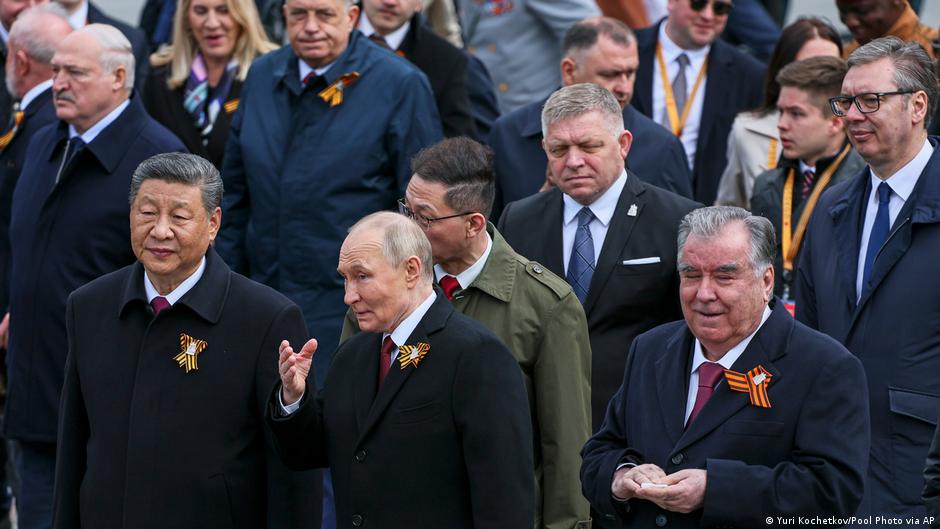
In a renewed display of geopolitical friction affecting European airspace and diplomacy, Lithuania and Latvia have once again refused to allow the private plane of Slovak Prime Minister Robert Fico to traverse their territories en route to Moscow. The trip is intended for the Russian Victory Day celebrations on May 9, a significant annual event commemorating the end of World War II.
Implications for European Political Access and Regional Stability
Prime Minister Fico confirmed on April 18 that both Lithuania and Latvia have officially informed Bratislava that they will not permit his aircraft to fly over their airspace ahead of the Moscow visit. "Lithuania and Latvia have already notified us that they will not allow transit during the flight to Moscow," Fico stated in a video address. He added that he would seek alternative routes, as was necessary during the previous year when Poland also denied overflight permissions.
This development underscores the complex political landscape within the European Union, where member states exercise sovereign control over their airspace in response to international tensions. While Slovakia and these Baltic nations are all EU members, diverging foreign policy stances toward Russia influence logistical and diplomatic arrangements.
"EU member countries have chosen not to allow the Prime Minister of another member state to fly over their territory." – Slovak Prime Minister Robert Fico
The refusal by Lithuania and Latvia to grant passage follows a pattern established in prior years. In 2023, airspace access for Fico and Serbian President Aleksandar Vučić was similarly denied by the Baltic states on grounds of "political sensitivity" and "diplomatic sensitivity." Poland also took part in blocking these flights, highlighting a coordinated approach among some EU countries to restrict official visits to Russia amid strained relations.
These restrictions come against a backdrop of Russia inviting a broad cohort of foreign dignitaries to mark Victory Day, a tradition that witnessed attendance by leaders from 27 countries in 2022, including China, Belarus, Cuba, Venezuela, Slovakia, and Serbia. The European Union has consistently cautioned its aspirant members and politicians against traveling to Moscow for these events, signaling ongoing diplomatic friction.
Impact on the Innovation and Venture Capital Ecosystem
While this episode is primarily political, it has indirect consequences for technology startups and the venture capital landscape in Central and Eastern Europe. Heightened geopolitical tensions can exacerbate uncertainties for cross-border investments, partnerships, and talent mobility within the EU and with Russian-linked markets.
For startups eyeing expansion or collaborations in Eastern Europe, evolving regulatory and diplomatic constraints may complicate travel and communication channels. Venture capital firms that assess geopolitical risk as part of their investment evaluations might recalibrate funding priorities, favoring markets perceived as more stable or aligned politically.
Moreover, the politicization of airspace and diplomatic access adds layers of operational complexity for international business leaders and innovators who depend on seamless connectivity across borders. As governments tighten restrictions based on political considerations, the resulting fragmentation risks slowing innovation ecosystems that thrive on openness and cooperation.
Industry observers note that such political moves could accelerate consolidation trends, mergers, and acquisitions as startups seek to anchor themselves in jurisdictions with less geopolitical friction. The stakes are especially high for technology sectors reliant on global supply chains, diverse talent pools, and cross-border capital flows.
Looking Ahead
Prime Minister Fico’s intention to find an alternative flight route to Moscow highlights the logistical challenges posed by fragmented European airspace policies amid geopolitical divides. For the broader European tech and startup ecosystem, sustained political tensions underscore the need for strategic agility and risk management.
Investors and entrepreneurs should monitor how such diplomatic disputes impact regional connectivity, regulatory frameworks, and ultimately the flow of venture capital. While immediate effects on startup funding may be subtle, the cumulative impact of political fragmentation could reshape the innovation landscape in Central and Eastern Europe over the coming years.