Putin Warns Armenia’s EU Bid Implies Exit From Eurasian Economic Bloc
The dispute over Armenia’s EU ambitions adds strategic uncertainty for startups, investors and cross-border trade tied to the Eurasian market.
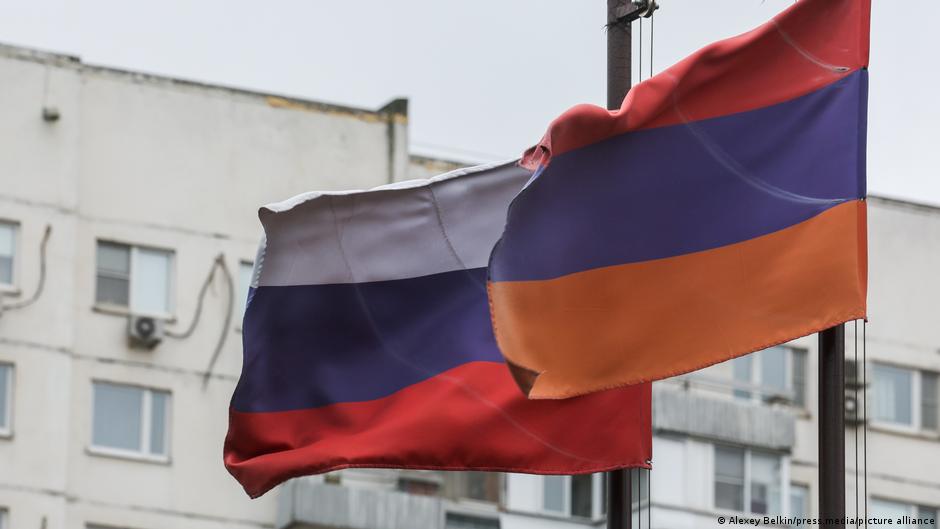
Russian President Vladimir Putin told Armenian Prime Minister Nikol Pashinyan that Armenia’s move to begin the process of joining the European Union would, in practical terms, amount to leaving the Eurasian Economic Union, sharpening a geopolitical dispute with implications for the country’s investment climate, trade access and startup ecosystem.
The exchange took place during a meeting between the two leaders on the sidelines of the Shanghai Cooperation Organisation summit in Bishkek. According to a transcript published on the Kremlin’s website on Tuesday, September 1, the central issue in the talks was Yerevan’s plan to submit an application for EU membership.
“You said that you had not declared your withdrawal. The adoption of a law on the start of the procedure for joining another economic organisation in fact means a declaration of withdrawal from ours, because being there and there is incompatible. That is the problem,” Putin said.
By the “other organisation,” Putin was referring to the EU, and by “ours,” to the Eurasian Economic Union, or EAEU. He again called for Armenia to hold a referendum on choosing between the EU and the EAEU, saying the government should “turn to the people, ask them.”
Pashinyan pushed back, saying Yerevan had reviewed the legal framework governing Armenia’s relations with Russia as well as the agreements in force within the EAEU and had found no breach of Armenia’s obligations to either Moscow or the bloc. He added that with the adoption in 2025 of a law on European integration, Armenia had effectively ruled out a referendum on choosing between the EU and the EAEU.
Why the dispute matters for startups and investors
For the venture and startup community, the disagreement is more than a diplomatic argument. Armenia has spent years building a reputation as a small but increasingly visible technology hub, with founders, software exporters and internationally connected startups relying on predictability in regulation, market access and logistics. Any renewed clash over whether Armenia can balance deeper EU ties with continued EAEU membership introduces strategic questions for companies deciding where to incorporate, hire, export and raise capital.
If Armenia’s path toward the EU is treated by Moscow as incompatible with EAEU membership, startups could face a more fragmented operating environment. Founders selling into the Russian market or depending on regional supply chains may have to reassess commercial exposure. Investors, especially those looking at cross-border growth stories, typically discount political volatility that can alter customs rules, product movement or bilateral market access. Even absent an immediate legal break, the rhetoric alone can raise execution risk for early-stage companies.
That matters in venture terms because smaller ecosystems tend to depend heavily on confidence signals. For Armenia, those signals include access to outside capital, the ability to attract diaspora founders, and a stable framework for scaling companies beyond the domestic market. A prolonged dispute between Moscow and Yerevan over the country’s strategic orientation could complicate each of those factors, particularly if trade pressure expands or if businesses begin planning for diverging regulatory regimes.
Pashinyan announced on August 24 that Armenia intended in the near future to begin the process of submitting an application to join the EU. Following that statement, the European Commission said Armenia was now “closer to the European Union than ever before,” while also stressing that accession takes place within a “clearly defined process based on merit.”
For investors, that response signals both opportunity and constraint. On one hand, stronger alignment with European institutions can be read as supportive of governance reform, rule-based market integration and broader links with Western capital networks. On the other, the Commission’s formulation underlines that EU accession remains a long and structured process rather than a near-term operating reality for businesses on the ground.
The policy ambiguity is especially relevant for M&A and strategic investment. Acquirers and late-stage backers generally price assets against future jurisdictional certainty, not just present fundamentals. If Armenia is seen as moving toward one economic orbit while still embedded in another, buyers may demand larger risk buffers or slower timelines. That does not eliminate dealmaking, but it can change valuations and diligence priorities for technology assets tied to regional trade flows.
In June, Pashinyan had said there were no grounds for holding a referendum on joining the European Union. He was responding to a joint statement by the leaders of Russia, Belarus, Kazakhstan and Kyrgyzstan. Putin had previously argued that membership in the EU and the EAEU could not be combined. The Russian leader had also said that the “Ukrainian scenario” allegedly began with Kyiv’s attempt to join the EU.
The pressure around Armenia’s geopolitical direction has already shown up in economic measures. Ahead of Armenia’s parliamentary elections on June 7, Moscow increased pressure on Yerevan, including by banning imports into Russia of a number of Armenian products. Pashinyan’s Civil Contract party ultimately won those elections. His September 1 meeting with Putin in Bishkek was the first face-to-face encounter between the two leaders since that vote.
That sequence will be closely watched by entrepreneurs and funds assessing Armenia’s next phase. Trade restrictions on Armenian products may not directly target the startup sector, but they shape broader market sentiment and can affect everything from currency expectations to confidence in cross-border expansion. In emerging innovation ecosystems, political risk rarely stays contained within one industry.
For now, the immediate takeaway for venture investors is not that Armenia’s tech sector has lost momentum, but that the country’s strategic positioning is becoming a more central diligence issue. Founders can still pitch growth, talent depth and European alignment. But after Putin’s latest warning, they may also need to answer harder questions about market access, bloc compatibility and how durable Armenia’s east-west balancing act will prove to be.