Russia Labels StopTime Musicians ‘Foreign Agents’ After Protest Performances
The designation highlights regulatory and reputational risks facing creators, digital platforms and investors in Russia’s innovation economy.
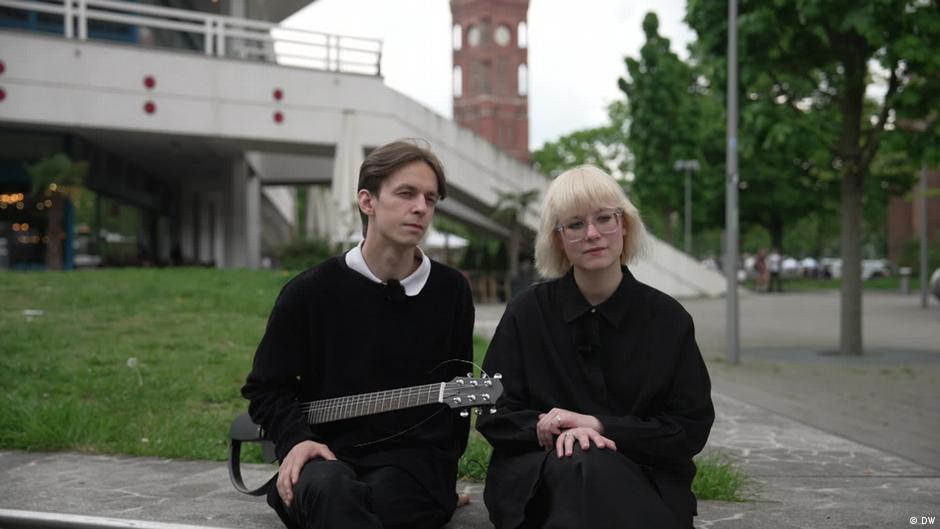
Russia’s Ministry of Justice has added two members of the street music group StopTime to its register of “foreign agents,” underscoring the widening compliance risks surrounding independent creators, social media distribution and the digital businesses that support them.
The designation covers 19-year-old vocalist Diana Loginova, who performs under the name Naoko, and her husband, 23-year-old guitarist Alexander Orlov. The ministry published the decision on its website on Friday, October 16, exactly one year after the musicians received their first administrative detention.
According to the ministry’s justification, Loginova opposed the war in Ukraine, “distributed false information” about the decisions and policies of the Russian authorities, and interacted with people designated as foreign agents. The ministry alleged that Orlov, among other activities, “actively participated in distributing anti-Russian materials.”
The case illustrates how cultural activity promoted through social networks can become a regulatory exposure for creators and the technology platforms around them.
The October 16 update also added the movement Malinovy Klin — Independent Kuban to the foreign-agent register. Authorities claimed, among other things, that the organization had called for a violation of Russia’s territorial integrity.
Digital distribution meets regulatory pressure
StopTime began performing on the streets of St. Petersburg in spring 2025. Until January 2026, its lineup also included drummer Vladislav Leontiev. The group advertised its concerts through social media, demonstrating how independent performers can use digital channels to assemble an audience without relying on established venues, record companies or traditional marketing infrastructure.
Its performances included songs by Noize MC, Monetochka, Zemfira and the band Pornofilmy. All of those artists have also been designated as foreign agents by the Russian Ministry of Justice. During one performance in October 2025, StopTime played Noize MC’s song “Kooperativ Lebedinoye Ozero.” A St. Petersburg court had classified the song as information prohibited in Russia in May.
For venture investors and founders, the case points to risks extending beyond media and entertainment. Startups operating creator platforms, ticketing services, event discovery products, streaming tools, social networks or payment infrastructure may face difficult decisions about moderation, customer access and regulatory compliance when artists or their material receive official designations.
The available information does not identify any startups, investors, financing rounds or acquisition talks connected to StopTime. Nor does it indicate that technology companies were involved in the authorities’ actions. The broader relevance for the innovation ecosystem lies instead in the operating environment: online tools that lower barriers for independent creators can also make their activity easier to promote, document and scrutinize.
A year of arrests and departure
The foreign-agent designation came exactly one year after Loginova, Orlov and Leontiev were first placed under administrative arrest. The musicians were found guilty of organizing a mass event that led to a disruption of public order. The case concerned a concert near the Ploshchad Vosstaniya metro station that attracted 70 people, according to police.
Immediately after the first detention terms expired, authorities drew up new administrative reports against the group’s members. The successive cases, sometimes described as “carousel” protocols, kept them in custody almost until the middle of November.
After a third consecutive detention, Loginova and Orlov left Russia. Leontiev remained in the country and subsequently left the group.
The sequence—from social media promotion and a small street audience to repeated detention, emigration and inclusion on the foreign-agent register—shows the potential speed with which political and regulatory risk can reshape a creator-led project. Such uncertainty can complicate long-term planning for companies serving independent artists and other online communities.
It may also affect how founders and venture funds assess investment in Russia’s creator economy and adjacent consumer technology sectors. Platforms must weigh growth opportunities against legal exposure, while investors evaluating funding or acquisitions may need to examine content policies, user communities and enforcement risks alongside conventional commercial metrics.
StopTime’s experience does not establish a direct regulatory outcome for startups or investors. It does, however, offer a clear example of the pressures facing digitally organized cultural activity in Russia—and of the constraints that can influence where creators, entrepreneurs and capital choose to operate.