AfD Victory in Saxony-Anhalt Draws Alarm From European Leaders
Poland, France and the Czech Republic reacted sharply after preliminary results put the far-right AfD far ahead in an eastern German state vote.
Political leaders in countries bordering Germany moved quickly to respond after the far-right Alternative for Germany, or AfD, scored a major electoral success in the eastern state of Saxony-Anhalt, a result that could deepen uncertainty across Europe’s policy landscape and add new pressure on Germany’s innovation economy.
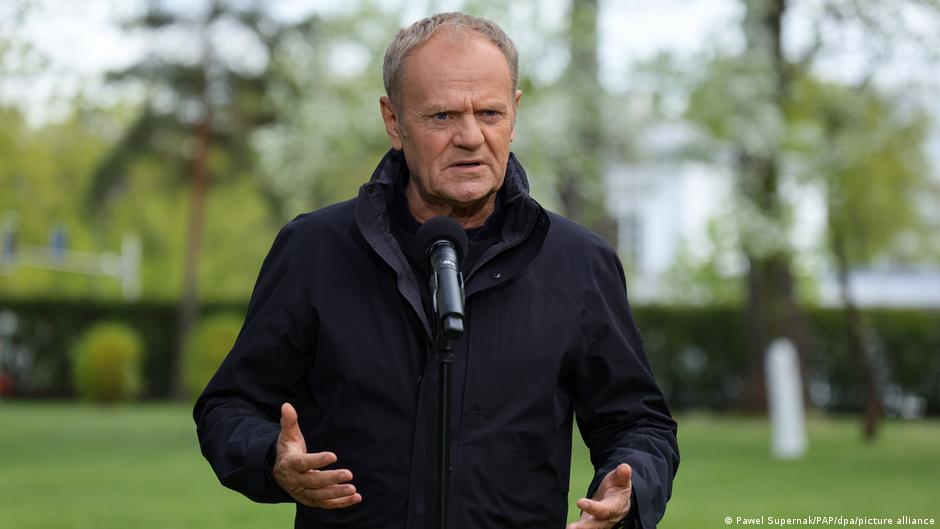
Polish Prime Minister Donald Tusk said he was stunned by the AfD’s performance in the state parliament election. Writing on X on Sunday evening, September 6, Tusk delivered one of the sharpest reactions from a European head of government, warning against any celebration of the party’s rise.
“In Poland, only idiots or traitors can rejoice at the triumph of the AfD party in Germany,” Tusk wrote.
He added that, in his view, a number of such figures had accumulated in Poland’s opposition parties, naming Confederation and Law and Justice, known as PiS.
Preliminary results in Saxony-Anhalt showed the AfD winning decisively with 44 percent of the vote. The party’s candidate for state premier is Ulrich Siegmund. The scale of the result puts the party far ahead of the Christian Democratic Union, whose member Sven Schulze is the incumbent state premier. The CDU was preliminarily projected at 17.4 percent.
For investors, founders and corporate dealmakers, the outcome is not only a political development. Saxony-Anhalt is part of Germany’s eastern industrial and technology corridor, and the vote adds to questions about how political polarization could affect regional investment, talent mobility, public-private partnerships and cross-border confidence in Germany as a startup and manufacturing hub.
Investor Confidence Meets Political Volatility
Germany remains one of Europe’s core markets for venture capital, deep-tech commercialization and industrial innovation. Any major shift in state-level politics can matter for startups because German regional governments influence infrastructure, business incentives, education policy and the tone of public engagement with international companies and workers.
The AfD’s strong showing may therefore be watched closely by venture funds and strategic investors with exposure to Germany’s eastern states. The source article does not report specific investor reactions or funding impacts, but the political context is relevant for the innovation ecosystem because early-stage companies often depend on predictable regulation, access to skilled labor and openness to international networks.
Benjamin Haddad, France’s minister for European affairs, also reacted on X, calling the result a “difficult moment for Europe.” He said European leaders must listen to anger, anxieties and fears and respond to them, while stressing that nationalism and xenophobia would never be the answer.
“We must not forget our history,” Haddad said, according to the report.
Haddad said this historical awareness underlies the importance of decisions taken by France and Germany. His comments point to a broader concern for the European Union: political fragmentation in large member states can complicate the coordination needed for industrial policy, defense technology, energy transition projects and digital regulation.
That matters to the startup sector because European innovation increasingly depends on coordinated markets rather than isolated national programs. Venture-backed companies in areas such as artificial intelligence, climate technology, cybersecurity, semiconductors and mobility often need EU-wide regulatory clarity, cross-border customers and access to pan-European capital. Political shocks in Germany can therefore resonate beyond a single state election.
Regional Vote, Continental Signal
The reaction from the Czech Republic was notably different. Tomio Okamura, speaker of the Czech Chamber of Deputies and founder of the right-wing Freedom and Direct Democracy party, congratulated the German far-right party on its success during an appearance on public broadcaster CT.
“I hope, above all, that it will become part of the new governing coalition in the state of Saxony-Anhalt,” Okamura said. The politician, who is of Japanese-Korean origin, leads the SPD, which is part of the ruling coalition in the Czech Republic. Since late 2025, the Czech government has consisted of the right-populist ANO party of billionaire Andrej Babis, Okamura’s SPD and the Motorists party.
The contrast between Tusk’s condemnation, Haddad’s warning and Okamura’s congratulations illustrates how Europe’s right-wing and nationalist parties may interpret the Saxony-Anhalt result as a signal of momentum. For founders and investors, that creates a more complex operating environment. Political alignment across neighboring markets can influence everything from immigration rhetoric to energy policy and procurement priorities.
Preliminary vote shares reported in Saxony-Anhalt placed the Left Party at 8.6 percent, Alliance 90/The Greens at 8.9 percent, the Social Democratic Party of Germany at 9.2 percent and the Sahra Wagenknecht Alliance at 5.1 percent. The Free Democratic Party and other parties failed to cross the five percent threshold, according to the preliminary results.
Based on those figures, the 83 seats in the Saxony-Anhalt state parliament could be distributed as follows: the AfD would receive 39 mandates, the CDU 15, the Left Party, the Greens and the SPD eight seats each, and the Sahra Wagenknecht Alliance five. Preliminary final results were expected during the night leading into September 7.
The parliamentary arithmetic will determine whether the AfD’s electoral lead translates into governing power or remains a disruptive force from outside government. That distinction is important for the business community. A party can shape sentiment and political debate without controlling the executive, but entry into a governing coalition would raise more direct questions about state policy, administrative appointments and the future of economic development programs.
For Germany’s startup ecosystem, the immediate issue is not a single policy change but the signal sent by the vote. Venture capital depends on confidence in institutions, openness to talent and confidence that public policy will remain stable enough for long-horizon bets. Saxony-Anhalt’s result, and the intense reaction it triggered from Warsaw, Paris and Prague, shows that regional elections in Europe’s largest economy can quickly become a continental business risk indicator.