Ukraine Sanctions Russian Vote Organizers in Occupied Regions
Kyiv’s move adds legal and geopolitical risk around occupied Ukrainian territories as Europe weighs parallel sanctions.
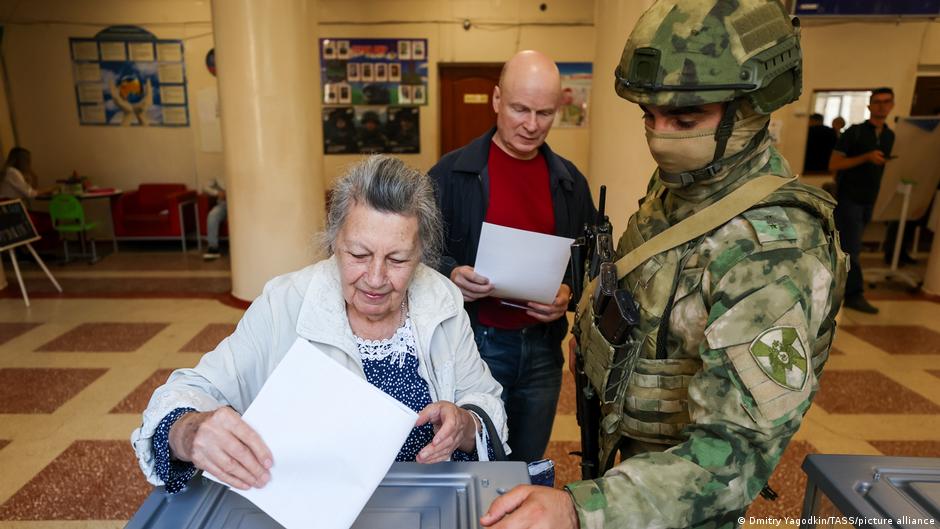
Ukrainian President Volodymyr Zelensky has imposed sanctions on people involved in organizing Russian State Duma elections in occupied Ukrainian territories, a step that underscores the widening compliance and geopolitical risk surrounding Russia-linked activity in those regions. The European Union had earlier signaled its readiness to add the same category of individuals to its own sanctions lists.
The sanctions, introduced on Saturday, September 27, target 44 people connected to the conduct of the vote. According to the Office of the President of Ukraine, 38 of those sanctioned hold both Ukrainian and Russian citizenship. Ukrainian authorities said some of the individuals had already been “elected” as so-called deputies of illegally created local councils on the temporarily occupied territory of Ukraine.
For technology startups, investors and acquirers operating across Europe, the move is another reminder that Ukraine-related sanctions are not limited to major state companies or military suppliers. They also reach local political intermediaries, administrators and individuals tied to governance structures established by Russia in occupied areas. That creates a broader due diligence challenge for venture capital funds, fintech companies, SaaS platforms, marketplaces and other firms with cross-border exposure to counterparties, employees, customers or vendors in the region.
Ukraine and its Western allies have recognized both the process and the results of the vote as illegal.
Occupied Territories Become a Sharper Compliance Flashpoint
Russia held State Duma elections from September 18 to 20. For the first time in parliamentary elections, Russian authorities organized voting in occupied territories of Ukraine’s Kherson, Zaporizhzhia, Donetsk and Luhansk regions. Kyiv and its Western allies have rejected the process and its results as unlawful. The European Union has also said it is prepared to impose sanctions on people who helped conduct the elections in occupied Ukrainian territories.
The latest Ukrainian action matters beyond the immediate political dispute because sanctions lists have become a central filter for global capital flows. Venture investors increasingly need to screen not only founders and shareholders, but also regional partners, local contractors, payment recipients and politically exposed persons who may appear in a company’s operating history. That is especially relevant for startups in cybersecurity, defense tech, logistics, financial services, identity verification and communications infrastructure, where exposure to sanctioned individuals can affect fundraising, banking access and exit prospects.
The risk is not theoretical for companies with Ukrainian, Russian or broader Eastern European links. A startup may have no direct business in occupied territories and still face questions during diligence if an adviser, early backer, reseller or local government-facing partner is later identified by authorities as having supported Russian administrative structures. In M&A processes, buyers may respond by expanding sanctions warranties, tightening representations around beneficial ownership, and requiring more detailed records of historic transactions.
Russia’s New Electoral Map Raises Investor Questions
For the 2026 State Duma elections, Russian authorities for the first time created separate single-member districts for Ukrainian regions occupied after 2022. Following the vote, Russia announced winners in single-member districts in the self-proclaimed “DNR” and “LNR,” as well as in occupied parts of Zaporizhzhia and Kherson regions.
In the “DNR,” Russia announced the election of Irina Kuksenkova, a war correspondent for Channel One, and Alexander Borodai, a former “head” of the self-proclaimed republic. In the “LNR,” it announced the election of Denis Kolesnikov and Ivan Sanayev, described as “local parliament deputies.” In occupied Zaporizhzhia region, Russia named Alexei Tikhomirov, and in occupied Kherson region, Elena Dmitruk, described as a “deputy chair of the local parliament.” All of them ran on the ticket of United Russia.
In addition to the single-member candidates, eight more representatives of the “authorities” in occupied Ukrainian territories entered the Russian State Duma through federal party lists. Among them was Serhiy Arbuzov, a former first deputy prime minister of Ukraine under President Viktor Yanukovych and former head of the National Bank of Ukraine, who was nominated by the party A Just Russia.
For the venture ecosystem, the practical consequence is a more complicated map of prohibited or high-risk relationships. Startups seeking international capital are already being asked by investors to demonstrate clean ownership, transparent cap tables and reliable compliance controls. The inclusion of local political figures and election organizers in sanctions measures can make those reviews more granular, particularly for companies with regional hiring, inherited subsidiaries, legacy Russian-language customer bases or historical banking ties.
VC funds may also need to revisit portfolio-level exposure. Even where a company’s product is purely digital, sanctions risk can arise through customer onboarding, payment infrastructure, distribution partnerships or procurement. Founders planning acquisitions or cross-border expansions are likely to face more intensive checks around counterparties connected to occupied territories, Russian political parties or administrative bodies that Ukraine and its allies consider illegitimate.
The Ukrainian sanctions do not create a new technology policy framework by themselves. But they add to a broader environment in which war-related legal risk is shaping investment decisions, startup governance and transaction timelines. As the EU considers parallel measures, the impact could extend beyond the named individuals, influencing how funds, strategic buyers and compliance teams evaluate companies with any operational footprint near the conflict’s legal and political boundaries.