Trump Expects New Iran Talks as Strait Crisis Clouds Startup Risk Outlook
The White House is pressing for a broader agreement with Tehran as Gulf shipping disruption and strike risks weigh on venture-backed technology sectors.
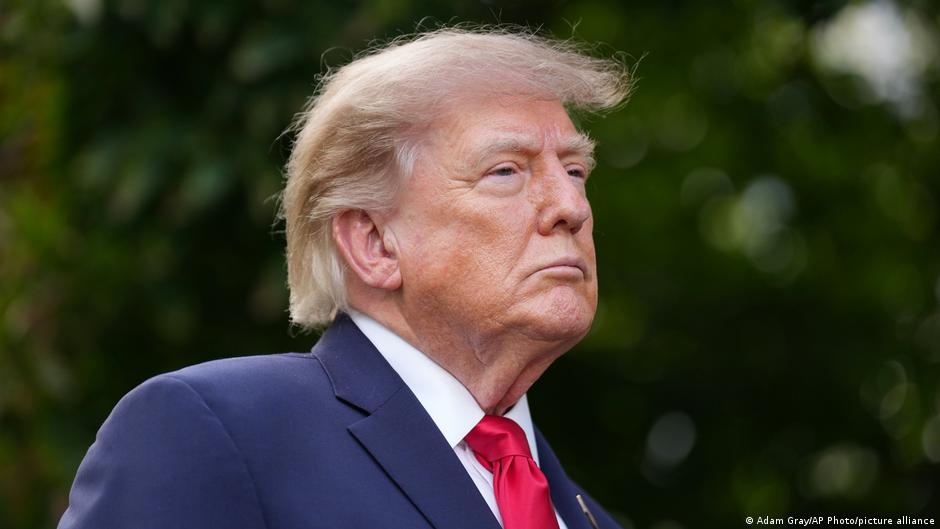
U.S. President Donald Trump expects negotiations with Iran to resume in the coming days, even after rejecting Tehran’s proposed seven-day plan to reopen the Strait of Hormuz. The renewed diplomatic track, described by Trump in a phone interview with Axios on Sunday, September 27, comes as Washington and Tehran remain divided over the scope of any agreement.
For venture capital investors and technology startups, the dispute is not a distant geopolitical story. The Strait of Hormuz is a critical maritime corridor, and uncertainty around its status can ripple through energy markets, logistics networks, hardware supply chains and the broader risk appetite that shapes startup financing. Any escalation involving U.S. strikes on Iran would add another layer of volatility for founders and investors already navigating fragile global capital conditions.
“I expect new talks with Iran,” Trump said, adding that Tehran “wants to make a deal,” but not the deal he wants.
Trump said the United States might have accepted such terms a year ago, but argued that Iran had overestimated its position. Asked whether he was considering renewed strikes on Iran, the U.S. president replied that he “always” thinks about it.
Talks Resume Around Competing Deal Structures
Axios reported that two regional sources, speaking anonymously, also confirmed expectations that talks between the two countries would resume. According to those sources, Qatari mediators who previously participated in meetings between representatives of Washington and Tehran are expected to meet as soon as September 28 with Iranian Foreign Minister Abbas Araghchi and U.S. presidential special envoy Steven Witkoff.
The core problem is that both sides appear to be defining a potential deal differently. Tehran wants any negotiations to focus on fully reopening the Strait of Hormuz and lifting the U.S. maritime blockade. Washington, by contrast, is seeking a broader agreement that would include concessions on Iran’s nuclear program.
That gap matters for markets because it affects whether talks are likely to produce a narrow de-escalation around shipping, or a more ambitious settlement that would require deeper political concessions. For startups, especially those dependent on international freight, cloud infrastructure expansion, semiconductors, energy-intensive computing, defense technology, maritime analytics or industrial automation, the difference is material. A limited reopening could ease immediate pressure on transport and energy assumptions, while a prolonged standoff would keep operational planning and fundraising narratives exposed to geopolitical shocks.
Several days earlier, Araghchi said Tehran had proposed that Washington restore vessel traffic through the Strait of Hormuz within a week if certain conditions were met, while also resuming talks on a long-term settlement of the conflict. Media reports listed those conditions as an end to fighting on all fronts, including Lebanon, the lifting of the blockade on Iranian ports, the unfreezing of Tehran’s assets and the removal of restrictions on Iranian oil exports.
On September 26, Trump said he had rejected Iran’s proposal. He said Tehran wanted a deal under which the strait would open immediately because Iran was suffering “crushing losses.” Trump added that he liked making deals, but that the arrangement proposed by Iran would be unacceptable.
Why Venture Investors Are Watching the Strait
The immediate venture capital implication is less about direct exposure to Iran and more about second-order effects. Startups do not need operations in the Gulf to be affected by higher uncertainty around energy flows, shipping routes or military escalation. Hardware companies can face planning risk around component movement and manufacturing schedules. Climate and energy startups can see customer demand shift quickly as companies reassess fuel prices and resilience strategies. Defense and dual-use startups may find heightened attention from customers and investors, while consumer and enterprise software companies could see buyers become more cautious if macro sentiment deteriorates.
The M&A environment could also be affected. Strategic buyers tend to become more selective when geopolitical risk rises, particularly in capital-intensive categories such as robotics, mobility, aerospace, energy infrastructure and supply chain technology. At the same time, larger incumbents may accelerate acquisitions in areas tied to resilience, maritime visibility, cybersecurity, defense analytics and energy management if the crisis underscores gaps in existing capabilities.
Venture firms will be watching whether Qatar’s mediation can produce enough progress to reduce near-term uncertainty. The fact that meetings are expected with both Araghchi and Witkoff suggests that a diplomatic channel remains active, but Axios noted that the two sides remain far apart on what an acceptable agreement should cover.
The risk of further escalation remains central. The Wall Street Journal previously reported, citing unnamed sources, that Trump had rejected Iran’s proposal and had told aides he intended to resume bombing the country after the midterm elections in Congress in November. According to the newspaper’s sources, Trump views a new military operation as “highly likely” because he is skeptical that Tehran is prepared to meet his demand for a complete abandonment of its nuclear program.
For founders, the message is that geopolitical risk is again becoming a boardroom issue. Startups with exposure to physical supply chains, energy costs or government procurement may need to revisit contingency planning, customer concentration and runway assumptions. For investors, the Iran talks are a test of whether diplomacy can contain a disruption that has the potential to reshape funding priorities across logistics, defense technology, energy resilience and infrastructure software.
The next round of talks, if it proceeds as expected, will therefore be watched not only in diplomatic capitals but also across the innovation economy. A narrow maritime arrangement could calm immediate fears around the Strait of Hormuz. A broader breakdown, especially if followed by renewed U.S. strikes, would raise the premium on resilience and risk management across the startup ecosystem.