AfD Victory in Saxony-Anhalt Raises Policy Uncertainty for Startups and Investors
The far-right party won 43.8% in the eastern German state, but coalition arithmetic leaves companies facing a difficult and uncertain governing process.
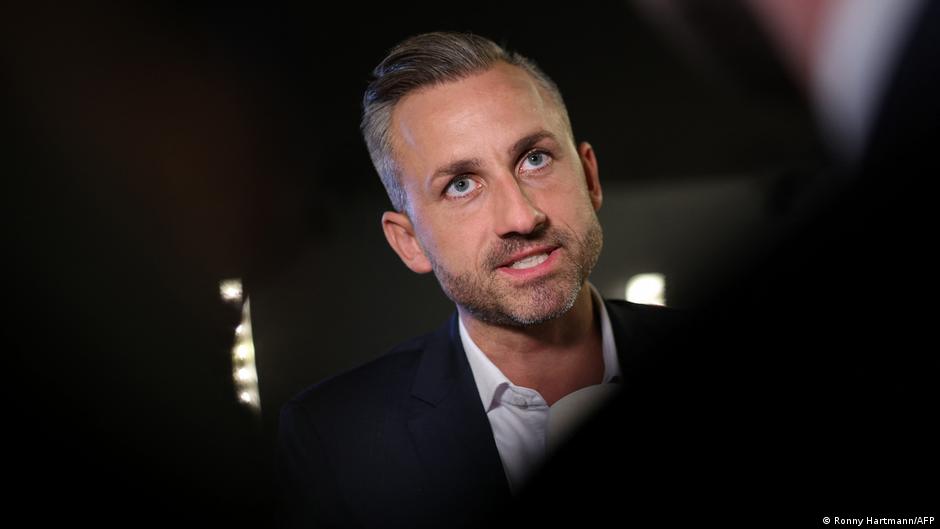
The election in Saxony-Anhalt has delivered a decisive first-place finish for the far-right Alternative for Germany, but not a clear governing path. For founders, venture investors and technology companies operating in eastern Germany, the result introduces a new layer of political uncertainty in a region where public policy, energy costs, labor availability and economic development programs matter directly to company formation and growth.
According to preliminary official results from the September 6 election to the Landtag, the state parliament of Saxony-Anhalt, AfD won 43.8% of the vote after ballots from all polling stations were counted and published overnight into Sunday, September 7. The party’s candidate for state premier is 35-year-old Ulrich Siegmund, and AfD chairman Tino Chrupalla has already said Siegmund will put himself forward for the post.
The Christian Democratic Union, the party of incumbent state premier Sven Schulze, fell to 17.2%, nearly half its result in the previous election. The Social Democratic Party received 9.3%, the Greens 8.9%, the Left Party 8.6%, and the Sahra Wagenknecht Alliance, known as BSW, entered the parliament with 5.3%. The Free Democratic Party and other parties failed to clear the 5% threshold. Turnout was 77.8%.
In the 83-seat Landtag, the distribution is expected to give AfD 39 seats, the CDU 15, the Left Party, Greens and SPD eight seats each, and BSW five seats. That makes coalition formation a highly complex exercise. It also means that a party with positions outside Germany’s traditional governing consensus will shape negotiations, even if it does not ultimately lead the state government.
Why the Result Matters for the Innovation Economy
For the startup and venture capital community, the immediate issue is not only who becomes premier, but whether Saxony-Anhalt can produce a stable government capable of setting clear priorities. Early-stage companies often depend on predictable regional policy in areas such as economic development, infrastructure, education, skilled migration, university partnerships and industrial investment. Any prolonged coalition deadlock could slow decision-making and complicate planning for companies seeking public support or assessing expansion in the state.
The result also puts economic policy at the center of coalition talks. BSW’s lead candidate in Saxony-Anhalt, Thomas Schulze, said after the election that his party was open to talks with AfD. He told dpa that BSW had said it would negotiate with all parties, including AfD, and that the party was not interested in a political “firewall.”
“We stated that we would hold talks with all parties. That includes AfD,” Thomas Schulze said, according to dpa.
Asked about common ground between the two parties, Schulze pointed first to Russia policy, saying they share positions against sanctions that, in his view, are damaging the economy. Both parties also advocate what they describe as affordable energy through renewed oil and gas supplies from Russia. For startups, especially hardware, climate technology, advanced manufacturing and data-intensive businesses, energy policy is not an abstract ideological issue. It affects operating costs, investor assumptions and the credibility of regional industrial strategy.
At the same time, dpa noted that there are AfD initiatives incompatible with BSW’s positions. Schulze said AfD’s education policy was completely unsuitable for BSW and that the parties were very far apart on that issue. He also said BSW takes a much more socially oriented position on the economy. BSW has proposed a nonpartisan state premier who would govern with shifting majorities involving AfD.
AfD’s Siegmund rejected that proposal and said the party would not give up its values and goals for political maneuvering, according to Reuters. He ruled out coalitions involving major compromises, saying voters should finally receive after elections what they voted for. He said cooperation would be possible only with those who support AfD’s demand for a clear change of political course in the state, whether through a parliamentary group or individual lawmakers. Chrupalla, speaking on ARD, said AfD was prepared to make compromises in talks with other parties, including on migration and economic policy, provided they agreed to a change of course.
CDU Defeat Deepens the Governance Puzzle
The CDU’s defeat was severe not only statewide but also personally for Sven Schulze. In his Magdeburg constituency, the 47-year-old incumbent lost with 31.7% to AfD candidate Christian Mertens, who received 35.2%. Schulze had been elected head of the state government at the beginning of 2025, after previously serving as economy minister and as a member of the European Parliament.
CDU candidates failed to win a single direct mandate. They were defeated in all 41 constituencies. AfD candidates won 38 constituencies, including Siegmund in Genthin. Only in the major cities of Magdeburg and Halle did AfD fail to achieve a convincing victory. The contrast with the 2021 state election is stark: then, the CDU won direct mandates in 40 of 41 constituencies, while AfD won one.
The outgoing coalition of CDU, SPD and FDP suffered a crushing defeat. Based on stated positions, none of the parties entering the new Landtag except BSW intends to join a coalition with AfD. That leaves few viable combinations. A possible minority government made up of CDU, SPD and Greens, with full support from the Left Party, would reach 40 seats, just ahead of AfD’s 39. In that scenario, BSW’s five lawmakers could become decisive.
Yet Schulze repeatedly said before the election that he did not want to depend on either the right or the left. Within the CDU, there is also resistance to any cooperation with the Left Party. If Schulze is nominated again for premier, defectors could emerge within his own ranks. CDU state parliament member Eva Feußner has already warned Stern that if attempts are made to cooperate with the left, entire local party branches would unanimously leave the party.
For venture capital firms and startups, the election’s main takeaway is a less predictable policy environment in one eastern German state. AfD’s first-place result is clear, but the governing mandate is not. Until coalition talks produce a workable arrangement, founders and investors will be watching whether Saxony-Anhalt can maintain continuity on economic development while navigating sharper political fragmentation.