Armenia’s Parliamentary Elections Signal Political Stability Amid Regional Geopolitical Shifts
Prime Minister Pashinyan’s Civil Contract party leads early results, impacting Armenia’s tech startup ecosystem and foreign investment outlook.
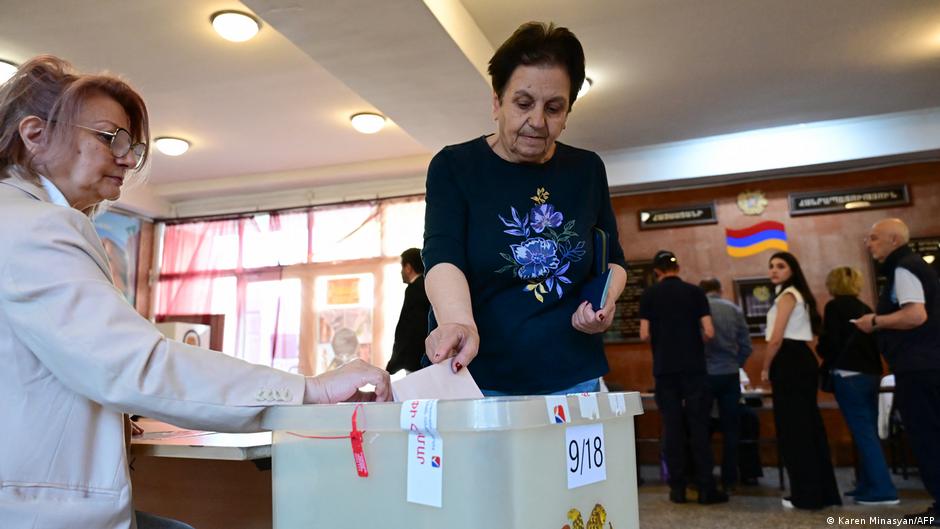
Armenia held pivotal parliamentary elections on June 7 that will shape the country’s foreign policy and economic direction in coming years. Early results from the Central Electoral Commission (CEC) show Prime Minister Nikol Pashinyan’s party, Civil Contract, leading with approximately 50.86% of the vote after processing 55.95% of ballots.
Election Results and Political Landscape
The opposition alliance Strong Armenia, headed by Russian-Armenian businessman Samvel Karapetyan, secured about 23.19% of votes, while the Armenia bloc, led by former president Robert Kocharyan, captured 9.6%. Other parties crossing the parliamentary threshold include Prosperous Armenia (4.1%) and Wings of Unity (2.3%). Voter turnout was 58.97%, higher than in the 2018 and 2021 elections.
Armenia’s National Assembly consists of 105 deputies, including four reserved seats for ethnic minorities such as Yazidis, Russians, Kurds, and Assyrians. The election was conducted via proportional representation with a 4% threshold for parties and higher thresholds for multi-party blocs.
Prime Minister Pashinyan declared Civil Contract’s victory and intention to form a single-party government even before 20% of ballots were counted, eliciting criticism from opposition factions who accused him of power usurpation and interference with the electoral commission’s work.
“The statement by the Prime Minister is unconstitutional and exceeds his official powers,” said Arman Tatoyan, head of the Wings of Unity party.
Implications for Tech Startups and Venture Capital
Armenia’s political stability under Pashinyan’s leadership is crucial for the country’s burgeoning tech startup ecosystem and the broader innovation landscape. Since coming to power, Pashinyan’s government has pursued reforms aimed at improving digital infrastructure, incentivizing entrepreneurship, and attracting foreign venture capital.
However, the ongoing geopolitical tension stemming from Armenia’s pivot towards closer ties with the European Union, formalized in 2025, complicates the country’s economic environment. Moscow has expressed dissatisfaction with Armenia’s EU rapprochement, imposing trade restrictions on key Armenian exports such as alcohol, agricultural products, and flowers ahead of the elections.
This geopolitical friction could affect foreign direct investment flows and M&A activity, particularly involving Russian investors or companies dependent on the Eurasian Economic Union’s integrated market. For startups reliant on cross-border partnerships and funding, the evolving geopolitical dynamic necessitates strategic recalibration.
Nevertheless, the electoral outcome signals a continuation of policies favoring digital innovation and economic diversification beyond traditional Russian influence. The government’s commitment to fostering a stable parliamentary majority reduces political uncertainty, a positive signal for venture capitalists evaluating investment risks in the region.
Moreover, Armenia’s increased voter turnout, despite challenges such as no external polling stations and reliance on electronic voting for overseas diplomats, reflects growing civic engagement which can translate into stronger governance and institutional support for the private sector.
Looking Ahead
With a stable parliamentary majority likely, Pashinyan’s administration is poised to advance reforms that integrate Armenia more deeply into the European tech and innovation ecosystem. This may open new avenues for startups to access EU funding programs, cross-border collaborations, and larger markets.
However, managing relations with Russia will remain a delicate balancing act. The outcome of these elections will influence Armenia’s strategic partnerships and the flow of venture capital and M&A deals in its tech sector.
Investors and startup founders should closely monitor the evolving political landscape as it directly impacts regulatory frameworks, foreign investment policies, and the overall innovation climate in Armenia.