Army Secretary Driscoll to Exit After Clash With Hegseth, Reports Say
Daniel Driscoll’s expected departure could reshape Pentagon procurement priorities for defense startups, investors and incumbent contractors.
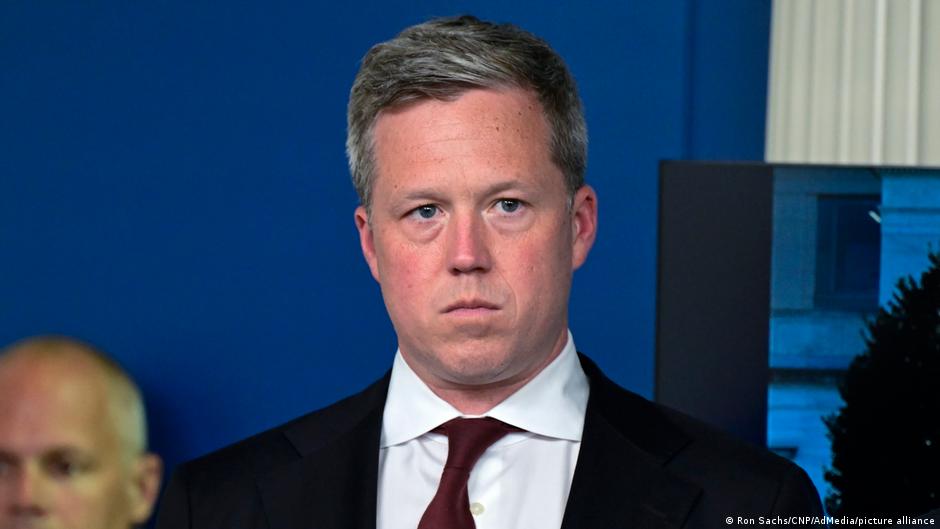
Daniel Driscoll, the secretary of the U.S. Army, has submitted his resignation to President Donald Trump after months of disagreements with Defense Secretary Pete Hegseth over the direction of the U.S. armed forces and the dismissal of several officers, according to reports published late on Monday night and into Tuesday, September 1.
The Wall Street Journal first reported that Driscoll had sent Trump his resignation letter. Reuters and the Associated Press later circulated the same information. NBC News, citing sources, reported that the White House had accepted Driscoll’s resignation.
Driscoll is expected to leave the Pentagon in the coming days, the Journal said. In a statement cited by both the Journal and AP, White House principal deputy press secretary Anna Kelly said Driscoll had effectively advanced Trump’s “Make America Strong Again” agenda at the Department of the Army, showing leadership during what she described as historic military operations, restoring priority to readiness and weapons lethality, and helping support negotiations between Russia and Ukraine, among other areas.
For the venture and startup ecosystem, the significance of Driscoll’s expected exit lies less in the headline personnel drama than in the policy fault lines underneath it. Reuters noted that, in his current role, Driscoll had argued for a “flexible approach” and for the Army to buy cheaper weapons, while criticizing large manufacturers. That stance matters because it points to a procurement philosophy that can open space for newer defense technology suppliers, software-led contractors and lower-cost hardware entrants attempting to break into a market long dominated by established prime contractors.
Why the dispute matters beyond the Pentagon
Defense is not a conventional startup sector, but procurement signals from the Army and the Pentagon can still move capital allocation decisions across venture portfolios. Founders building dual-use systems, autonomous platforms, logistics software, sensing tools or lower-cost weapons programs watch leadership changes closely because budget priorities, approval pathways and customer openness can change with them.
If Driscoll’s departure leads to a harder shift in procurement direction, it could affect how investors assess timing risk in defense deals. A leadership team that favors established supply chains may slow adoption for newer vendors. A team that emphasizes cost efficiency and flexibility may create more opportunities for smaller companies seeking pilot contracts or a first major military customer.
Reuters said Driscoll had pushed a “flexible approach” and supported Army purchases of cheaper weapons while criticizing large manufacturers.
That description places Driscoll closer to an acquisition mindset that many defense startups and their backers consider favorable: lower barriers for nontraditional suppliers and greater willingness to challenge the economics of legacy programs. Even without any immediate policy announcement, his resignation introduces uncertainty about whether that approach will survive the current Pentagon reshuffle.
The timing is also notable. The Journal had already reported on August 21 that Driscoll was planning to resign at the end of the year because of his conflict with Hegseth. Reuters said at the time that Driscoll’s departure would leave the Army without a Senate-confirmed leader as the United States sought to end the war against Iran, which it said had begun together with Israel nearly six months earlier. The latest reporting indicates the transition is now expected to happen sooner.
For investors, that acceleration can matter. Procurement cycles are already long, and a faster-than-expected change at the top of the Army can delay decisions, alter internal sponsorship for programs, or shift the balance between experimentation and traditional contracting. In sectors where venture-backed companies depend on government milestones to unlock follow-on funding, management turnover can ripple into fundraising timelines and strategic planning.
A broader leadership reset
Reporters assessing the move have framed Driscoll’s resignation as another step in a wider leadership overhaul across the Pentagon during Trump’s second presidential term. Reuters, in that context, recalled the April dismissal of Army Chief of Staff Randy George and several other senior military officials. For the innovation ecosystem around defense, repeated changes at the top can create a paradox: disruption may open doors for challengers, but it can also raise execution risk by making customer priorities harder to read.
Driscoll’s own profile adds a political dimension. He is a friend and former classmate of Vice President J.D. Vance. In November 2025, he was appointed Trump’s new special envoy for Ukraine, replacing Keith Kellogg in that position. He has served as secretary of the Army since February 2025.
That combination of political ties, national security experience and procurement views made Driscoll an unusual figure from the standpoint of defense-focused capital. He was senior enough to influence the Army’s buying posture, politically connected enough to matter inside the administration, and publicly associated, according to Reuters, with a more adaptable and cost-conscious acquisition line. His exit therefore lands at the intersection of policy, contracting and capital markets.
None of the reports published so far set out a successor or a replacement strategy. That leaves open the central question for startups and investors tracking the defense market: whether Driscoll’s departure represents a pause in the Army’s willingness to experiment with lower-cost alternatives, or simply another phase in a broader reordering of Pentagon leadership under Trump.
Until that becomes clearer, the practical takeaway for venture-backed defense companies is straightforward. Personnel changes at the top of the Army are not only political events; they can alter which technologies get attention, how quickly procurement decisions move, and whether newer entrants can compete on price and speed against larger incumbents. In a market where government demand often shapes private investment decisions, that makes Driscoll’s expected resignation more than a Washington story. It is also a signal event for the defense innovation pipeline.