Berlin Left Party Win Sets Up Policy Test for Startups and Investors
The Left Party’s first-place finish in Berlin’s election could reshape the city’s policy climate for startups, investors and real estate-linked innovation.
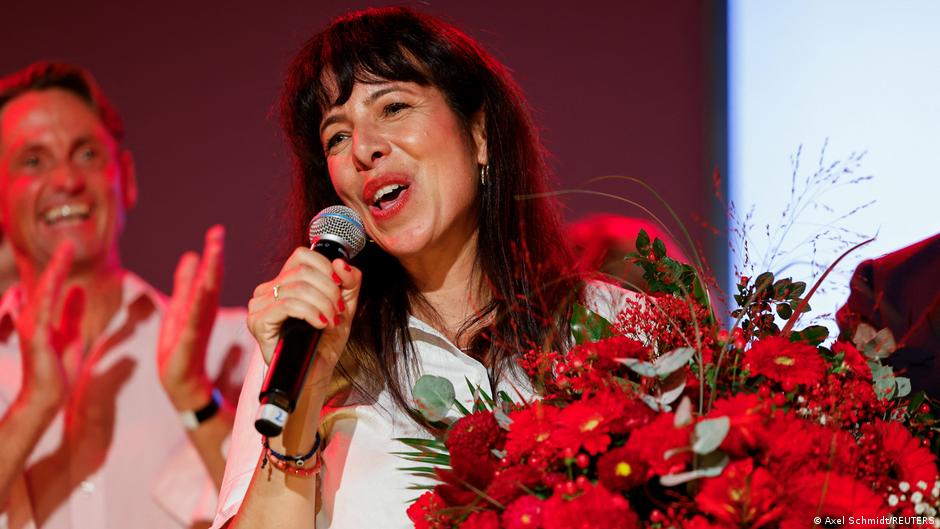
The Left Party won the election to Berlin’s House of Representatives, taking first place with 25.7% of the vote, according to official preliminary results released overnight into Monday, September 21. The result marks a sharp increase of 13.5 percentage points compared with the 2023 election and positions the party as the central force in negotiations over the next city government.
For Berlin’s technology and startup ecosystem, the result is more than a local political shift. The German capital is one of Europe’s most closely watched innovation hubs, with a dense mix of early-stage startups, venture-backed scaleups, research institutions, creative industries and international talent. A change in political leadership could influence the operating environment around housing, urban development, labor, public procurement, transport and social policy, all of which affect company formation and investor confidence.
The conservative Christian Democratic Union, the party of German Chancellor Friedrich Merz, came second with 18.8%. The far-right Alternative for Germany placed third with 16.3%. The Greens followed with 14.3%, while the Social Democratic Party received 12.1%. The left-populist Sahra Wagenknecht Alliance, with 4.7%, and the liberal Free Democratic Party, with 2.5%, failed to clear the 5% threshold required to enter the Berlin parliament.
Under the preliminary seat allocation, the Left Party will hold 47 seats in the new House of Representatives. The CDU will have 35, the AfD 29, the Greens 26 and the SPD 22. Voter turnout was 74.2%.
Coalition Math Matters for the Innovation Economy
Elif Eralp, the Berlin leader of the Left Party, said she expects to become governing mayor of the German capital. Her statement underscored the party’s view that the result gives it a mandate to lead the city after an election that significantly altered the balance of power.
“The people of Berlin have given us a clear mandate to lead the city,” Eralp said.
The most likely coalition partners for the Left Party are the Greens and the SPD. For founders, venture capital funds and corporate innovation teams, the policy details of such a coalition would matter. Berlin’s startup scene depends not only on private capital, but also on the city’s ability to remain attractive to skilled workers, international entrepreneurs and technical talent. Housing affordability, immigration-related services, digital administration, transport links and the availability of office and laboratory space all shape the city’s competitiveness.
Negotiations are expected to be difficult because the prospective partners disagree on several issues. One of the most consequential for investors and urban businesses is housing policy. The Left Party and the Greens want to implement a decision approved in a 2021 city referendum to expropriate more than 200,000 apartments from large housing companies. The SPD opposes the plan.
That dispute could have broad implications beyond the residential property sector. Berlin’s housing crisis has long been a factor in hiring and retention for startups. Founders frequently compete for workers in global labor markets, where quality of life and living costs can be decisive. At the same time, aggressive intervention in the housing market may raise questions among institutional investors about property rights, city-level regulatory risk and the predictability of Berlin as a business location.
Venture capital firms typically watch such political signals closely, particularly in markets where startup growth depends on real estate, mobility, fintech, climate tech or urban infrastructure. A coalition agreement that prioritizes rent pressure relief, public ownership or tighter regulation could improve affordability for residents and workers while creating uncertainty for companies and investors exposed to housing, construction and real estate technology.
Political Risk Enters the Funding Conversation
The election also comes at a time when European startups are operating in a more selective funding market than during the boom years. In that context, local governance can become part of the due diligence discussion. Investors may ask whether Berlin’s next administration will accelerate digital public services, back innovation procurement and protect the city’s global talent appeal, or whether contentious social and security debates will consume political bandwidth.
Another sensitive issue in coalition talks is antisemitism. Although Eralp has repeatedly stressed that she wants to support and develop Jewish life in Berlin, the Left Party faces criticism from potential coalition partners. Felix Banaszak, a co-chair of the Greens, has already described a coalition with the Left Party as possible, but only if it demonstrates a clear position against antisemitism.
For Berlin’s international business community, that debate is not peripheral. The city’s tech sector is global, drawing employees, founders and investors from across Europe, the Middle East, North America and Asia. Political controversies that affect social cohesion and Berlin’s reputation as an open, secure and inclusive city can influence recruitment and partnership decisions, especially for companies building cross-border teams.
The Left Party also faced criticism after election night over the presence of Issa Remmo at a party event in Berlin’s Neukölln district. German media describe Remmo as the head of the well-known Remmo clan of Arab origin. Representatives of the Left Party said the event was open and that anyone could attend.
“We have nothing to do with organized crime,” Eralp said on ZDF.
Other parties continued to criticize the Left Party. Nina Stahr, head of the Greens in Neukölln, demanded explanations from the prospective coalition partner and linked the issue to talks on forming Berlin’s next government.
The final shape of Berlin’s government remains unresolved, but the election result already signals a possible change in the city’s governing priorities. For the startup and venture capital community, the central question is whether a Left-led coalition can combine social policy ambitions with a stable environment for entrepreneurship, capital formation and innovation-led growth. Berlin’s role as a European startup capital is unlikely to disappear, but the next coalition agreement may determine how attractive the city feels to founders and funders in the years ahead.