Canada Weighs Joining EU’s Ukraine Loan as Tech Ties With Europe Deepen
Ottawa’s talks on a potential contribution to the EU’s €90 billion Ukraine loan come as Canada pursues closer digital, AI and defense innovation links with Brussels.
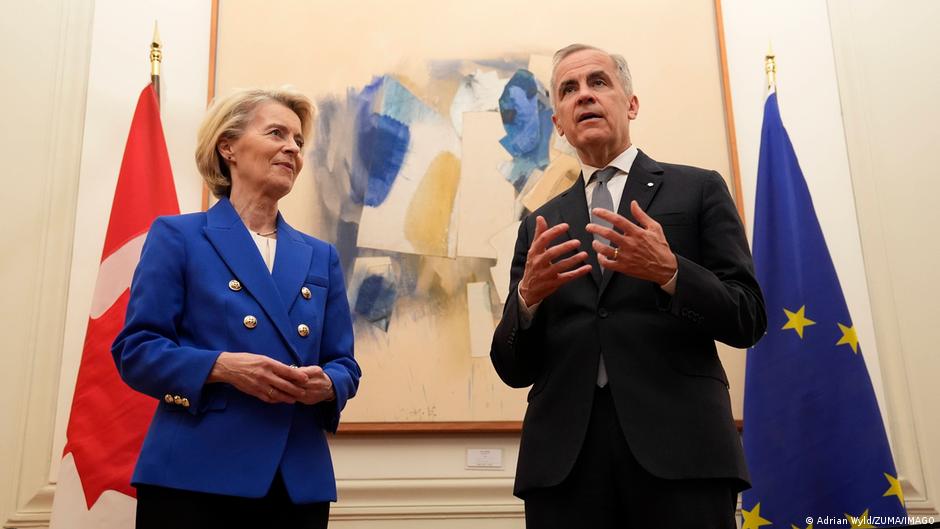
Canada is in talks to join the European Union’s €90 billion loan program for Ukraine, a move that would extend Ottawa’s role in Western support for Kyiv while advancing Prime Minister Mark Carney’s push to deepen ties with Europe across defense, technology and trade.
The size of Canada’s potential contribution is expected to be negotiated before an EU-Canada summit scheduled for late October in Montreal, according to the Financial Times, which cited people familiar with the matter. If agreed, Canada would become one of the few non-EU participants in the loan initiative, with the United Kingdom currently the only country outside the bloc to have joined.
For the venture and startup ecosystem, the talks point to a broader strategic shift: Canada is seeking to position itself more closely with Europe not only on security financing, but also on digital infrastructure, artificial intelligence cooperation and defense innovation. That alignment could matter for startups building dual-use technologies, AI systems, cybersecurity tools and advanced computing applications, particularly as public funding and cross-border procurement increasingly shape the market for defense and resilience technologies.
A Broader Transatlantic Strategy
The proposed Canadian participation in the EU loan program is part of Carney’s wider effort to reinforce transatlantic relationships and reduce Canada’s dependence on the United States. According to the Financial Times, Carney’s objective is to build an alliance of liberal powers committed to a multilateral order that the publication says was disrupted by U.S. President Donald Trump.
That geopolitical framing has direct relevance for investors and founders. As governments reassess supply chains, strategic technologies and security partnerships, venture-backed companies in areas such as AI infrastructure, cloud computing, defense software and secure communications may find new opportunities in public-sector collaboration. At the same time, closer Canadian-EU alignment could open pathways for startups seeking access to European research programs, procurement networks and regulatory partnerships.
Canada wants its participation in the loan program to demonstrate a commitment to strengthening transatlantic ties, according to the report.
Ottawa has already committed significant military assistance to Ukraine, with Canadian support amounting to 6.5 billion Canadian dollars, or about $4.7 billion. On September 10, Carney and Ukrainian President Volodymyr Zelensky signed a declaration establishing a 100-year partnership that includes cooperation in defense innovation.
That defense innovation component is likely to be closely watched by technology investors. Ukraine has become a live testing ground for drones, battlefield communications, electronic warfare, cyber defense and rapid software deployment. For Canadian startups and investors, a long-term partnership with Ukraine could create channels for applied research, commercialization and collaboration with military and civilian institutions operating under wartime conditions.
AI, Supercomputing and Digital Trade
Canada is also seeking other agreements with the European Union as it looks for support in a trade conflict with the United States. The Financial Times reported that Ottawa hopes to join the EU’s supercomputing network for joint work on artificial intelligence and to sign a digital trade agreement with Brussels.
Those goals could have meaningful implications for the innovation economy. Access to European supercomputing resources would be significant for AI developers, particularly startups that face high infrastructure costs and limited access to advanced compute. While the source report does not specify the terms of any potential Canadian participation, the direction of travel suggests that compute capacity and AI collaboration are becoming central components of international economic strategy.
A digital trade agreement with Brussels could also affect startup expansion, data flows, cross-border services and platform regulation. For Canadian software companies, clearer digital trade arrangements with the EU may reduce uncertainty when selling into European markets or partnering with European enterprises. For venture capital firms, closer institutional links between Canada and Europe could make transatlantic scaling strategies more attractive, especially for companies that want alternatives to U.S.-centric growth paths.
The timing is notable. Governments are increasingly using industrial policy, defense financing and digital infrastructure agreements to shape technology markets. In that environment, startup opportunities are not determined only by private capital availability, but also by access to public procurement, research networks and international policy frameworks.
Canada’s potential entry into the EU’s Ukraine loan program is therefore more than a financial contribution to Kyiv. It is also a signal that Ottawa wants to be more deeply embedded in a European-led architecture for security, technology and economic cooperation. For founders and investors, the practical question will be whether that political alignment translates into concrete programs, funding channels, procurement opportunities and market access.
The immediate focus remains the negotiations over Canada’s contribution to the €90 billion loan and whether an agreement can be reached before the late-October summit in Montreal. But the adjacent talks on AI, supercomputing and digital trade suggest that the Canada-EU agenda is expanding well beyond wartime finance.
If Canada succeeds in linking Ukraine support with a wider innovation partnership, the result could reshape parts of the transatlantic startup landscape. Defense technology, artificial intelligence, advanced computing and secure digital trade are all sectors where public policy now heavily influences private investment. Ottawa’s outreach to Brussels may give Canadian startups a stronger European bridge at a moment when geopolitical alignment is becoming a competitive advantage.