Colombia Declares National Emergency After Devastating 7.4 Magnitude Earthquake
The earthquake has caused significant damage and fatalities, prompting urgent relief efforts that impact Colombia's economic and innovation landscape.
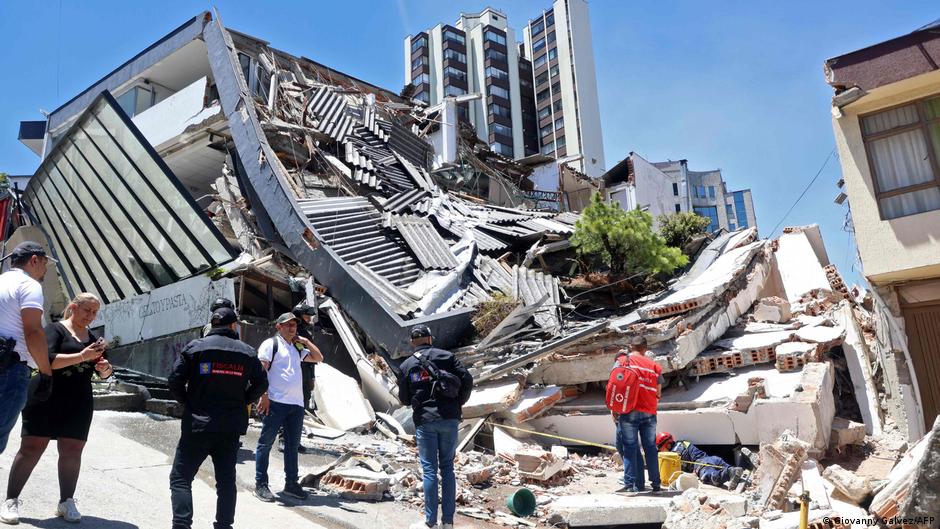
Colombia is facing a severe crisis after a powerful 7.4 magnitude earthquake struck the western region of the country, leading President Abelardo de la Espriella to declare a national emergency. The disaster, which occurred just days after de la Espriella took office, has resulted in at least 132 confirmed fatalities and over 570 injuries, according to the Colombian Association of Regional Centers.
Impact on Infrastructure and Economic Stability
The earthquake has caused extensive damage across multiple cities including Pereira, Cali, and Manizales. More than 1,500 homes have been seriously damaged and approximately 60 buildings have completely collapsed. Public infrastructure has also been affected, with 18 hospitals and 52 schools reporting significant damage.
"All institutional resources will be mobilized to adequately respond to the catastrophe. First and foremost, we must save those trapped beneath the rubble," President de la Espriella stated shortly after the event.
The Colombian Geological Service identified the epicenter near San José del Palmar at a depth of approximately 103 kilometers. Multiple aftershocks continue to pose risks, making this the strongest earthquake recorded in Colombia in the 21st century.
Response and Support: Implications for Startups and Innovation Ecosystem
The U.S. Department of State has committed $15.5 million in emergency aid to support Colombia's relief efforts, reinforcing the strong bilateral ties under the new Colombian administration. This assistance aims to provide immediate humanitarian support but also highlights potential challenges and opportunities within Colombia's broader economic and innovation ecosystems.
For Colombia's tech startups and venture capital community, the disaster presents a complex scenario. While immediate recovery efforts will demand public and private coordination, the rebuilding phase may stimulate demand for innovative solutions in disaster response technologies, infrastructure resilience, and health tech.
Moreover, President de la Espriella's administration, having a pro-business orientation with plans for deregulation and stronger security measures, may accelerate reforms aimed at stabilizing and growing the private sector. This could attract venture capital interested in sectors aligned with rebuilding and expanding digital infrastructure, smart city projects, and security technologies.
However, the destruction of critical infrastructure such as hospitals and schools may temporarily disrupt Colombia's human capital development and reduce operational capacities for startups dependent on stable utilities and networks.
Strategic Outlook for Investors and Stakeholders
The earthquake underscores the vulnerabilities of Colombia's regional infrastructure but also spotlights the government's readiness to engage international partners. The new president's agenda emphasizes addressing security challenges linked to organized crime and drug trafficking, which, combined with economic liberalization efforts, could reshape the investment landscape.
As Secretary of State Marco Rubio noted, the U.S. is poised to deepen cooperation with Colombia to reinforce regional security and economic ties. For venture capitalists, this framework may create a more conducive environment for scaling startups that contribute to public safety, logistics, and sustainable urban development.
In conclusion, while the immediate humanitarian needs remain paramount, the aftermath of Colombia's earthquake could act as a catalyst for innovation and increased VC activity in sectors addressing resilience, infrastructure modernization, and governance technologies. Market observers should watch for government policies and international aid disbursement as key factors influencing the speed and scope of economic recovery and startup ecosystem growth.