Drone Incursions Expose Security Risks for Moldova’s Startup Ecosystem
Five drone incursions in one day underscore the geopolitical risks facing Moldova’s technology startups, investors and innovation economy.
Drones violated Moldova’s airspace five times on October 16, with one aircraft falling and exploding near the village of Novye Kodryany, according to the country’s Defense Ministry. The repeated incursions add a new layer of operational and investment risk for Moldova’s emerging technology sector, particularly startups dependent on cross-border business, infrastructure reliability and international capital.
The Defense Ministry said the unmanned aerial vehicle entered Moldovan airspace illegally at 4:22 p.m. local time. At 5:06 p.m., authorities announced that the aircraft had crashed and exploded. Novye Kodryany is located about 50 kilometers from the Ukrainian border.
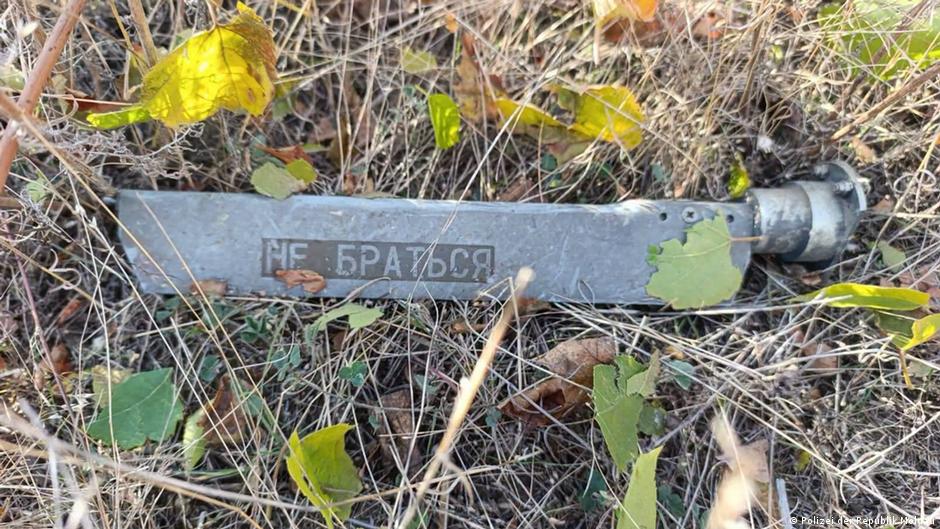
Moldovan police published a photograph of debris from the fallen drone on Facebook. No casualties were reported in connection with the incident in the information released by the authorities.
Moldova’s Foreign Ministry said such incidents “endanger the safety of citizens,” among other consequences.
The ministry “strongly condemned” the repeated violations of the country’s airspace. It also called on Russia to “immediately cease attacks on Ukraine and comply with international law,” including respect for Moldova’s sovereignty and territorial integrity.
Security pressure reaches the innovation economy
For Moldova’s startups and venture investors, the immediate significance of the incidents lies in the wider perception of country risk. Repeated airspace violations can influence decisions about business continuity, employee safety, insurance, data resilience and the location of critical operations. They may also complicate fundraising conversations for founders seeking capital from investors that assess geopolitical exposure alongside product traction and growth.
The incidents do not by themselves indicate disruption to Moldova’s startup financing or mergers and acquisitions. However, a sustained deterioration in regional security could affect due diligence, investment timelines and valuations, particularly for early-stage companies with limited financial reserves. International investors may place greater emphasis on contingency planning, distributed teams and the ability to maintain services during infrastructure or transport interruptions.
At the same time, the security environment may increase demand for technologies related to drone detection, airspace monitoring, cybersecurity, communications and emergency response. Any commercial opportunity would remain closely tied to government procurement rules, regulatory oversight and the availability of capital. Moldova’s innovation ecosystem therefore faces a dual reality: heightened operational uncertainty alongside potential demand for defensive and resilience-focused technologies.
Incursions accelerate in October
Several hours before the drone fell on Moldovan territory, the Defense Ministry reported that the country’s airspace had been violated seven times since October 10 amid Russian attacks on Ukraine. Six of those cases involved drones: two occurred on October 15 and another four during the night of October 16.
A separate incident occurred on October 10, when a drone carrying explosives fell in Geamana, a settlement located approximately 50 kilometers from the Ukrainian border.
According to the Defense Ministry, Moldova has recorded 64 airspace violations since the beginning of the year. Sixteen of them, including the incidents on October 16, occurred this month. Since 2022, when Russia launched its full-scale war against Ukraine, the total number of recorded violations has reached 101.
The pattern reinforces the exposure of a small, internationally connected economy to a conflict beyond its borders. For technology companies, this can translate into additional costs even when physical damage is limited. Founders may need to strengthen continuity plans, duplicate essential systems and reassure customers, employees and investors that services can remain available during security incidents.
Potential acquirers and strategic investors could likewise incorporate regional security into transaction structures. Risk may be reflected through longer review periods, contractual protections or preferences for companies whose assets, personnel and customers are spread across multiple markets. These are potential responses to the environment rather than outcomes confirmed by Moldovan authorities.
Earlier missiles and drones fell inside Moldova
On the morning of October 3, three missiles and two drones violated Moldovan airspace. All five fell within the country, but no deaths or injuries were reported. Moldova’s Defense Ministry said that incident resulted from Russia’s large-scale strikes against Ukraine.
The growing number of cases places pressure on public institutions responsible for monitoring the airspace and communicating risks to residents and businesses. Clear official information will be important for limiting uncertainty, while the frequency of the violations is likely to remain a consideration for entrepreneurs, venture funds and companies evaluating acquisitions or partnerships in Moldova.
For the country’s innovation sector, the central challenge is maintaining investor confidence and operational stability without minimizing the seriousness of the security threat. The five incursions recorded in a single day show how rapidly regional military activity can become a domestic business risk, even in the absence of reported casualties.