Drone Strike on Russia’s Arctic Gas Hub Adds New Risk for Energy Tech
The first reported Ukrainian drone attack on Yamalo-Nenets highlights infrastructure vulnerability in a region central to Russia’s gas output.
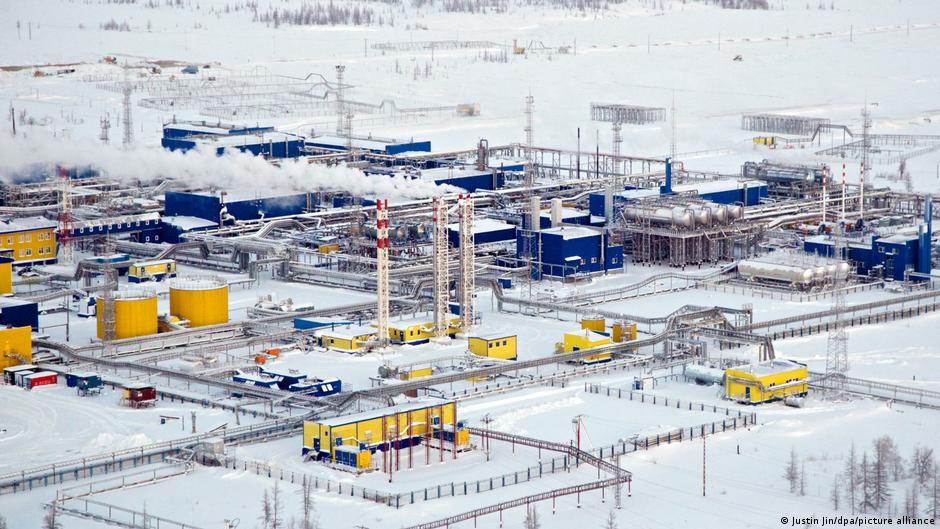
Ukrainian drones have attacked Russia’s Yamalo-Nenets Autonomous Okrug for the first time, according to regional officials, extending the geographic scope of strikes on Russian territory into a key Arctic energy region. The incident triggered a fire at an industrial facility in Novy Urengoy, a city closely tied to Russia’s gas production infrastructure.
Dmitry Artyukhov, the governor of Yamalo-Nenets, said on Wednesday, September 9, that the attack had been repelled. He said debris from an unmanned aerial vehicle fell on the grounds of an enterprise, causing a fire. Official information indicated there were no deaths or injuries. Artyukhov said the size and nature of the damage were still being assessed.
The Russian authorities did not identify the facility that was struck. Artem Zhoga, the presidential envoy to Russia’s Urals Federal District, said the target was an energy-sector facility in Yamal. According to him, the site’s personnel had been evacuated in advance.
Russian officials said the attack was repelled, but falling drone debris caused a fire at an industrial enterprise in Novy Urengoy.
Several media outlets and analytical projects that track strikes inside Russia reported that the target may have been the condensate preparation plant for transport in Novy Urengoy, part of Gazprom’s gas infrastructure. The facility is considered one of the region’s key gas condensate processing assets.
Strategic Infrastructure Moves Further Into Range
Novy Urengoy lies roughly 2,800 kilometers in a straight line from the Russian-Ukrainian border. If reports that the drones were launched from Ukrainian territory are confirmed, the incident could represent the longest known strike by Ukraine’s armed forces on Russian territory since the beginning of the full-scale war.
The distance is central to the broader significance of the attack. For investors and startup operators in energy technology, industrial security, autonomy, and critical-infrastructure software, the reported strike underscores how fast the risk map around physical assets is changing. Facilities once treated as deep-rear infrastructure may now require the same layers of detection, redundancy, resilience planning, and insurance scrutiny as sites closer to active conflict zones.
Yamalo-Nenets is one of Russia’s most important gas-producing regions. Estimates cited in the source indicate that it accounts for around 80% of Russian natural gas production. The Novy Urengoy plant processes gas condensate from the Urengoy, Yamburg, and other regional fields. Its designed capacity is estimated at about 19.5 million tons of feedstock per year.
That scale makes the episode relevant well beyond the immediate military context. Russia’s gas and condensate infrastructure sits at the intersection of energy markets, industrial automation, remote operations, logistics, and state-backed capital expenditure. Any perceived increase in vulnerability can influence procurement priorities, risk pricing, and demand for technologies that harden industrial systems against aerial threats and operational disruption.
Implications for Startups and Venture Capital
For venture capital firms, the attack adds to a wider pattern that has been reshaping defense-adjacent and infrastructure-focused investment. Startups working on drone detection, electronic warfare, perimeter sensing, satellite monitoring, geospatial analytics, industrial continuity planning, and autonomous inspection are likely to see stronger strategic interest as governments and large industrial operators reassess exposure at distant assets.
The incident also sharpens the case for dual-use technologies that can serve both civilian industrial markets and national-security customers. Energy companies operating in remote or harsh environments need systems that can detect low-cost aerial threats, preserve worker safety, isolate damaged equipment, and restore operations quickly. Those requirements overlap with military and border-security demand, creating a market structure that may appeal to investors looking for larger addressable markets than pure defense procurement alone.
At the same time, the event raises diligence questions. Venture investors evaluating companies with exposure to Russian energy infrastructure, sanctions-sensitive supply chains, or customers in contested regions will face more complex assessments of compliance, counterparty risk, and revenue durability. M&A activity involving industrial cybersecurity, sensing hardware, and energy resilience companies may also be affected as strategic buyers look for technology that can be integrated into existing energy and logistics operations.
The Russian authorities have not disclosed which enterprise was affected, and the reported damage remains under assessment. That uncertainty matters for markets and for startup suppliers alike. In critical infrastructure, the difference between a contained fire caused by debris and damage to a major processing unit can alter assumptions about downtime, replacement demand, and procurement urgency.
For the innovation ecosystem, the larger takeaway is that the war continues to accelerate the convergence of drones, energy security, and industrial technology. The reported first attack on Yamalo-Nenets shows that the frontier of operational risk is moving into regions central to commodity production and previously distant from the battlefield. Startups building tools for visibility, resilience, and rapid response may find the market expanding, but also becoming more politically sensitive and technically demanding.