Drone Threat Delays Zelenskyy Flight, Underscoring Wartime Risk for Investors
Norway’s prime minister said a drone threat in Moldovan airspace delayed the Ukrainian president’s flight to Oslo after a visit to Moldova.
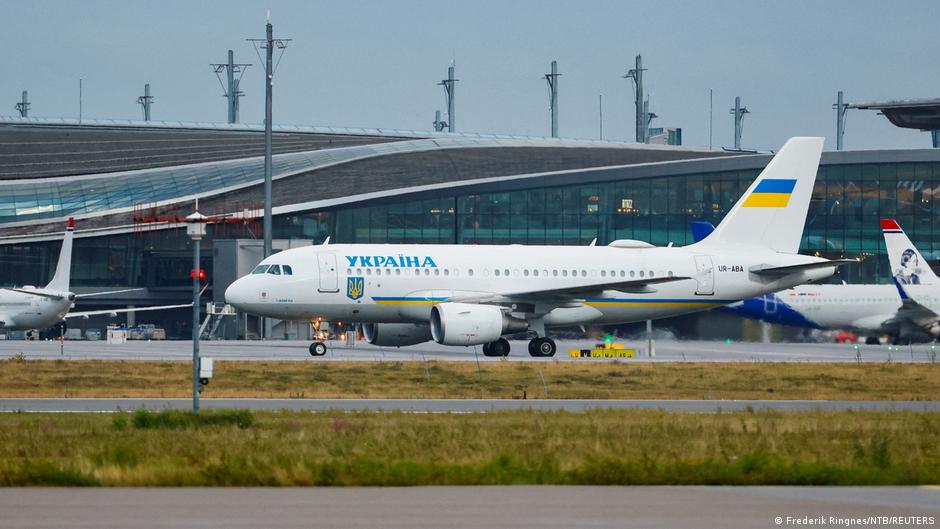
Ukrainian President Volodymyr Zelenskyy’s aircraft was delayed after a drone threat in Moldovan airspace as he was preparing to fly from Moldova to Norway, according to Norwegian Prime Minister Jonas Gahr Store, an incident that highlights the security volatility surrounding Ukraine’s leadership and the broader operating environment for companies and investors exposed to the region.
Store said on NRK on Wednesday, September 9, that Zelenskyy’s plane had nearly avoided a collision with a drone while leaving Moldova for Oslo. The Ukrainian president’s office had not commented on the incident. Store did not say where he obtained the information, and his initial remarks did not make clear whether the episode was accidental or represented a deliberate attempt to target Zelenskyy.
“His plane almost collided with a drone when it was due to take off from Moldova. This is the reality he is in,” Store said, according to the source account.
The Norwegian prime minister’s office later clarified the statement, saying there had been a drone threat in Moldovan airspace the previous day that delayed Zelenskyy’s aircraft en route to Oslo. It added that such threats are part of the conditions under which the Ukrainian president lives every day, while noting that it was unknown how close the drones came to his plane.
For venture investors and technology companies, the episode is another reminder that Ukraine’s innovation economy is developing under conditions that would normally freeze early-stage funding: airspace disruptions, border incidents, physical infrastructure risk and persistent uncertainty around executive mobility. Yet the country’s technology sector, defense-tech startups and cross-border engineering teams continue to operate, often becoming more central to Ukraine’s resilience and to European security priorities.
Security Risk Meets Startup Resilience
A senior Ukrainian official told DW that while the Ukrainian president’s aircraft was waiting to depart Chisinau, a Russian jet-powered drone entered Moldovan airspace. Zelenskyy’s departure was subsequently postponed, and other flights were suspended. The account did not include details on how long the disruption lasted or whether the aircraft itself was directly approached by the drone.
The uncertainty is material for startups and investors because regional aviation and logistics disruptions can affect everything from board travel and customer implementation to supply chains for hardware companies. In Ukraine’s case, those pressures sit alongside the growth of a wartime technology market in which unmanned systems, electronic warfare, cybersecurity, battlefield communications and dual-use software have become key innovation categories.
Zelenskyy arrived in Oslo from Moldova on the evening of September 8 to attend the funeral of King Harald V. After the ceremony, the Ukrainian president met Store. The official Norwegian government statement on their talks did not mention the drone incident.
Moldovan police said on September 9 that they had found a downed drone equipped with a propulsion unit. An explosion occurred when it hit the ground, leaving a large crater. Inside the drone, authorities found striking elements in the form of metal balls. No casualties were reported.
The incident comes against the backdrop of Russian drone activity near the Moldova border. According to a local regional military administration, Russian drones attacked the Starokozache international road crossing in Ukraine’s Odesa region on the border with Moldova during the night of September 9. NRK noted that the airport from which Zelenskyy flew to Oslo is about a two-hour drive from that border crossing.
Implications for Capital and M&A
The reported delay is not a funding event in itself, but it is the kind of geopolitical signal that venture firms, strategic acquirers and corporate partners price into decisions about Ukraine-linked companies. Investors already assessing Ukrainian startups must account for distributed-team continuity, founder travel constraints, insurance availability, data security, customer concentration and the possibility that regional infrastructure can be affected by military incidents beyond Ukraine’s borders.
At the same time, the risks have not removed Ukraine from the European technology map. Instead, they have shifted the investor lens. Startups with products tied to defense, security, drone detection, mobility, logistics resilience, satellite intelligence and critical infrastructure monitoring may become more relevant as neighboring countries confront spillover threats. Moldova’s airspace disruption and the discovery of a drone containing metal-ball striking elements underline that the security perimeter around the war is not confined neatly to Ukraine’s territory.
For M&A, that can create both caution and strategic urgency. Buyers may hesitate over operational exposure, compliance complexity and employee safety obligations. But defense and security companies may also view Ukraine-connected engineering capabilities as strategically important, particularly where teams have real-world experience building or adapting systems under active conflict conditions. The same environment that raises diligence hurdles can make certain technologies more valuable.
The absence of a comment from Zelenskyy’s office leaves key questions unanswered, including the president’s own assessment of the threat and whether Ukrainian authorities view the episode as part of a broader pattern. Store’s office also emphasized that the distance between the drones and Zelenskyy’s aircraft was unknown. Those details matter: a confirmed near collision would carry different implications than a broader airspace threat that triggered flight delays.
Still, the broader point for the innovation ecosystem is clear. Ukraine’s political leadership, its allies and its technology sector are operating in an environment where drones can affect diplomatic travel, civilian aviation and border infrastructure. For venture capital, that means Ukraine-related exposure cannot be assessed only through conventional market metrics. It also requires a security and continuity framework usually associated with frontier markets or defense supply chains.
The reported Moldovan airspace threat therefore sits at the intersection of geopolitics and technology investment. It shows how unmanned systems are shaping not only the battlefield but also executive movement, diplomatic schedules and the risk models used by investors backing startups in and around Ukraine.