EU Pledges €710 Million in Aid as Crisis Funding Shapes Frontier Markets
The new humanitarian package underscores how conflict, displacement and disaster risk are reshaping operating conditions for startups and investors.
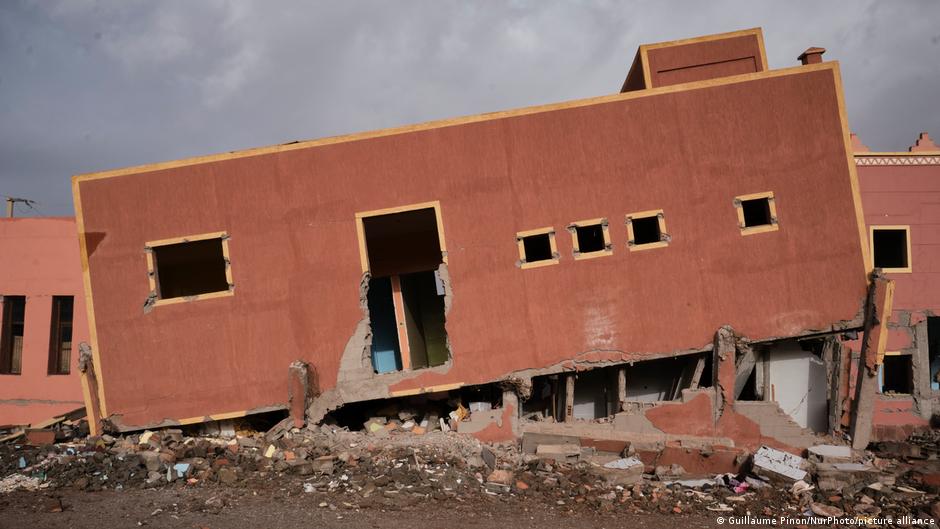
The European Union will allocate an additional €710 million in humanitarian aid for people affected by conflicts, natural disasters and other crises around the world, European Commission President Ursula von der Leyen said on Saturday, September 26. The announcement was made in a video address to participants of the Global Citizen Festival in New York, which was later canceled because of bad weather.
While the funding is humanitarian in purpose, the package also speaks to a wider set of conditions increasingly relevant to venture capital, startup formation and technology deployment in emerging and crisis-affected markets. For founders and investors working in areas such as digital identity, remittances, logistics, health technology, climate resilience, emergency payments and public-sector software, humanitarian spending at this scale can shape demand, infrastructure priorities and the risk profile of entire regions.
According to von der Leyen, the distribution of the aid will give particular attention to Africa, as well as to forcibly displaced people and the communities hosting them. About €380 million will be directed toward migration-related measures in African countries south of the Sahara. These measures include support for the most vulnerable groups of migrants, as well as return to countries of origin and reintegration.
Von der Leyen said special attention would be paid to Africa, forcibly displaced people and the communities that receive them.
For the innovation ecosystem, that focus highlights a reality already familiar to investors with exposure to African markets: migration, displacement and reintegration are no longer peripheral policy issues. They affect labor mobility, consumer demand, access to services, financial inclusion and the ability of small businesses to operate across borders. Startups building payments rails, portable benefits, education platforms, health access tools or data systems for public agencies often operate in precisely the environments targeted by these funding flows.
Humanitarian Priorities and Market Conditions
Another €252 million will go toward emergency assistance linked to active armed conflicts, forced displacement, epidemics and natural disasters. Of that amount, €97 million will be directed to countries in sub-Saharan Africa, €103 million to the Palestinian territories and Lebanon, and €52 million to Ukraine, including winter preparedness.
Smaller sums are planned for the Great Lakes region of Africa and for combating an Ebola outbreak in the east of the Democratic Republic of Congo. These allocations point to a mix of acute and recurring risks that can determine whether young companies are able to scale. Epidemics can accelerate demand for health surveillance, diagnostics logistics and remote-care infrastructure, while conflicts and displacement can create urgent needs for secure cash transfers, supply-chain visibility, shelter coordination and identity verification.
For venture-backed companies, the opportunity is not simply to sell into aid budgets. The more durable question is whether technology firms can build products that remain useful after emergency programs end. Humanitarian crises often expose gaps in basic infrastructure: payment systems that do not reach displaced people, health networks that lack real-time data, or logistics systems unable to function reliably during shocks. Startups that solve those problems may find use cases across government, nonprofit and commercial markets, but they also face long procurement cycles, complex compliance demands and high operational risk.
The EU said its humanitarian funding is designed for essentials such as food purchases, medical assistance, housing reconstruction, cash payments and winter preparedness. These categories are not conventionally described as venture markets, yet each has become increasingly digitized. Cash transfers depend on financial infrastructure; medical assistance can require data, triage and logistics tools; housing reconstruction involves mapping, verification and materials supply; and winter preparedness can rely on forecasting, energy planning and last-mile delivery.
Ukraine, Africa and Investor Risk
In 2026, the European Union budgeted around €1.9 billion for humanitarian aid worldwide. The largest spending lines are €557 million in support for countries in sub-Saharan Africa and €463 million for the Middle East and North Africa, according to European Commission data cited in the source material.
Ukraine remains a major recipient. The EU initially set aside €145 million in humanitarian aid for Ukraine in 2026, but in recent months the amount of humanitarian assistance for Ukraine and Moldova was increased to €248 million. Since the start of the full-scale war launched by Russia's authorities, the European Commission has allocated more than €1.4 billion to humanitarian aid programs for Ukraine.
For technology investors, Ukraine has become an example of both wartime resilience and structural uncertainty. The country's startup and software sectors have continued to attract attention despite security risks, but humanitarian needs, energy resilience and winter preparedness remain central to the broader operating environment. EU support for food, medical care, housing reconstruction, cash payments and winter readiness may not directly fund startups, but it can help stabilize communities, infrastructure and public services on which entrepreneurial activity depends.
In Africa, the package reinforces the importance of sub-Saharan markets in European external policy. The €380 million migration-related allocation and the separate €97 million for emergency assistance in sub-Saharan African countries place the region at the center of the new commitment. For venture capital firms evaluating frontier markets, such flows can be read alongside macroeconomic conditions, currency risk, regulatory capacity and public-sector digitization. They do not eliminate risk, but they may influence where governments and international partners invest in systems that startups later integrate with or build around.
The announcement also arrives at a moment when technology companies are increasingly expected to show resilience in unstable environments. Climate shocks, epidemics, conflict and displacement can disrupt customer acquisition, hiring, transport and payments. At the same time, they can create urgent demand for practical innovation. The companies best positioned to benefit are likely to be those that treat humanitarian and development contexts not as short-term grant opportunities, but as complex markets requiring trust, local partnerships and strong execution.
The EU's €710 million package is therefore not a venture capital program, and it should not be mistaken for one. Its stated purpose is humanitarian relief for people affected by war, disaster and crisis. But for the startup and investment community, the allocation is a signal about where institutional capital, public procurement and infrastructure priorities are moving. In regions where crisis response and market development increasingly overlap, humanitarian policy can become a meaningful part of the backdrop against which innovation ecosystems grow, consolidate and attract funding.