EU Rejects Ukraine Bid to Accelerate €90 Billion Loan as Funding Gap Widens
Brussels declined Kyiv’s request for early disbursement, raising questions for investors tracking Ukraine’s wartime economy and tech sector resilience.
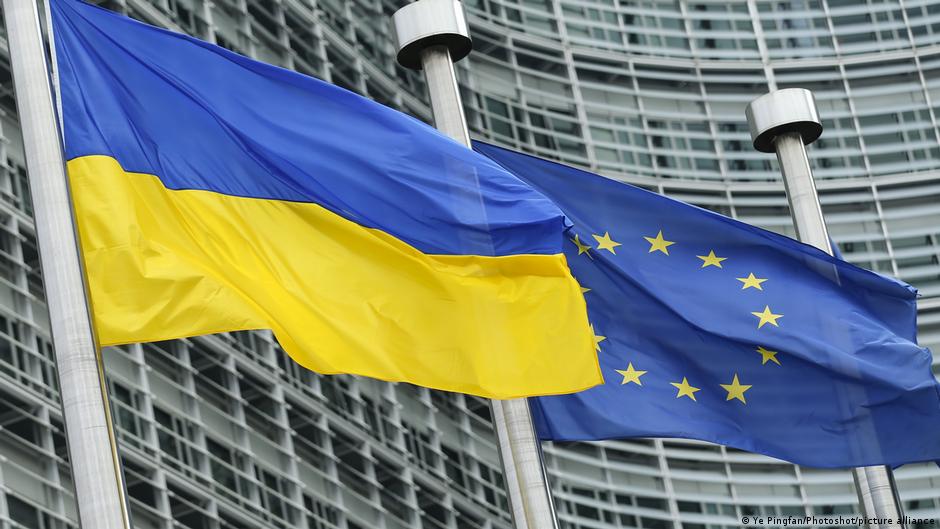
The European Union has rejected Ukraine’s request to receive part of a €90 billion loan ahead of schedule, declining a bid by Kyiv to cover a military financing shortfall that has emerged this year as defense spending rises. According to sources familiar with the matter cited by Bloomberg on Thursday, October 1, Brussels concluded that accelerating the funds now would not resolve Ukraine’s fiscal challenge and could instead push the problem into 2027.
The decision matters beyond public finance. For Ukraine’s startup and technology ecosystem, the timing and reliability of sovereign support shape everything from domestic purchasing power to defense-tech procurement, runway planning, investor confidence, and the likelihood of strategic M&A. Ukraine has built a visible innovation base during wartime, particularly in software, cybersecurity, drones, battlefield systems, fintech infrastructure, and remote engineering services. But those companies operate inside a macroeconomic environment whose stability still depends heavily on external financing.
Kyiv had asked the EU for early access to part of the €90 billion loan to cover a deficit in military funding in the current year. Bloomberg reported that the request followed Ukraine’s unexpected acknowledgment over the summer that rising military expenses had created an additional funding gap of €27 billion.
Brussels believes faster disbursement now could merely move the problem into 2027 rather than solve it.
European officials have instead turned to other partners, including Canada, Norway, and Japan, with a proposal to help Ukraine cover the remaining need. The EU loan is expected to cover two-thirds of the requirements of the country defending itself against Russian aggression, while non-EU states would contribute the balance.
Why the decision matters for startups and investors
For venture investors, the EU’s refusal is a signal that Ukraine’s financing outlook remains dependent on coordination among multiple governments and institutions. It does not erase the scale of pledged European support, but it does underscore that timing, conditionality, and burden-sharing will remain central variables for anyone assessing Ukraine exposure.
Startups in Ukraine often sit at the intersection of civilian innovation and national security demand. Defense technology companies may benefit from elevated military needs, but only if procurement budgets are liquid, predictable, and supported by external financing. A delayed or constrained funding flow can lengthen payment cycles, complicate government contracts, and make revenue forecasts harder to model. For software exporters and globally distributed teams, macro stability affects salaries, taxes, currency planning, and the ability to retain engineering talent inside the country.
The issue also feeds into M&A calculations. Strategic buyers and private equity investors typically discount assets in markets where sovereign financing is uncertain, even when the underlying companies show strong technical capability. If Ukraine’s 2027 funding gap remains unresolved, some acquisition talks may face tougher diligence around customer concentration, government exposure, and the durability of wartime revenue.
Bloomberg reported that €45 billion from the 2027 loan will be allocated quickly, but not before the start of next year. At the same time, the EU and Ukraine plan to begin work on defining additional budgetary and defense needs. For startup founders, that means the current question is not whether European financing exists, but how soon it arrives and under what conditions.
Reforms remain tied to budget support
The financing debate comes as EU officials continue to link support to reforms in Ukraine’s public sector and economy. In September, European Commission President Ursula von der Leyen said during a meeting with Ukrainian President Volodymyr Zelensky on the sidelines of the United Nations General Assembly in New York that the EU still had €37 billion in budget support available for 2026.
Von der Leyen directly connected the release of those funds to reforms by Kyiv aimed at fighting corruption and the shadow economy, increasing tax revenues, and bringing Ukrainian legislation closer to European Union standards. For the venture and startup community, those reforms are not merely diplomatic conditions. They are part of the institutional framework that can determine whether Ukraine becomes a more investable market after the war.
Anti-corruption enforcement and tax modernization have practical consequences for company formation, cap table transparency, public procurement, and cross-border investment. A stronger rule-of-law environment could improve investor appetite, reduce legal risk, and make Ukrainian startups easier to finance or acquire by Western companies. Conversely, slower reform progress could keep the country reliant on emergency support while limiting the depth of private capital inflows.
The International Monetary Fund is also involved in assessing Ukraine’s fiscal outlook. IMF representative Julie Kozack said the fund is discussing the possible size of Ukraine’s budget deficit with Kyiv and its partners. The IMF is also working with Ukraine to combine the second and third reviews of an $8.1 billion financing program, equivalent to €7.23 billion, and expects to present them to its executive board by December 2026.
Kozack said further financing for Ukraine depends on receiving sufficient and reliable assurances to cover the deficit. At the end of September, the IMF estimated Ukraine’s future financing gap at $30 billion to $35 billion in 2027, $17 billion in 2028, and $2 billion in 2029, according to Bloomberg.
For investors, those figures frame the scale of the challenge. Ukraine’s innovation ecosystem has continued to operate under extraordinary conditions, but venture markets depend on confidence in institutional continuity. The EU’s decision keeps pressure on Kyiv and its partners to align financing, reforms, and defense needs before 2027, when the country’s projected funding gap becomes more acute.
The near-term result is a more cautious backdrop for capital deployment. Venture funds with Ukrainian portfolio companies are likely to watch not only battlefield developments but also budget negotiations in Brussels, IMF board timing, and commitments from non-EU partners. In a market where technical talent remains a major asset, sovereign financing could still determine how much of that talent compounds into scalable companies rather than short-term wartime capacity.